Traditional Snacks
Authentic Singapore Hawker-Style Steamed Red Bean Buns (Dou Sha Bao)
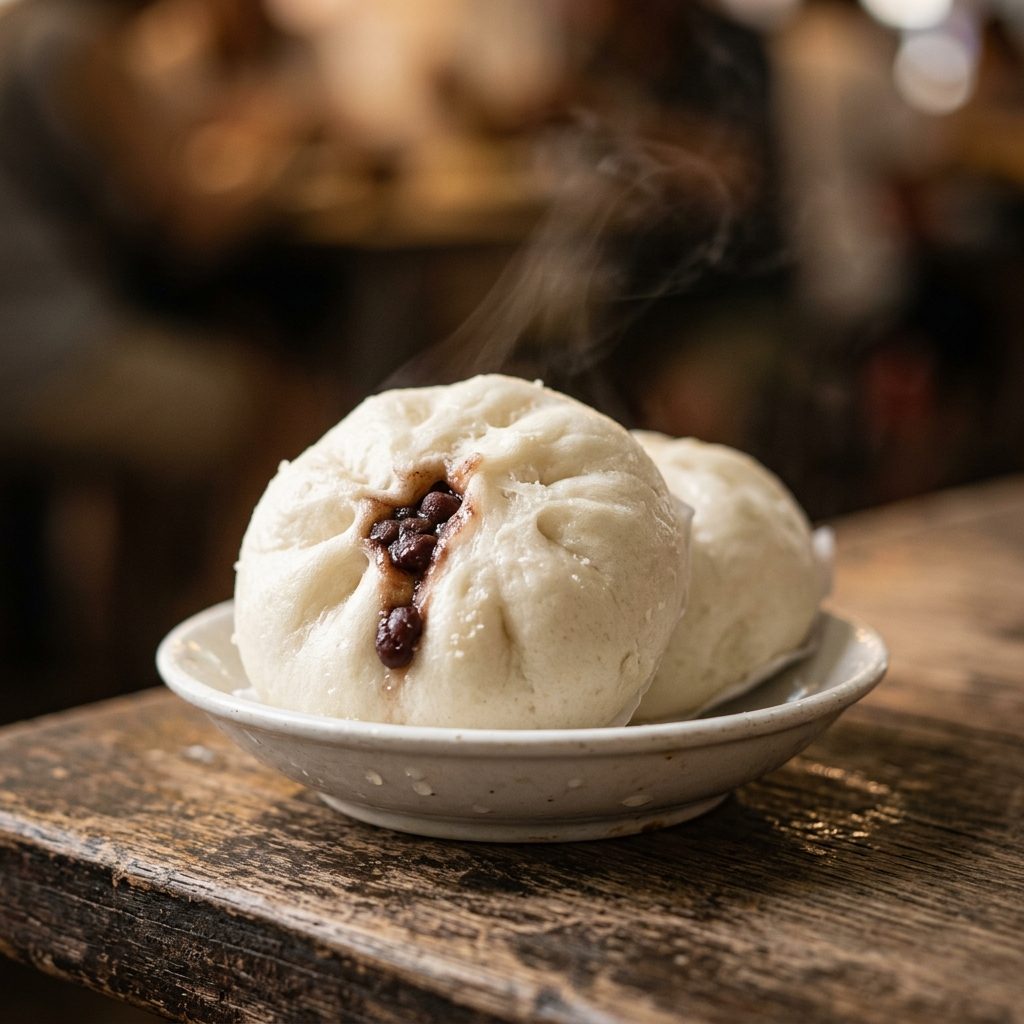
These pillows of soft, leavened dough encase a silky, sweet red bean center that achieves a professional 'sand' texture without a specialized grinder. A staple of Singaporean dim sum culture, these buns are traditionally enjoyed for breakfast or as a comforting afternoon snack.
- Prep
- 740 min
- Cook
- 45 min
- Serves
- 4
- Level
- Medium
- Per serving
- 420 kcal
Method
Preparation of Beans. Rinse the red beans and soak them in plenty of water for 12 hours (overnight) to ensure the core is fully hydrated.
Cooking. Drain the soaking water. Combine beans and 750ml of fresh water in a pot (a strict 1:3 bean-to-water ratio). Bring to a boil, then simmer on low heat for 45-60 minutes until the beans mash easily between two fingers.
Creating the 'Sand'. Pour the beans and their remaining liquid into a blender. Blitz until completely smooth. Pour the mixture through a fine sieve into a clean pot, using a spatula to push the paste through while discarding the tough skins remaining in the sieve.
Setting the Filling. Stir sugar and oil into the strained paste over medium heat. Cook, stirring constantly, until the paste thickens. Dissolve the 3g of gelatine in a tablespoon of hot water and stir it into the paste. This coagulant ensures the filling sets into a firm, manageable ball when chilled. Transfer to a bowl and refrigerate until firm.
Dough Making. Mix flour, yeast, baking powder, sugar, and warm water. Knead for 10 minutes until smooth and elastic. Let it proof in a warm place for 1 hour or until doubled in size.
Assembly. Punch down the dough and divide into 8 equal portions. Roll each into a ball, then flatten into a disc with thicker centers. Place a rounded tablespoon of the set red bean paste in the center. Pleat the edges to seal.
Final Proof and Steam. Place buns on squares of parchment paper. Let them rest for 20 minutes. Steam over high heat for 10 minutes. Turn off the heat but do not open the lid for 3 minutes to prevent the buns from collapsing.
Notes
Always use a 1:3 ratio of beans to water for cooking to ensure there is enough residual liquid to facilitate blending without making the paste too watery.
The 3g of gelatine is crucial for home cooks; it allows the paste to 'set' into a solid sphere, making it much easier to wrap the dough around the filling without a mess.
The fine sieve is the difference between a gritty paste and the professional 'sand' (Dou Sha) texture found in hawker stalls.
Add a pinch of salt to the bean paste to enhance the sweetness and depth of the adzuki flavor.
Questions
What does the name Dou Sha Bao mean?
Can I use gypsum instead of gelatine?
Why did my buns wrinkle after steaming?
Do I really need to soak the beans for 12 hours?
Another version of this dish, written for a home kitchen outside Singapore: Red Bean Steamed Buns on Recipe.net.