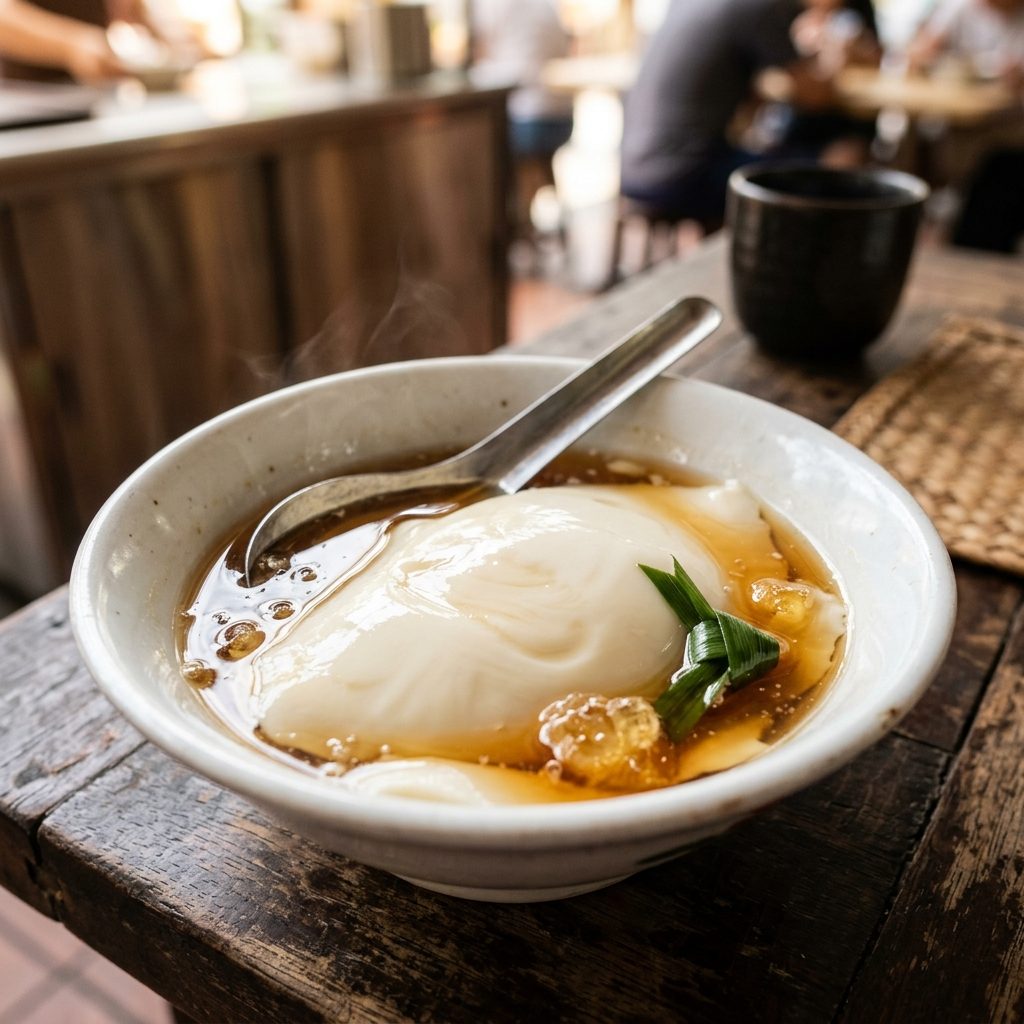
Traditional Snacks
Traditional Silky Soya Beancurd (Tau Huay) Recipe
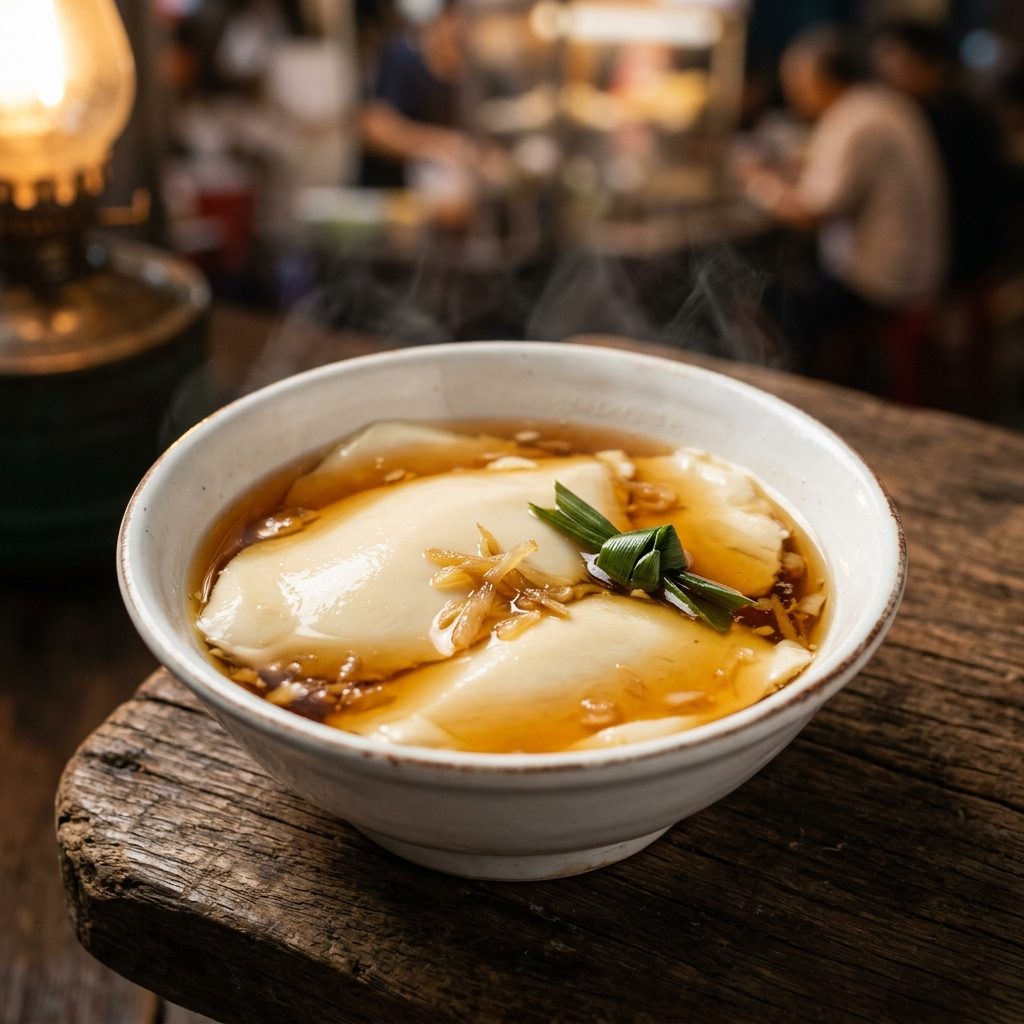
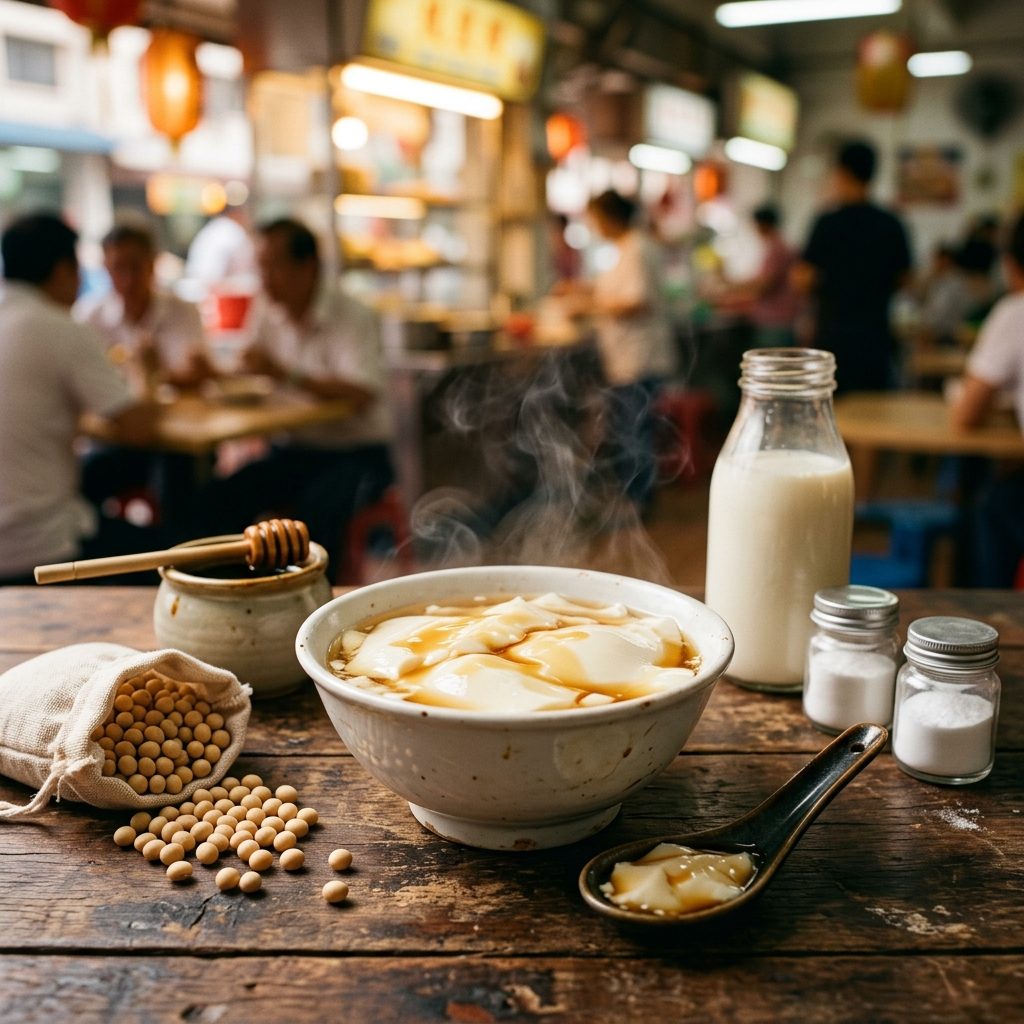
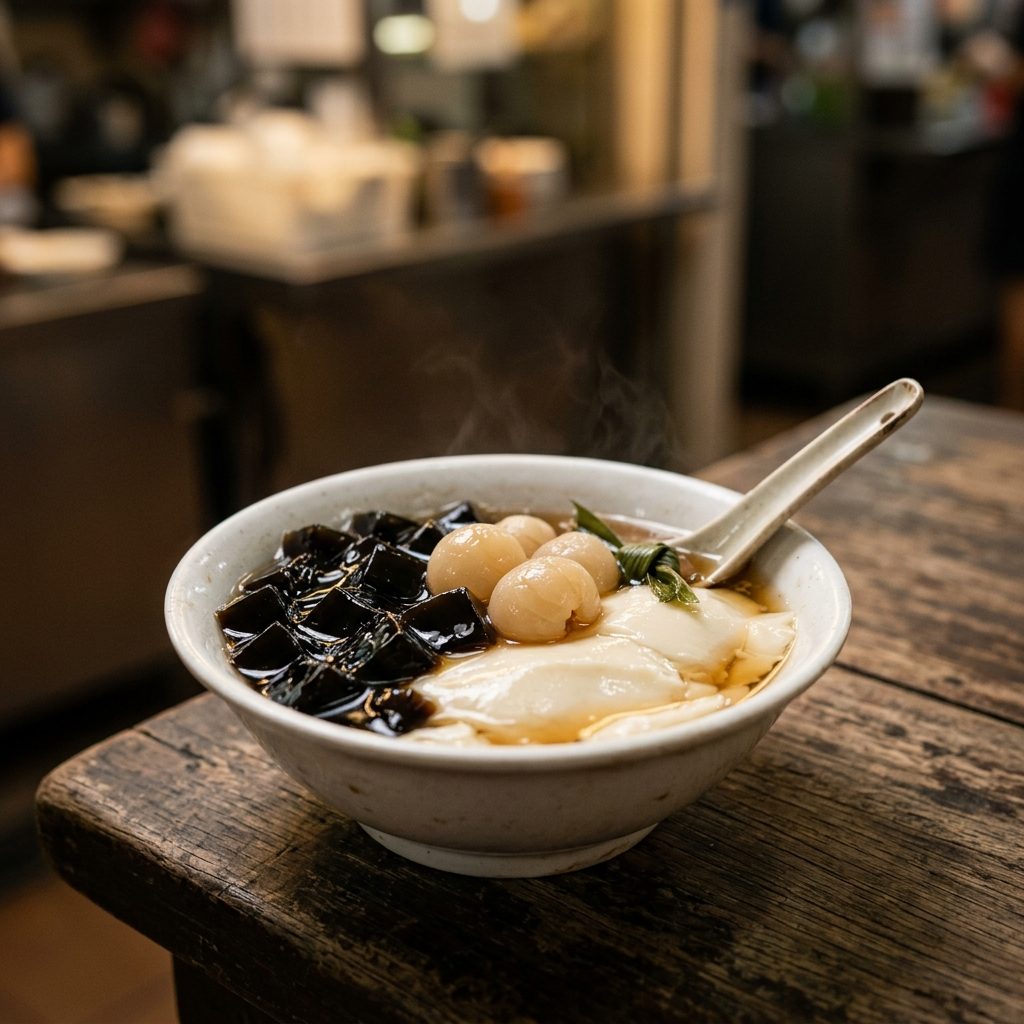
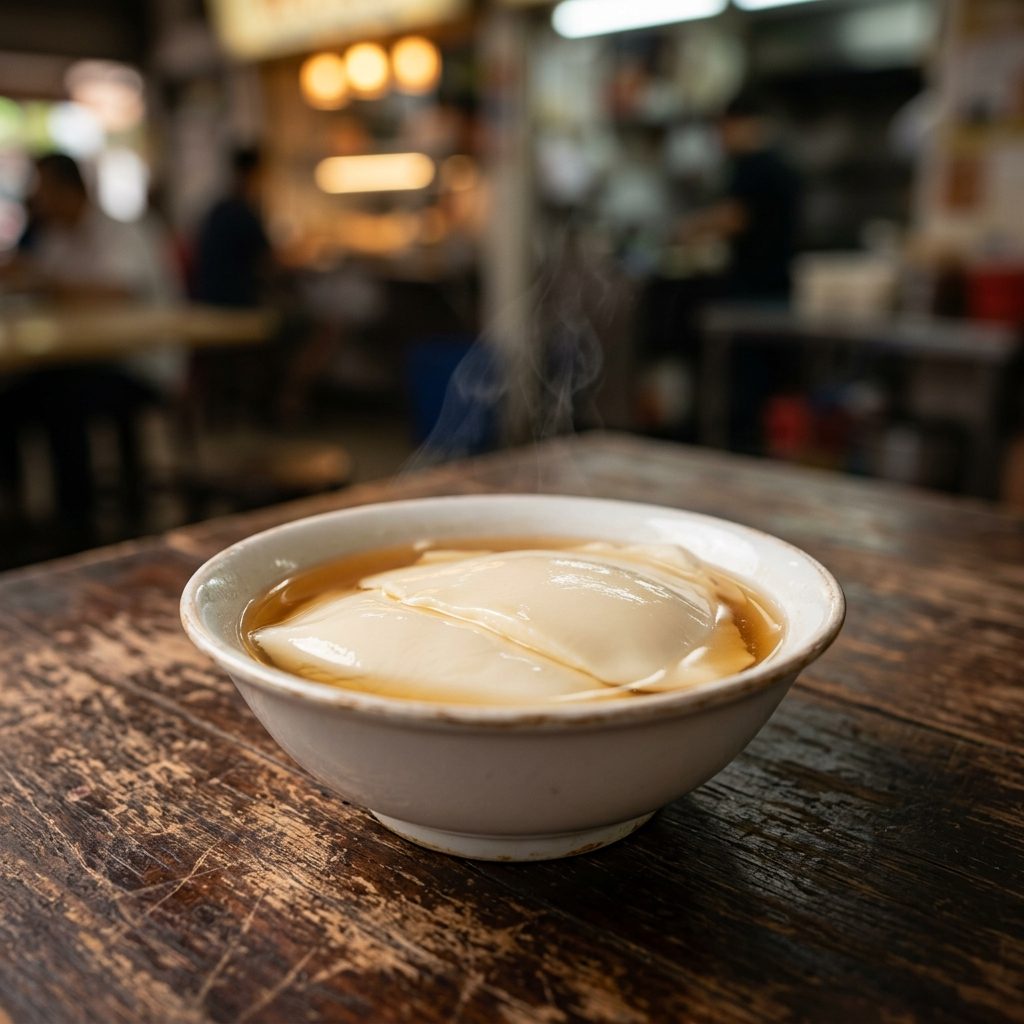
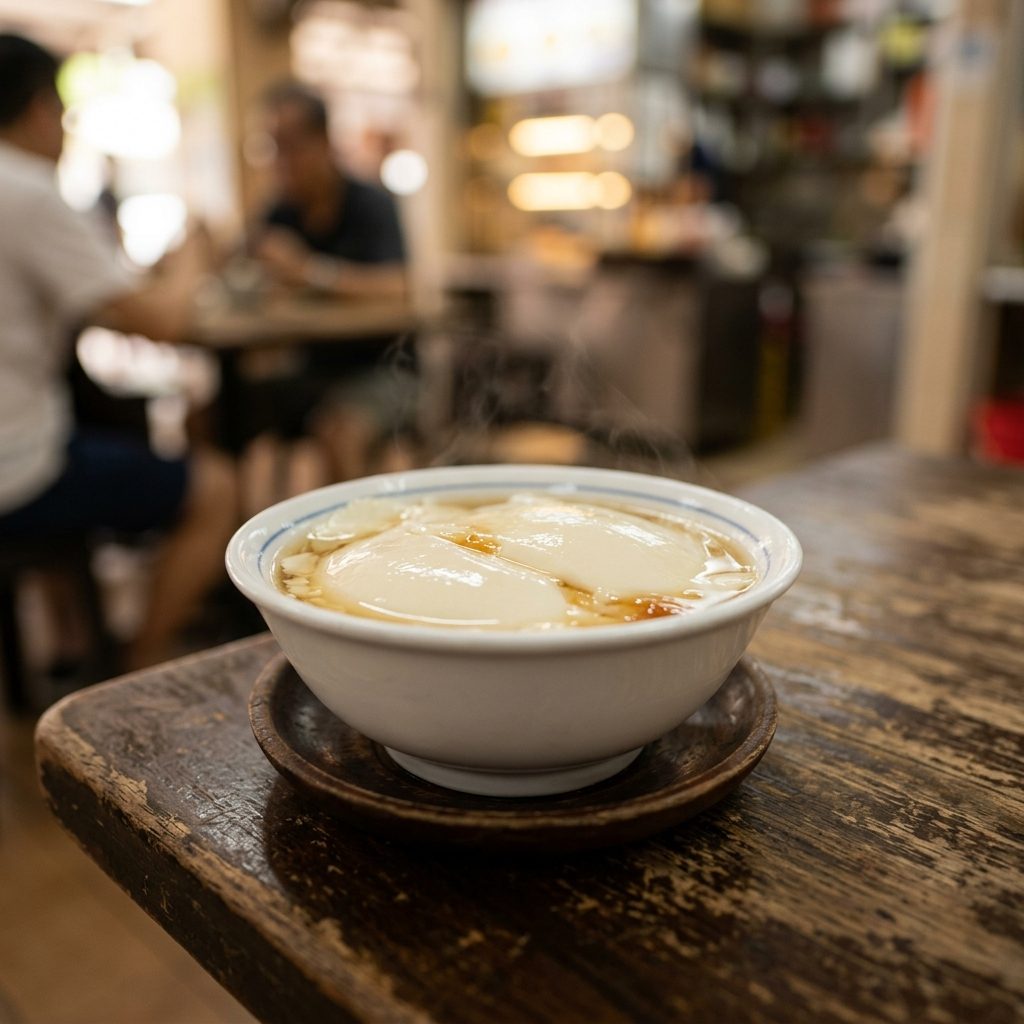
This traditional dessert, known in Hokkien as Tau Huay (豆腐花) meaning 'Bean Flower', is a staple of Singapore hawker centers and Hong Kong dessert houses. It features an incredibly smooth, melt-in-the-mouth texture achieved through the precise reaction between fresh soy milk and food-grade gypsum.
- Prep
- 480 min
- Cook
- 40 min
- Serves
- 6
- Level
- Medium
- Per serving
- 145 kcal
Method
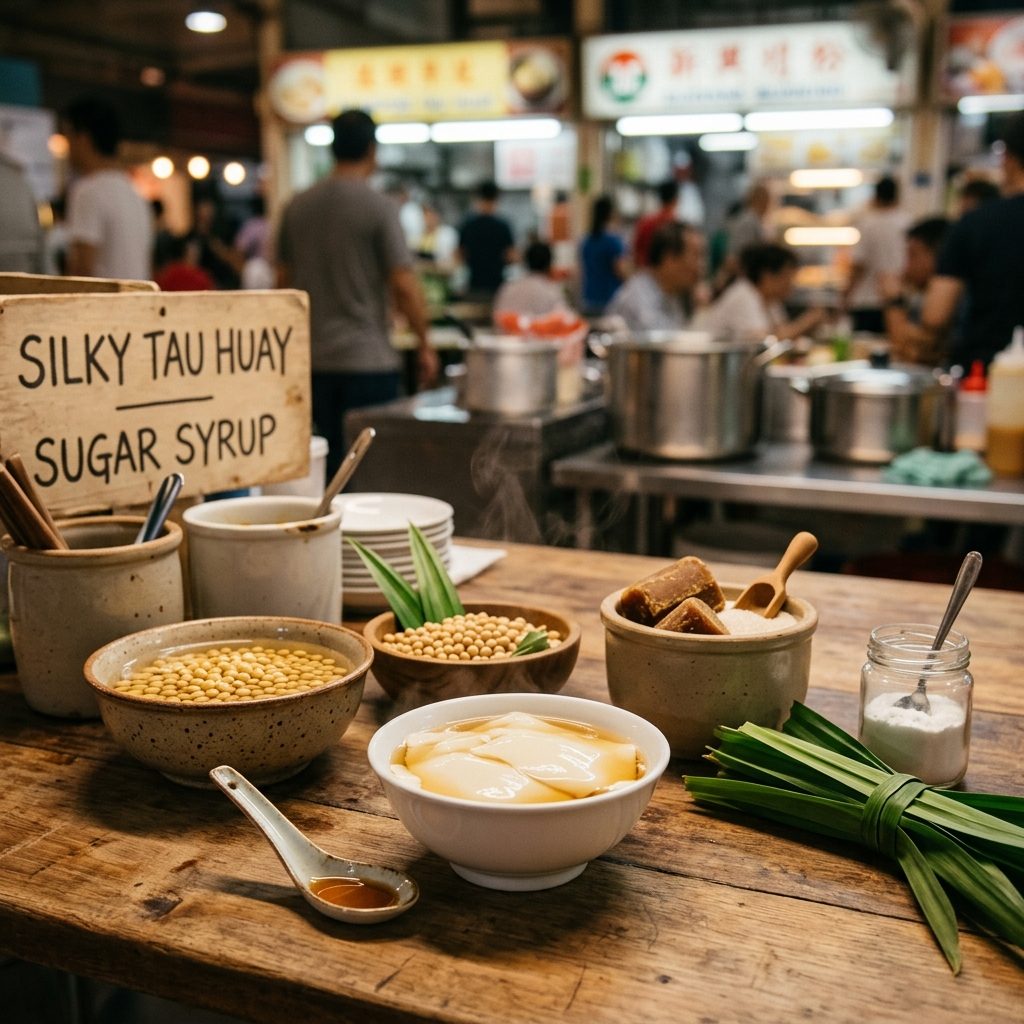
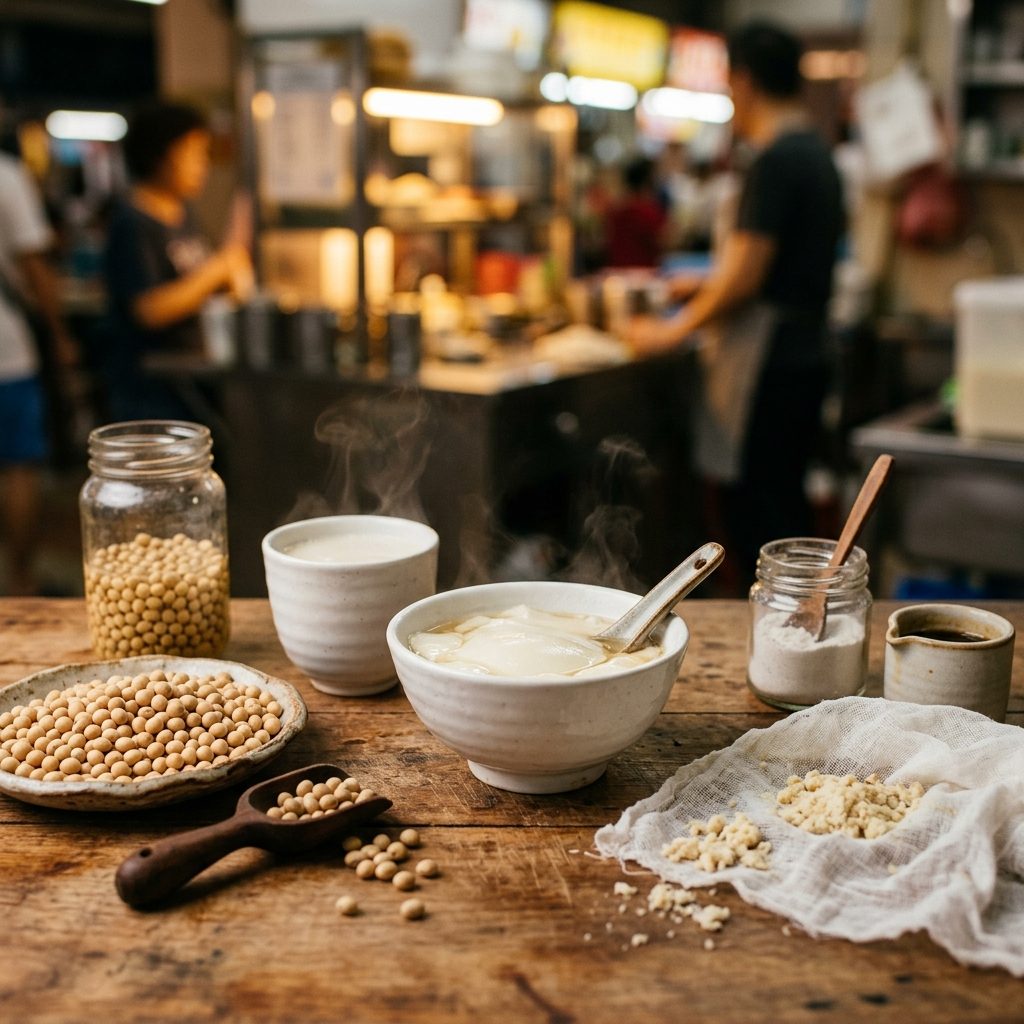
Soak the soya beans in plenty of water for at least 6 to 8 hours, or overnight in the refrigerator, until they have doubled in size and are soft to the touch.
Drain and rinse the soaked beans. In a high-speed blender, blend the beans with 2 liters of water in batches until very fine.
Strain the raw soy milk through a fine sieve to remove the large pulp (okara). Perform a second straining through a muslin cloth or nut milk bag, squeezing tightly to extract all the liquid and ensure a grit-free texture.
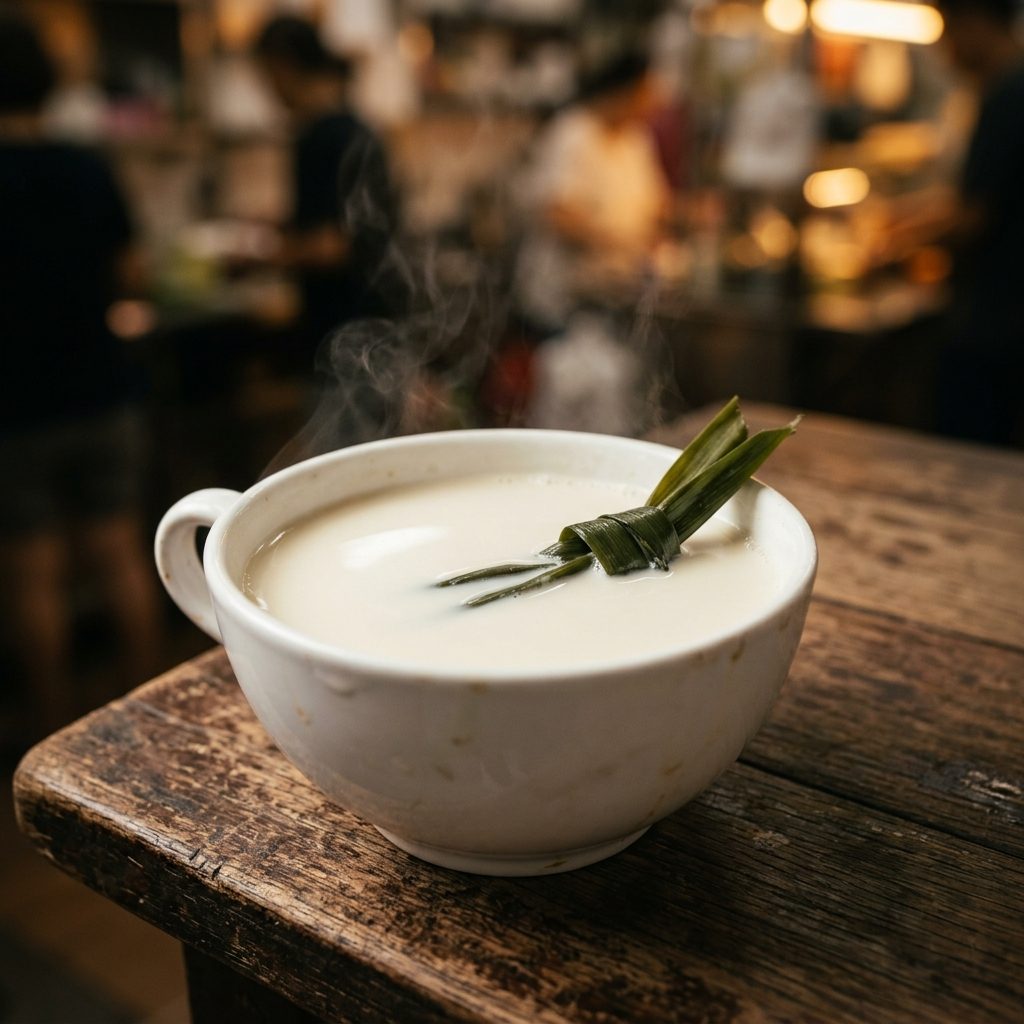
Pour the soy milk into a large pot and bring to a gentle boil over medium heat. Stir constantly to prevent the bottom from burning. Once boiling, reduce heat and simmer for 10 minutes, skimming off any foam that rises to the surface.
While the milk simmers, prepare the coagulant in a separate, large, heat-proof pot (the one you will set the beancurd in). Mix the gypsum powder, cornstarch, and 3 tbsp of water until it forms a smooth slurry.
Once the soy milk is ready, give the gypsum slurry a quick stir to ensure no powder has settled. Immediately hold the pot of hot soy milk about 1 foot above the coagulant pot and pour it in a steady, fast stream. This 'crashing' motion naturally mixes the ingredients without the need for stirring.
Quickly skim off any bubbles on the surface. Cover the pot immediately with a lid (wrapped in a kitchen towel to prevent condensation drips) and let it sit undisturbed for 30 to 40 minutes.
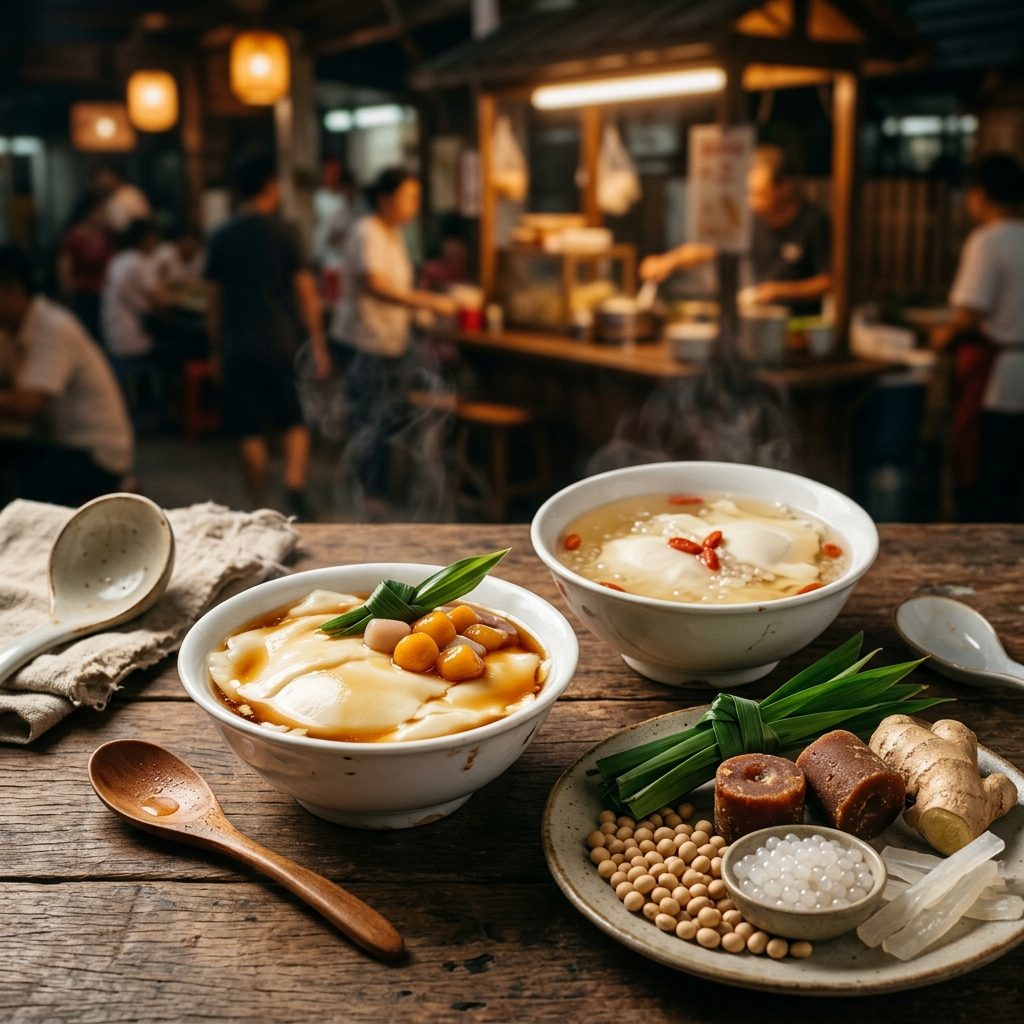
While the beancurd sets, make the syrup by boiling the rock sugar and pandan leaves in 1 cup of water until the sugar dissolves. Serve the warm beancurd by thin-shaving layers into a bowl and drizzling with the syrup.
Notes
Never stir the mixture after pouring the milk into the coagulant, as this will break the bonds and prevent it from setting.
Ensure the soy milk is approximately 85-90 degrees Celsius when pouring; if it is too cold, the gypsum will not activate.
Using cornstarch alongside gypsum provides a softer, more gelatinous texture common in Hong Kong styles compared to purely gypsum-set curds.
Old beans will not produce enough protein for a proper set; always use fresh, high-quality soya beans.
Questions
Can I use store-bought soy milk?
What is Sek Gao?
Why is my beancurd watery?
How long can I keep the beancurd?
Another version of this dish, written for a home kitchen outside Singapore: Egg Tarts on Recipe.net.