Guide
Mastering Soya Milk and Tau Huay: Ratios, Straining, and Setting Techniques
Making fresh soya milk at home is a foundational skill for Singaporean hawker desserts. This guide explains how to achieve the perfect silkiness using dried beans, specific water ratios, and the correct coagulation techniques for Tau Huay.
Understanding the Name and Origin
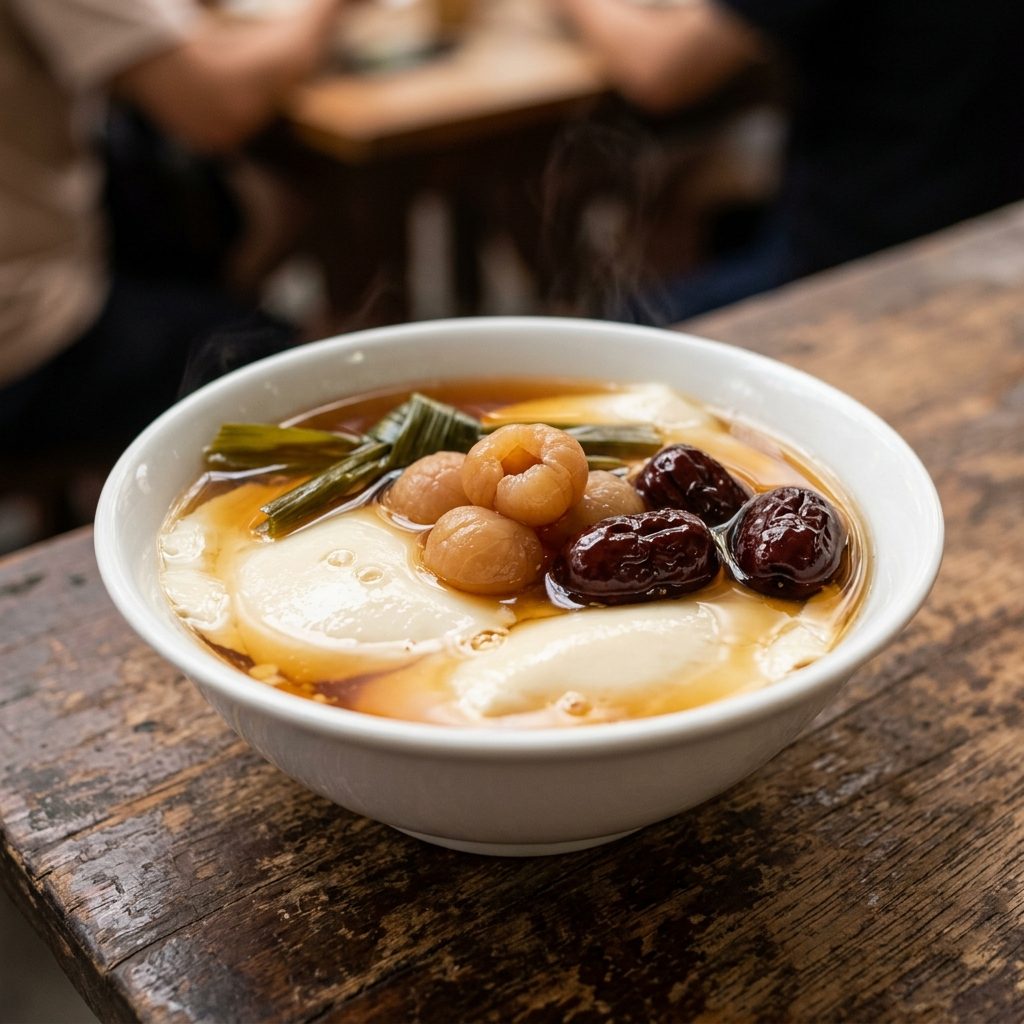
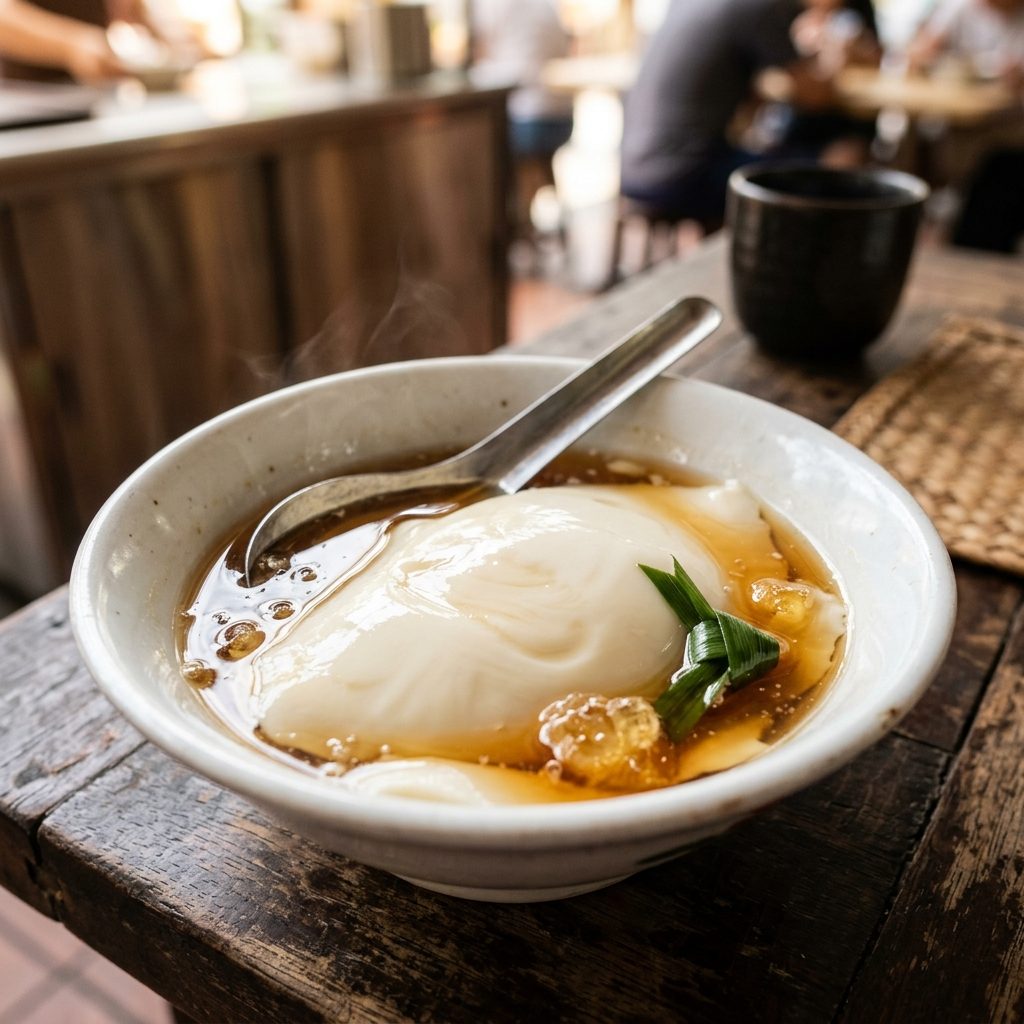
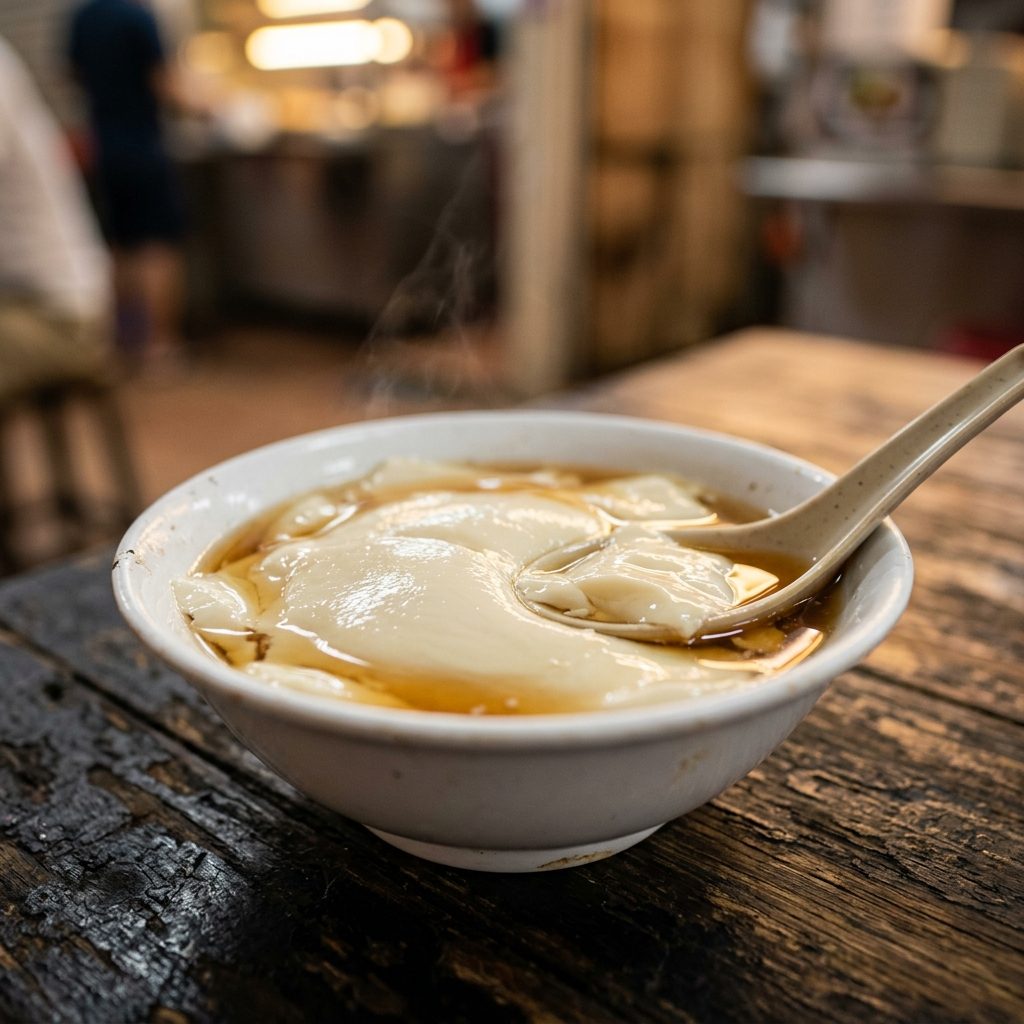
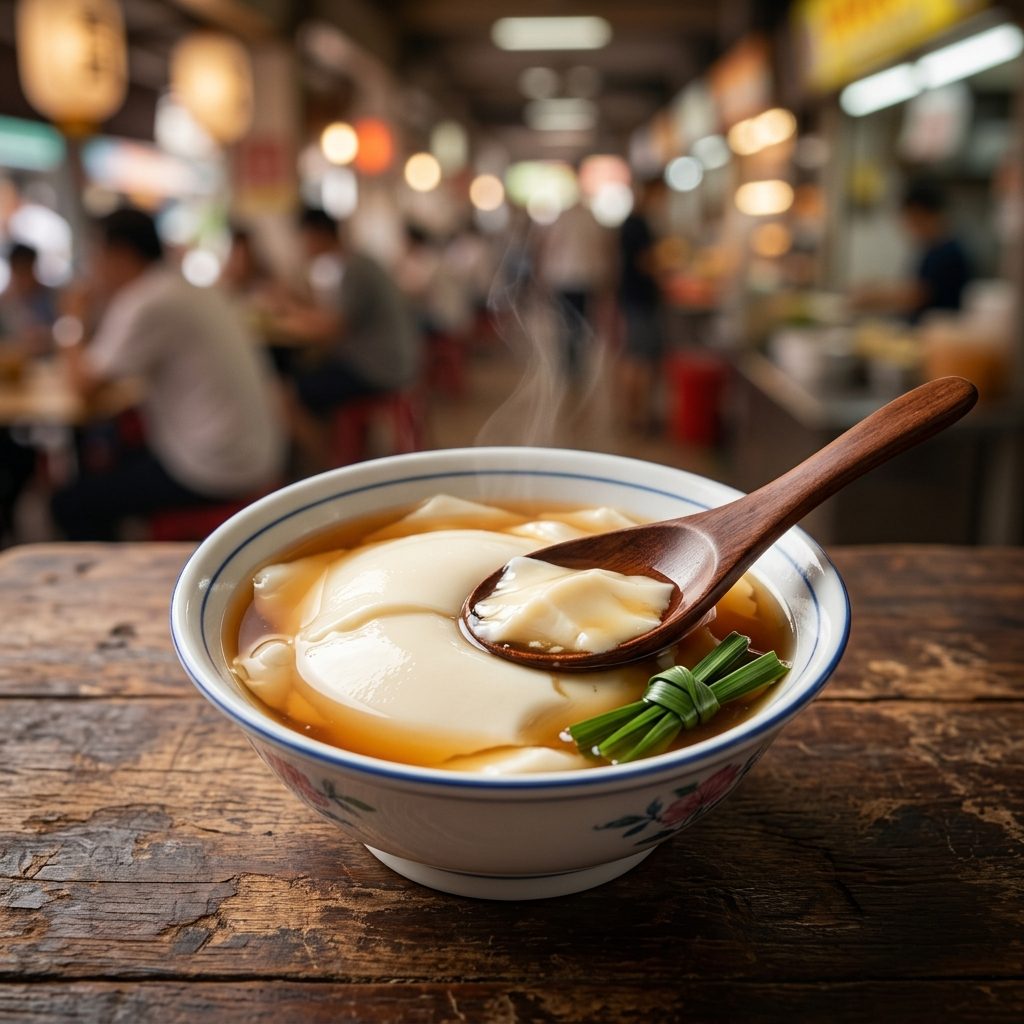
In Singapore, soya milk is commonly referred to as 'Dou Jiang' (豆浆) in Mandarin or 'Tau Huay' (豆花) in Hokkien. While 'Dou Jiang' literally means 'bean broth,' 'Tau Huay' translates to 'bean flower,' referring to the delicate, bloom-like curds of the set dessert. To achieve the hawker-style quality, you must move beyond pre-packaged powders and return to the dried yellow soybean.
The Essential Soaking Phase
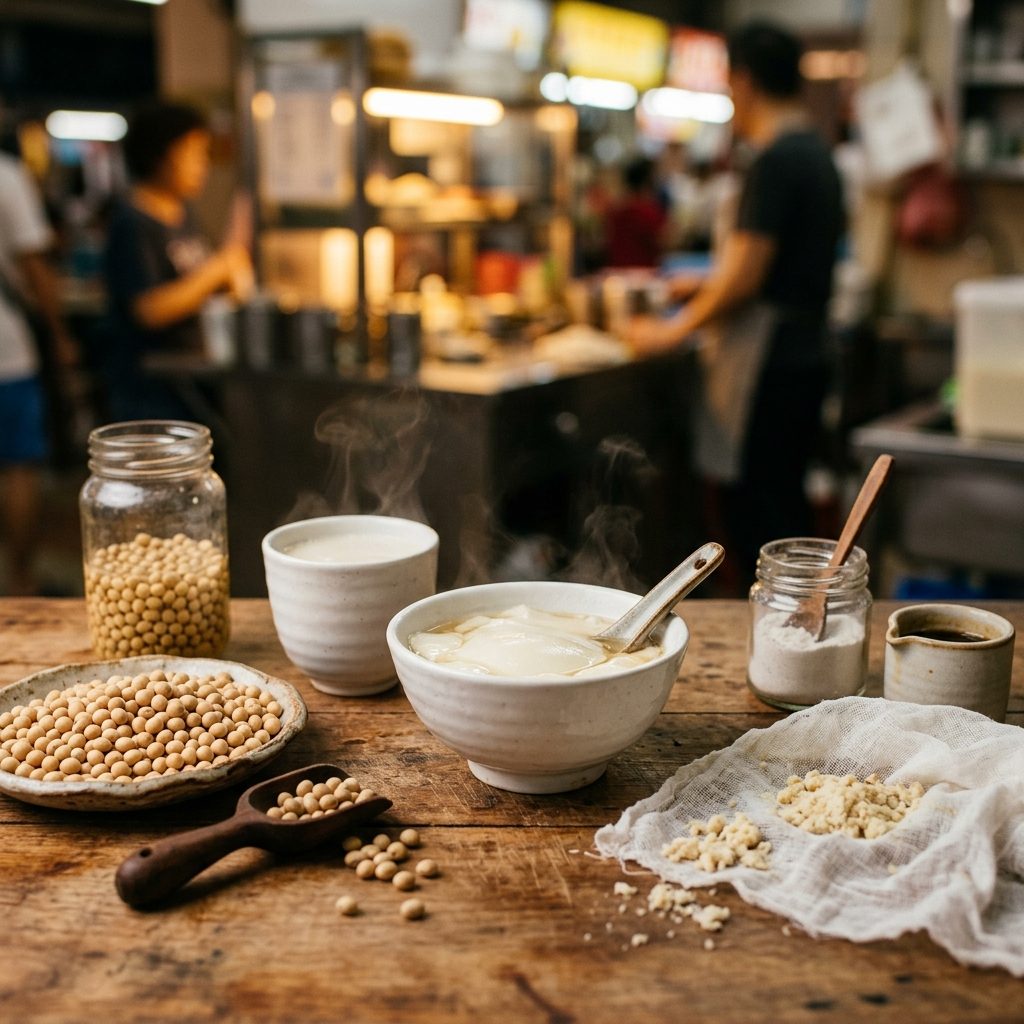
Start with 250g of dried non-GMO soybeans. Rinse them thoroughly until the water runs clear. Soak the beans in at least 1 liter of filtered water for 8 to 12 hours. In Singapore's tropical climate, if soaking for more than 8 hours, it is safer to keep them in the refrigerator to prevent fermentation. The beans are ready when they have doubled in size, are plump, and can be easily split with a fingernail.
The Golden Ratio for Milk and Pudding
The bean-to-water ratio is the most critical factor for texture. For a rich, creamy Soya Milk (Dou Jiang), use a ratio of 1:8 (1 part dried beans by weight to 8 parts water). If you intend to make Tau Huay beancurd, a slightly more concentrated ratio of 1:6 or 1:7 is preferred to ensure a stable set. For 250g of dried beans, use approximately 2 liters of water for standard milk, or 1.5 to 1.75 liters for beancurd.
Blending and Two-Stage Straining
Drain the soaking water and discard it. Add the beans to a high-speed blender with half of your measured fresh water. Blend on high for 2 minutes until the slurry is fine. In a home kitchen, straining is best done with a fine sieve lined with a 'muslin bag' or 'nut milk bag.' Pour the slurry through, and then use your hands to squeeze the 'okara' (bean pulp) until it is dry. For a truly smooth, hawker-quality finish, strain the liquid a second time through a fresh piece of cheesecloth to catch the micro-sediment.
Cooking the Milk
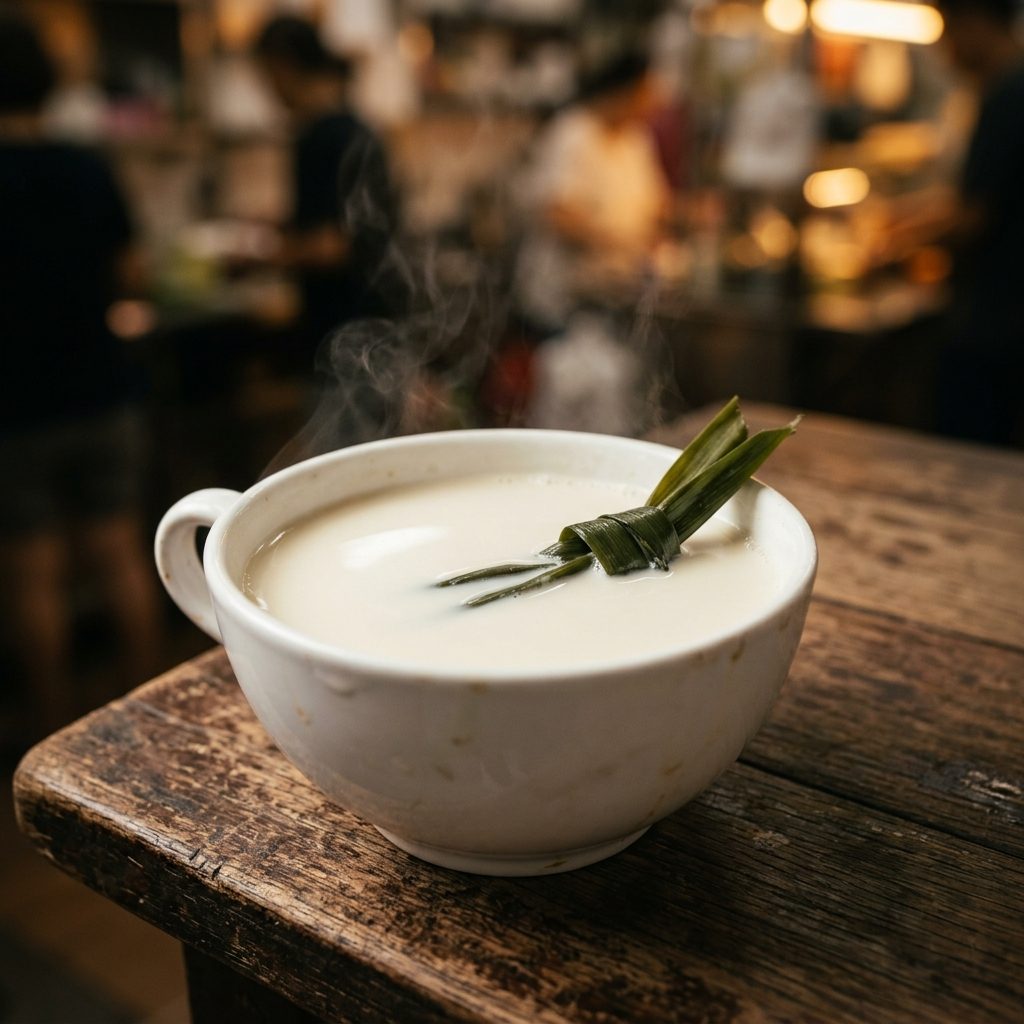
Transfer the raw milk to a heavy-bottomed pot. Add 2-3 knotted pandan leaves for that signature Singaporean aroma. Bring to a gentle boil over medium heat, stirring constantly with a wooden spoon. Soya milk burns easily at the bottom, which will ruin the flavor with a smoky aftertaste. Once it reaches a rolling boil, reduce heat to low and simmer for 15-20 minutes to cook out the 'beany' raw taste and improve digestibility.
Setting the Tau Huay (Coagulation)
To turn the milk into Tau Huay, you need a coagulant. For the traditional texture, use Gypsum (Calcium Sulfate). Mix 1 teaspoon of gypsum powder and 1 teaspoon of cornstarch with 3 tablespoons of room temperature water in a deep ceramic bowl. While the soya milk is still at approximately 80°C to 85°C, 'crash' the milk into the bowl by pouring it from a height of about 30cm. This creates a natural mixing action. Do not stir. Cover with a cloth and lid, and let it sit undisturbed for 30 minutes. Alternatively, for a modern 'jelly-style' chilled beancurd, use 10g of bloomed gelatine per 1 liter of hot milk, stirring until dissolved before chilling.