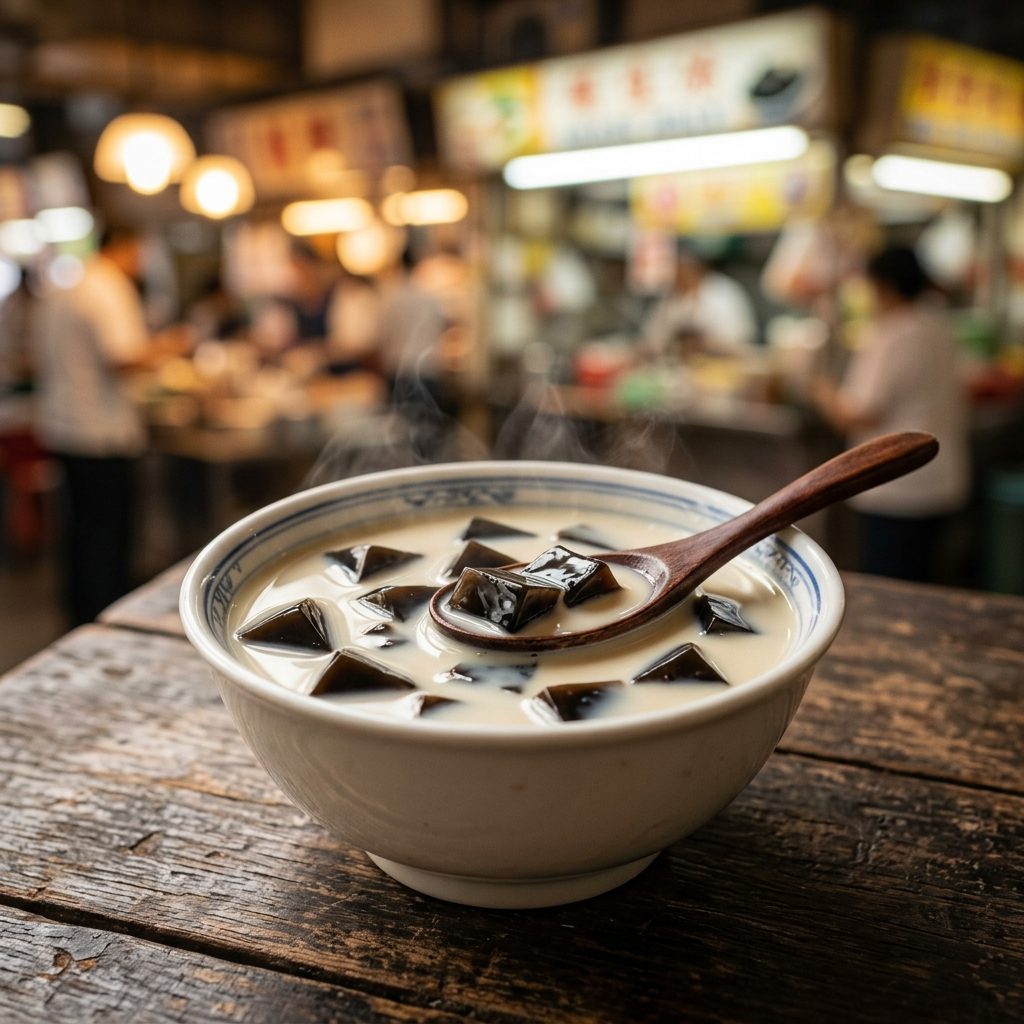
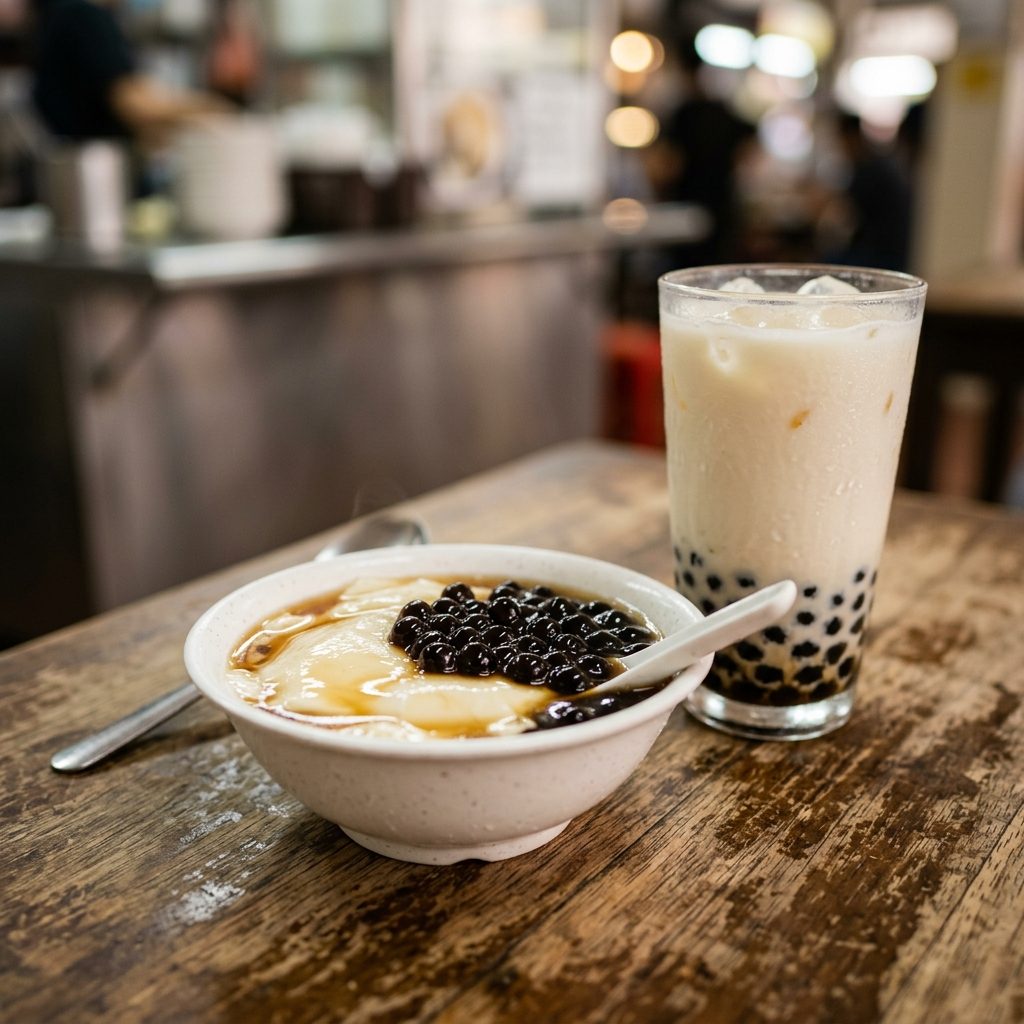
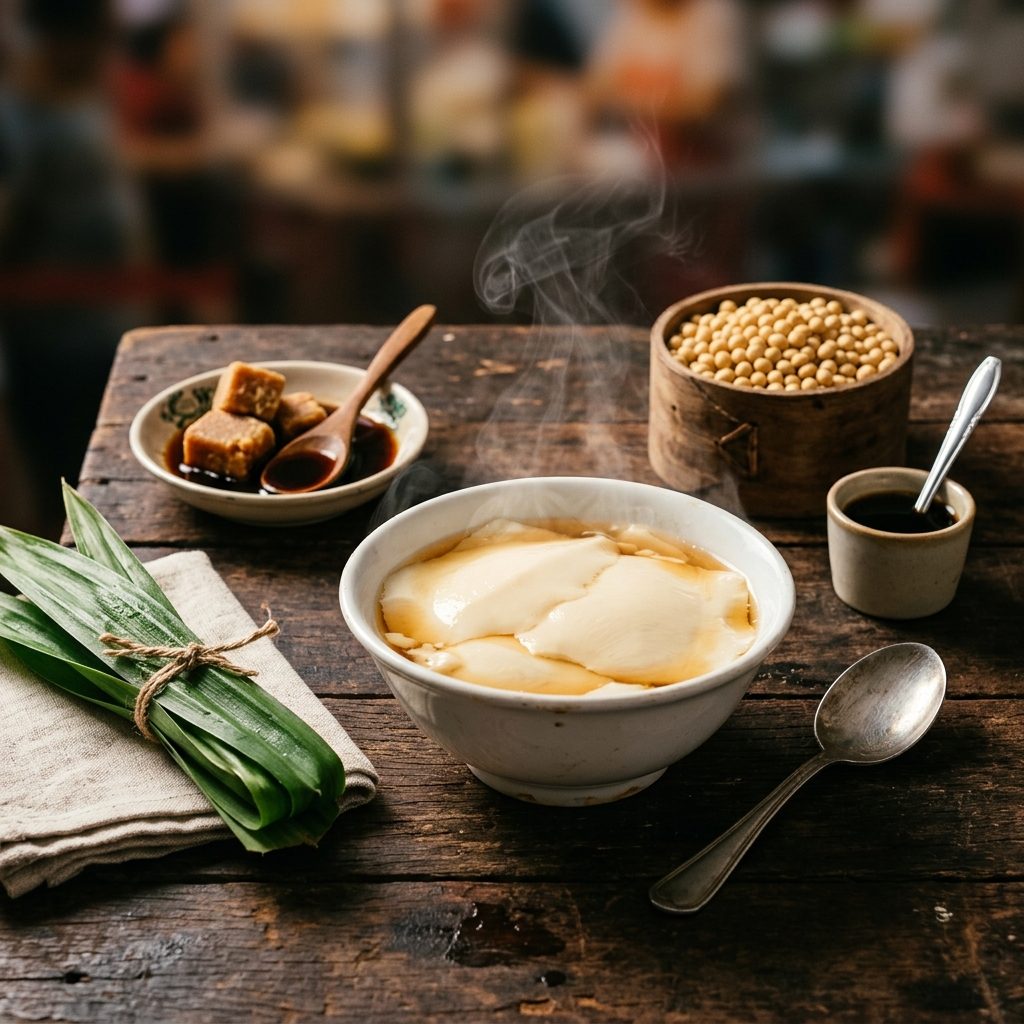
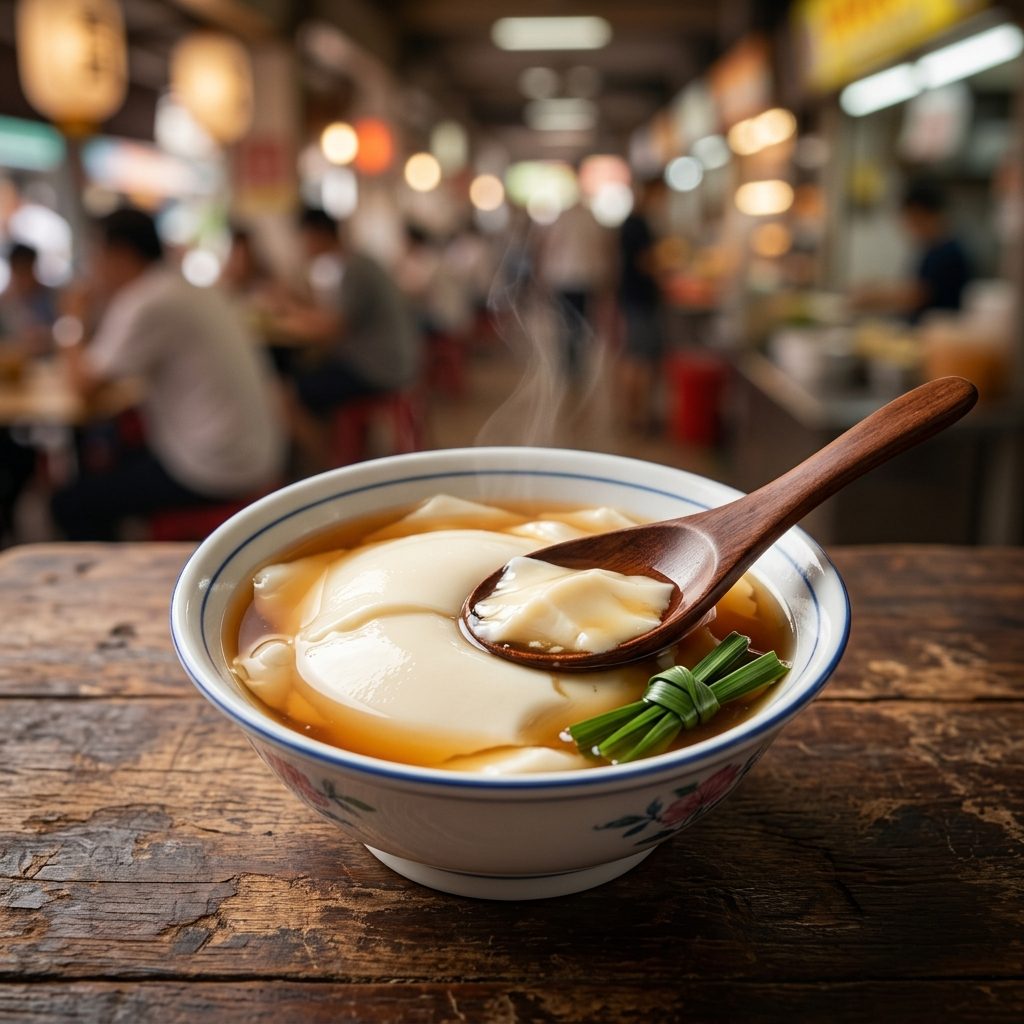
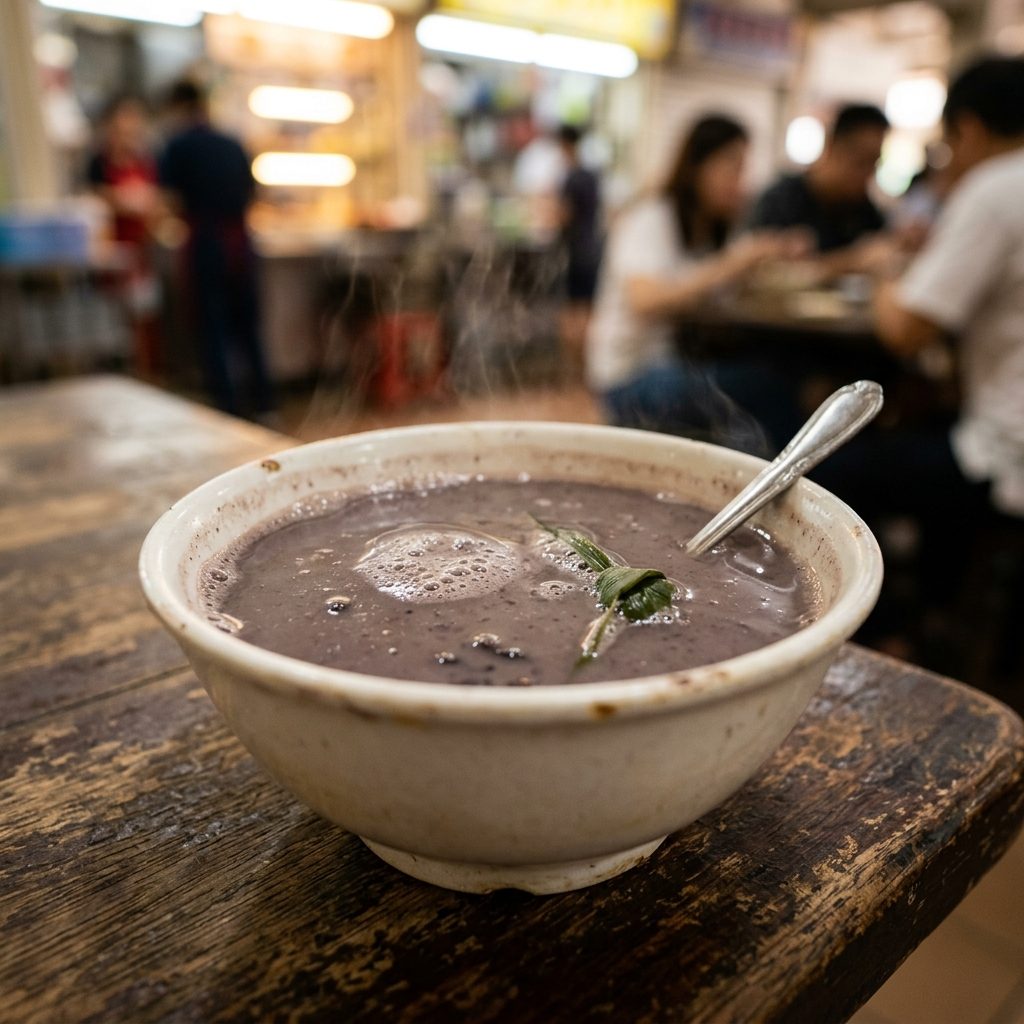
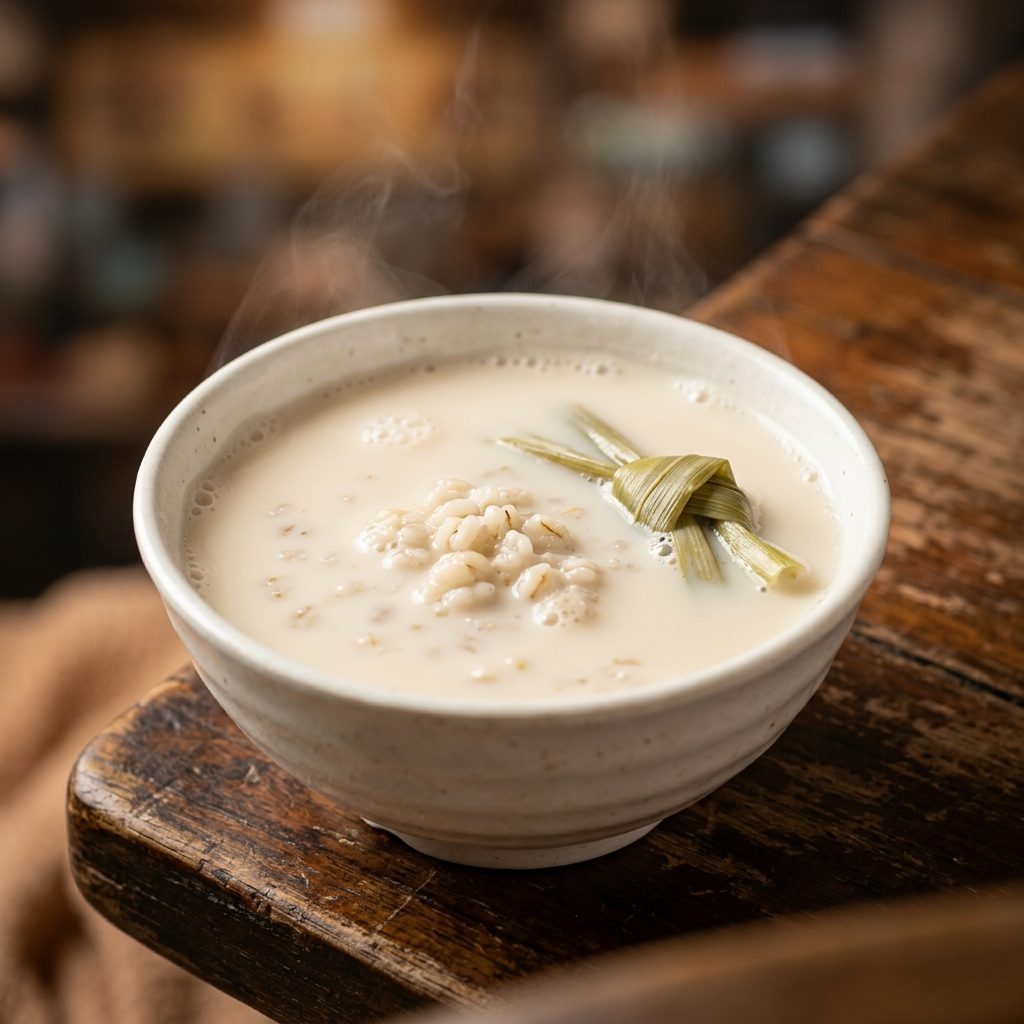
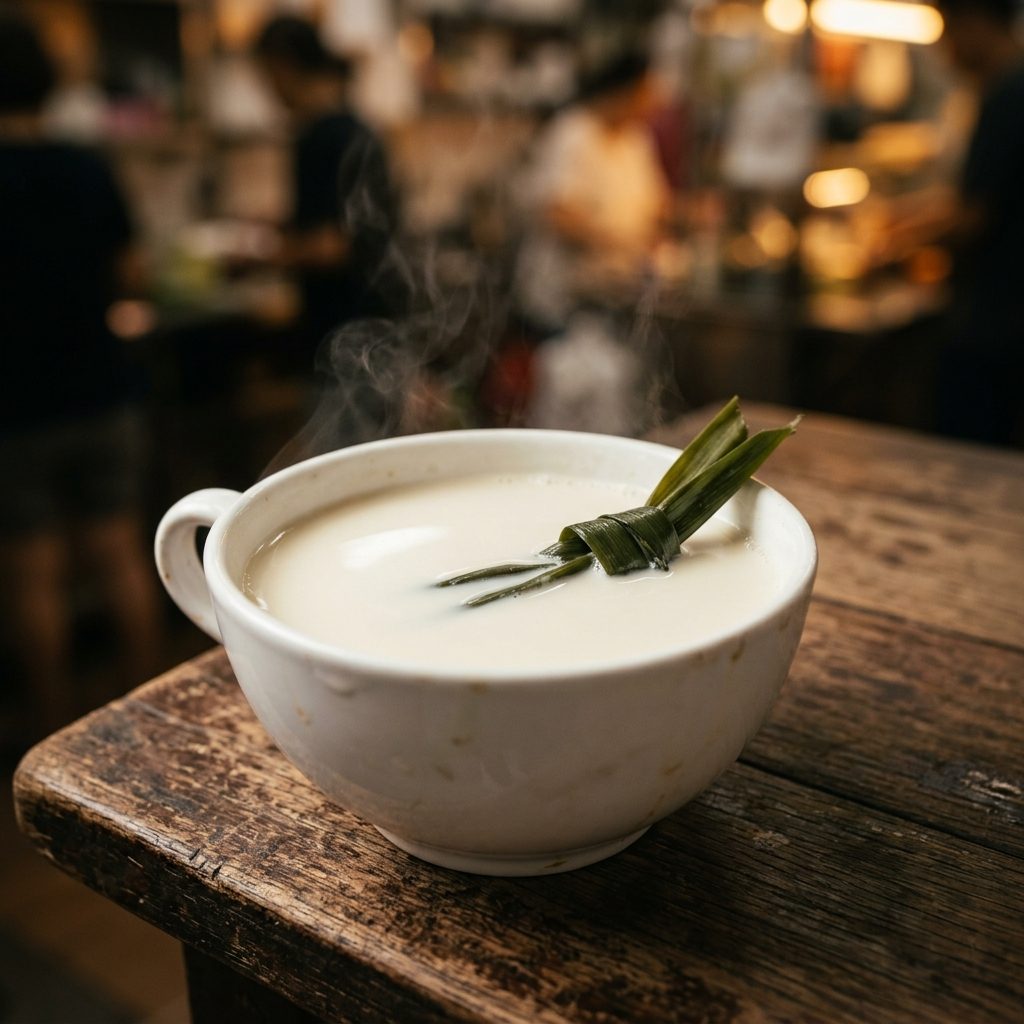
Soya Milk and Drinks
How to Make Silken Tau Huay and Utilize Leftover Okara Pulp
A comprehensive guide to creating the classic Singaporean dessert Tau Huay (豆花) using ordinary kitchen equipment. This recipe also features a delicious way to transform the leftover okara pulp into a savory, protein-rich stir-fry.
- Prep
- 480 min
- Cook
- 45 min
- Serves
- 4
- Level
- Medium
- Per serving
- 240 kcal
Method
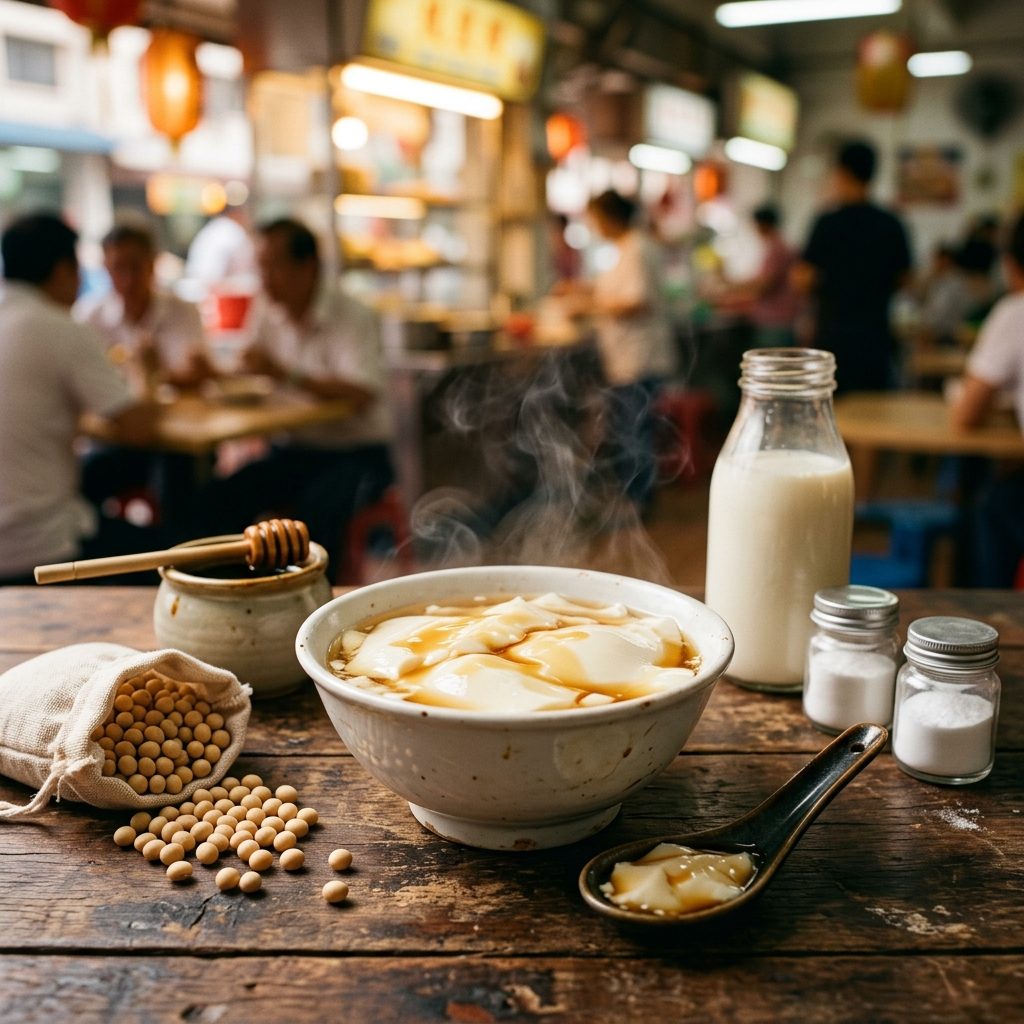
Preparation. In Hokkien, this dessert is called Tau Huay (豆花), which literally translates to 'Beancurd Flower' because of its delicate, blooming texture. Begin by soaking 300g of dried soy beans in plenty of water for exactly 6 to 8 hours. Do not exceed 10 hours as the beans may ferment. Drain and rinse.
Blending. Place half the beans in a blender with 900ml of water. Blend on high until the mixture is a fine white slurry. Repeat with the second half of the beans and the remaining 900ml of water. This 1:6 ratio ensures the milk is thick enough to set.
Straining the Okara. Pour the slurry through a fine sieve lined with a muslin cloth or nut milk bag over a large pot. Squeeze the cloth forcefully to extract every drop of soya milk. The dry pulp remaining in the cloth is the 'Okara' (豆渣, meaning bean dregs). Set the okara aside in a bowl for the savory dish.
Boiling. Add pandan leaves to the soya milk. Bring to a gentle boil over medium heat, stirring constantly to prevent the bottom from scorching. Once it reaches a rolling boil, simmer for 10 minutes to remove the 'beany' raw taste. Remove the pandan leaves.
Coagulating. In a clean, deep heat-proof ceramic pot, mix 1 tsp of gypsum and 1 tbsp of cornstarch with 3 tbsp of room-temperature water. Stir well. Give the hot soya milk one final stir, then, from a height of about 30cm, pour the milk quickly into the pot containing the gypsum mixture (this is called 'flushing'). Do not stir. Cover immediately with a kitchen towel and a lid. Let it sit undisturbed for 30 minutes to set.
Savory Okara Side Dish. While the beancurd sets, heat sesame oil in a pan. Sauté garlic and optional minced mushrooms or meat. Add the reserved okara pulp. Stir-fry for 5-7 minutes until the moisture evaporates and the okara smells toasted. Season with light soy sauce and white pepper.
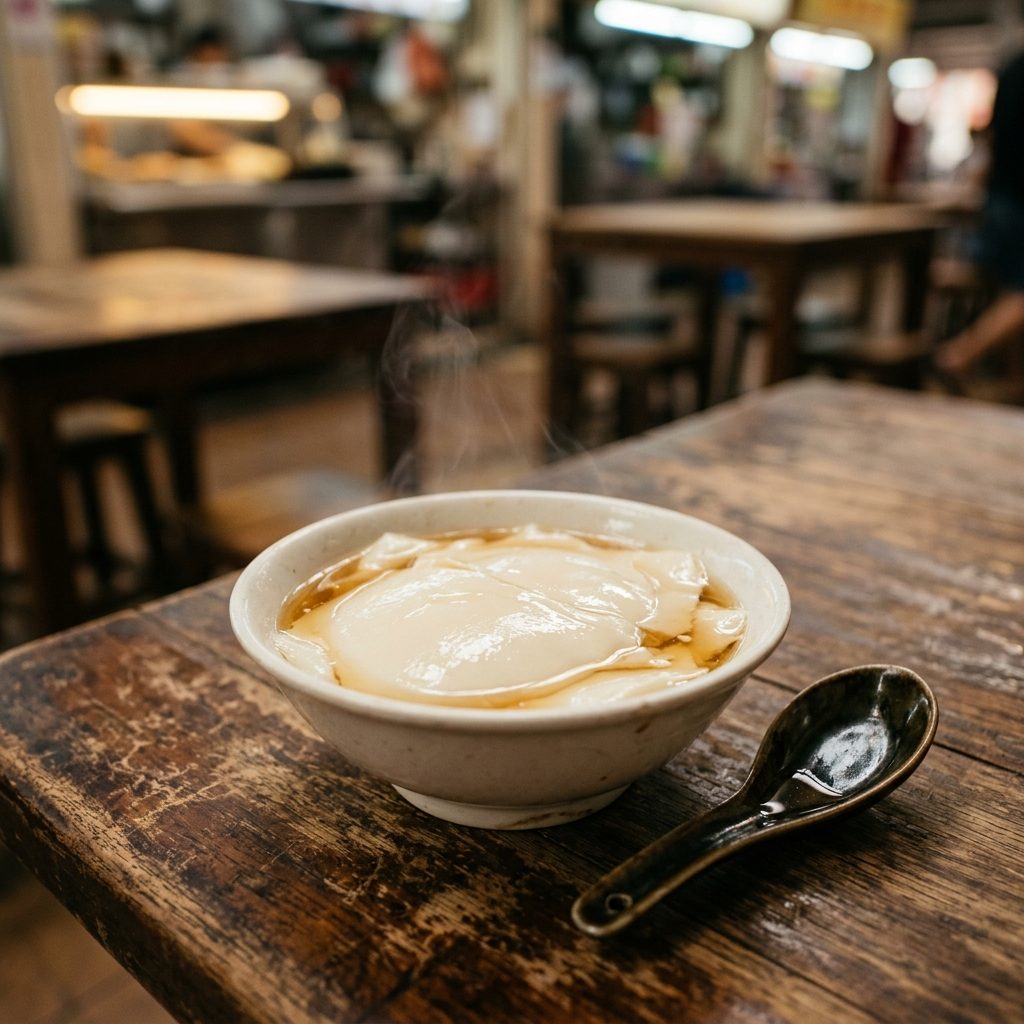
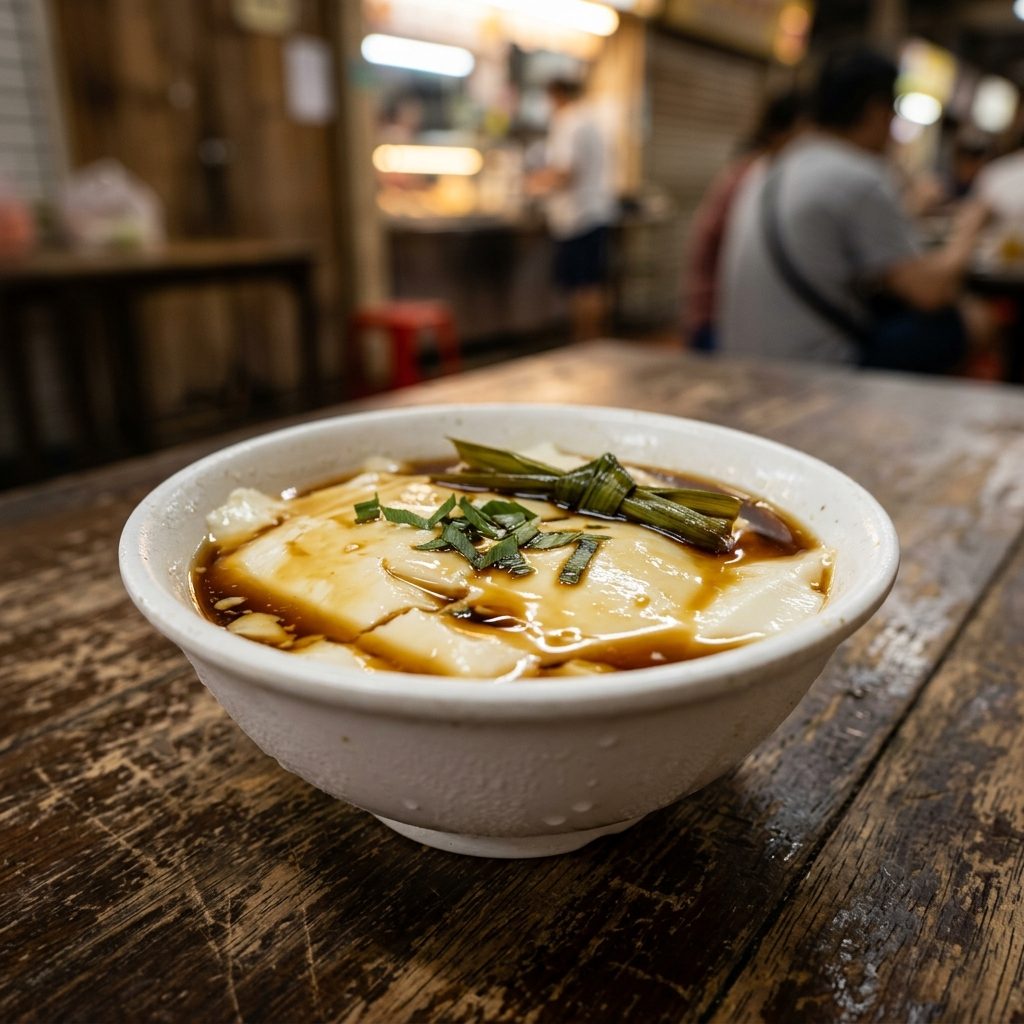
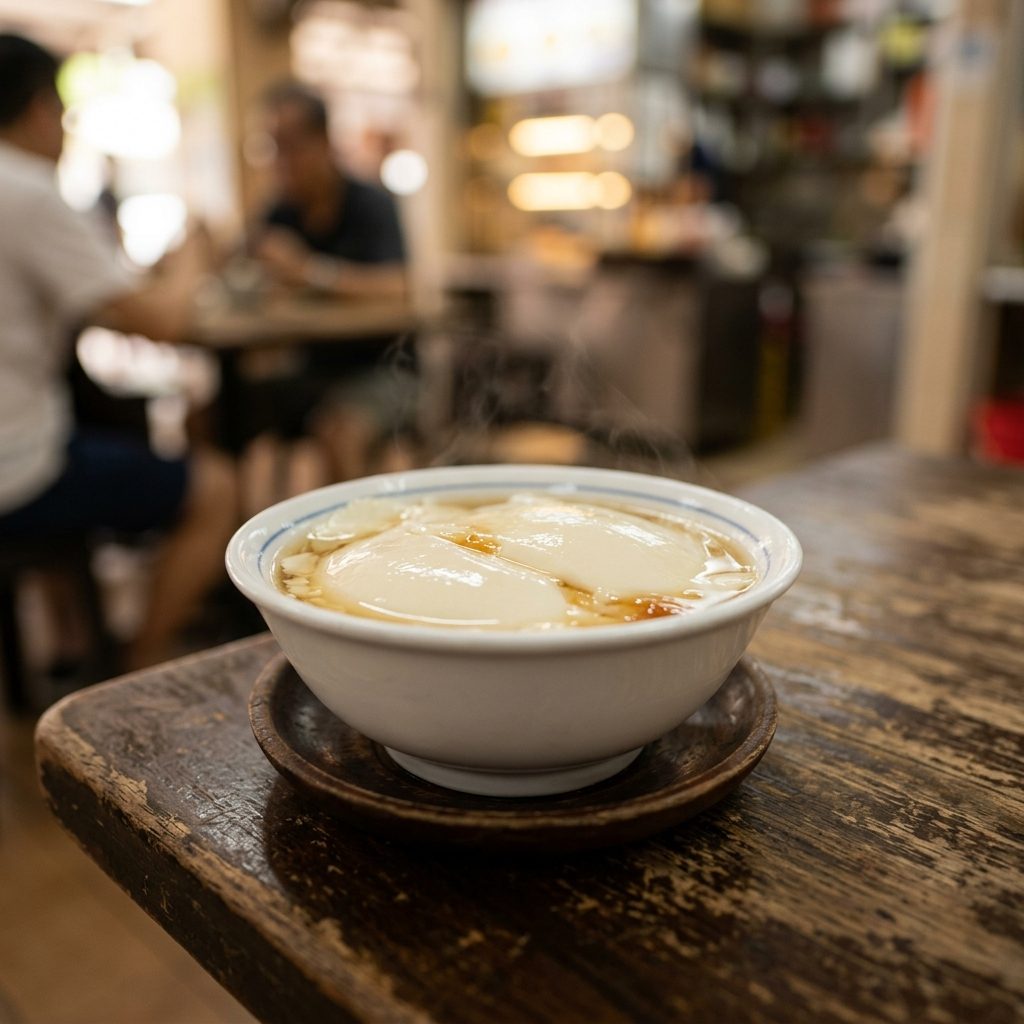
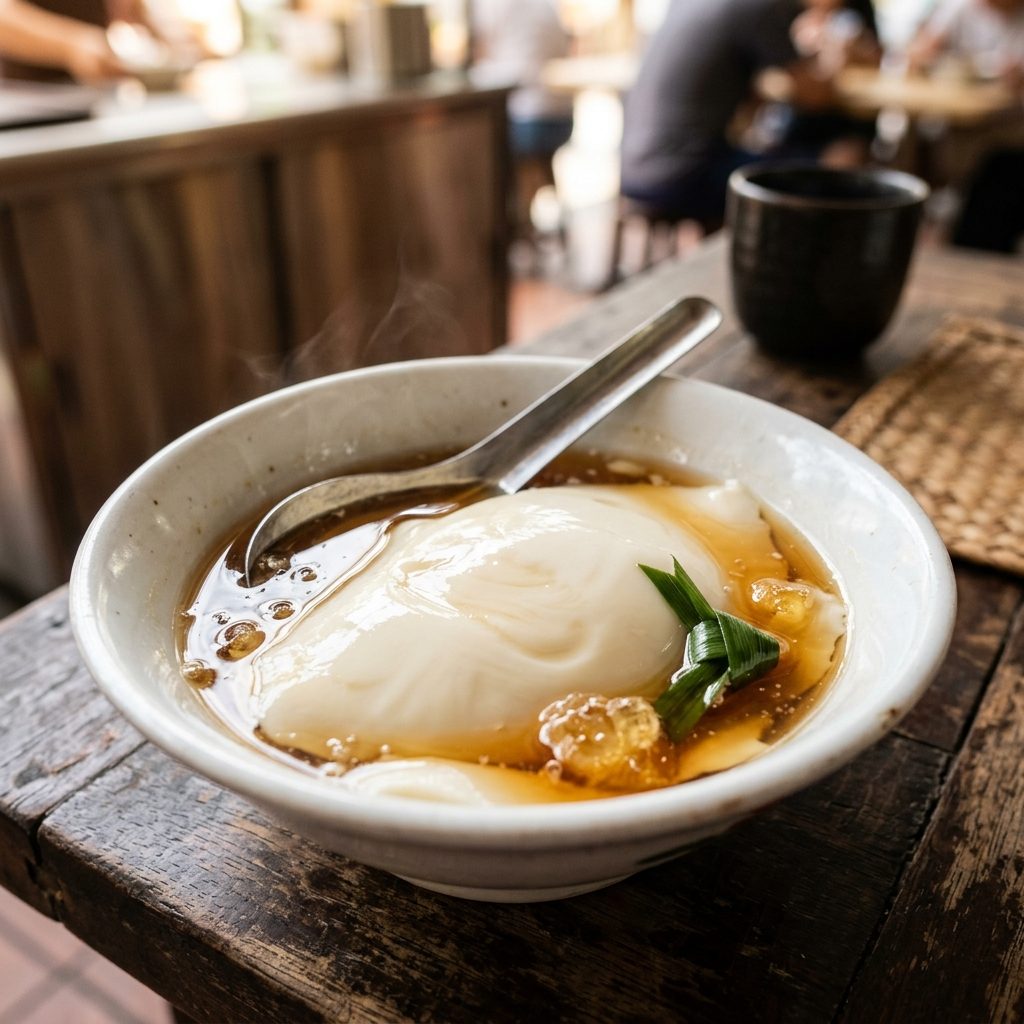
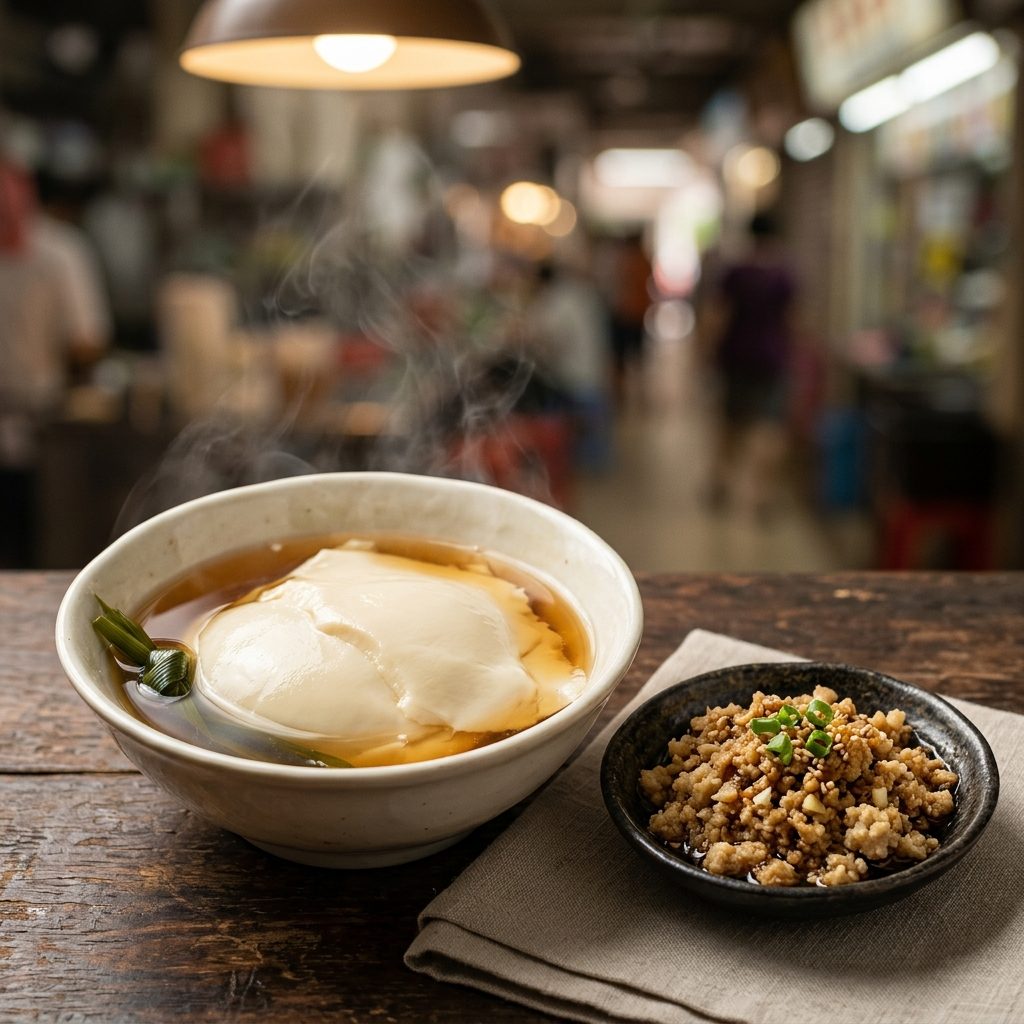
Serving. Once the Tau Huay is set, use a flat metal spoon to scoop thin, delicate layers into a bowl. Serve with a simple sugar syrup infused with pandan.
Notes
Ensure the pot used for setting the Tau Huay is completely grease-free, as fat prevents the gypsum from coagulating the proteins.
The 'flushing' technique from a height is crucial as it creates the necessary turbulence to mix the coagulant without stirring, which would break the curd.
Okara is extremely high in fiber; if it feels too dry during the stir-fry, add a splash of the fresh soya milk to create a creamier texture.
Always use food-grade gypsum (Calcium Sulfate) rather than GDL if you want the traditional Singapore hawker-style firm yet silken texture.
Questions
What is the meaning of Tau Huay?
Can I use gelatine instead of gypsum?
How long does the okara stay fresh?
Why did my beancurd fail to set?
Another version of this dish, written for a home kitchen outside Singapore: Okara Pancakes on Recipe.net.