Guide
How to Make Authentic Grass Jelly (Cincau) from Scratch
Grass jelly is a refreshing cornerstone of Singaporean hawker desserts, prized for its cooling properties. This guide teaches you how to extract the deep, herbal essence from dried Mesona chinensis using basic kitchen equipment to create a perfect, silky-smooth jelly.
Understanding the Immortal Grass
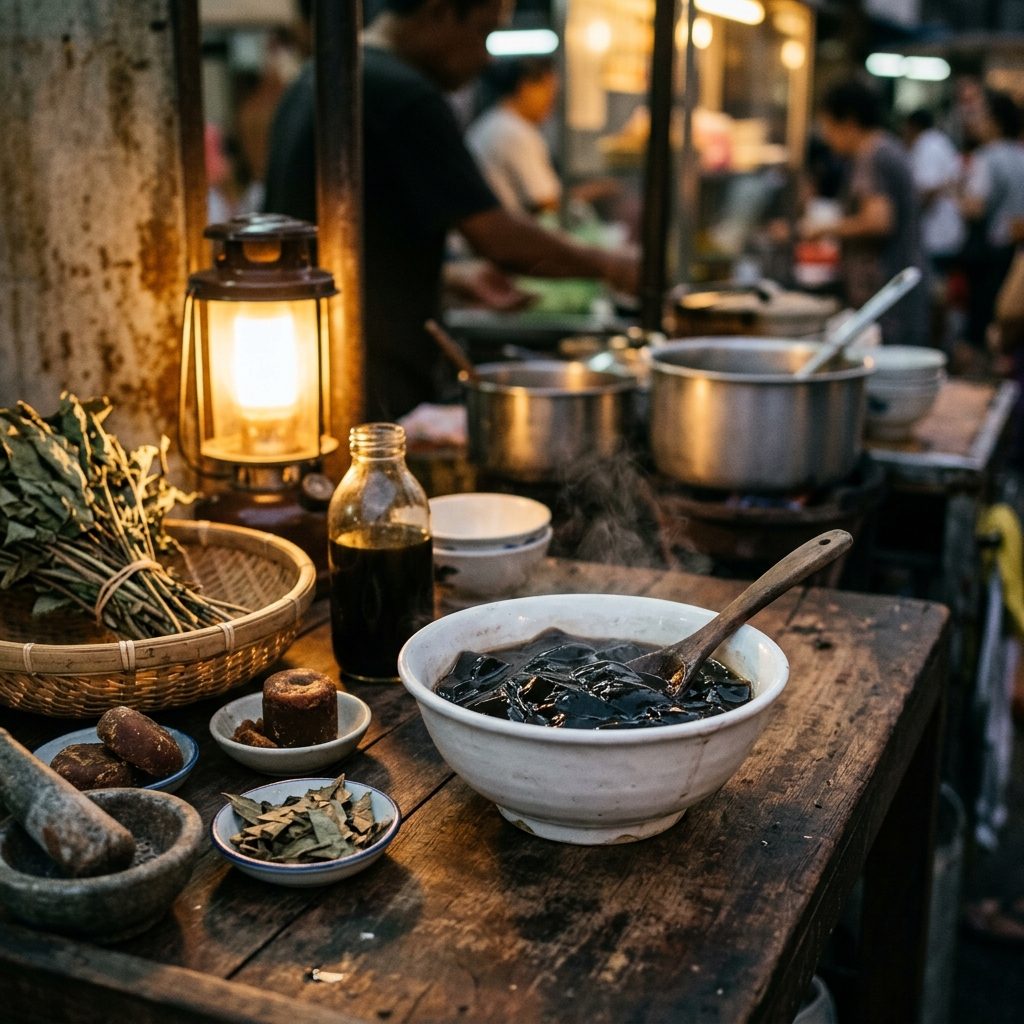
Grass jelly is known in Mandarin as Xiān Cǎo (仙草), which translates literally to 'Immortal Grass,' and in Hokkien as Cincau. It is derived from the dried stalks and leaves of the Platostoma palustre plant. Because the plant naturally contains a high amount of mucilage, it can be transformed into a gelatinous solid when boiled and combined with a thickening agent. Unlike commercial versions that rely on artificial extracts, homemade grass jelly has a complex, slightly bitter, and woody profile that is highly cooling in tropical heat.
Preparation and Soaking
To begin, you will need 50 grams of dried grass jelly stalks. These are often sold in compressed bundles at traditional Chinese medicinal halls or wet markets. Rinse the stalks thoroughly in cold water to remove sand and grit. Once cleaned, place the stalks in a large bowl and cover them with water to soak for exactly 1 hour. This rehydrates the plant material and begins the process of softening the woody fibers before extraction.
The Extraction Process (The Blender Method)
After soaking, discard the soaking water and place the softened stalks into a large pot with 2 liters of fresh water. While traditional methods involve hours of manual pounding, you can achieve superior extraction using a home blender. Bring the pot to a boil, simmer for 30 minutes, then carefully remove the stalks and place them in the blender with a small amount of the hot liquid. Pulse until the stalks are shredded into a coarse pulp. Return this pulp to the pot and simmer for another 1.5 to 2 hours. This step maximizes the release of the natural pectin-like substances within the plant.
Straining for a Silky Texture
Once the liquid has reduced slightly and feels noticeably slippery between your fingers, it is time to strain. Line a fine sieve with a piece of muslin or cheesecloth. Pour the liquid through the sieve into a clean pot. Use the back of a ladle to press the pulp firmly, extracting every drop of the dark concentrate. The resulting liquid should be deep black and opaque. If you see any remaining sediment, strain it a second time through a fresh cloth to ensure the final jelly is glass-smooth.
Adding the Coagulant
To transform the liquid into a solid jelly, you must use a setting agent. For a traditional hawker-style texture, use 40 grams of cornstarch or potato starch mixed with 100ml of cold water to form a slurry. Alternatively, for a firmer, 'bouncy' texture common in iced desserts, use 5 grams of agar-agar powder. Bring the strained liquid back to a gentle simmer and whisk in your chosen coagulant. Stir constantly for 3 to 5 minutes until the liquid thickens and becomes glossy. If using starch, the mixture should just reach a boil to fully activate the thickening power.
Setting and Serving
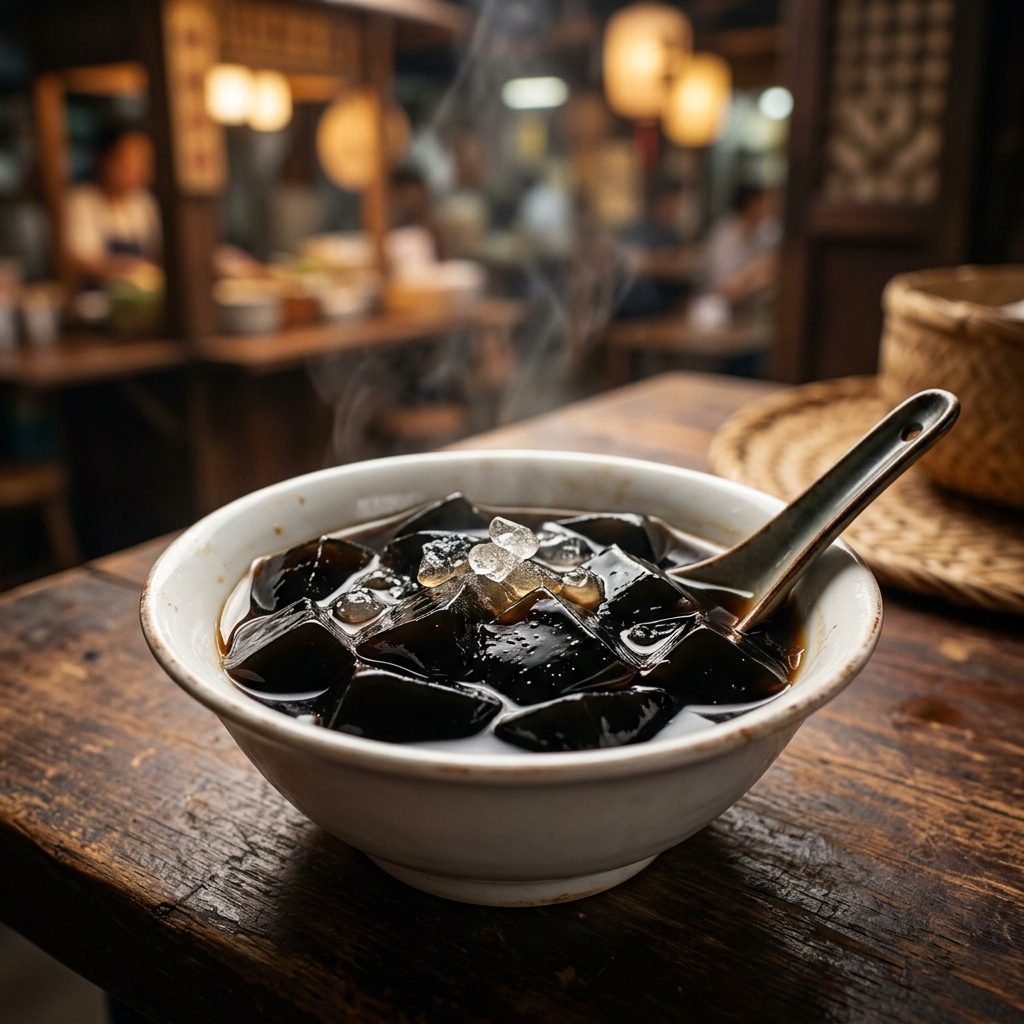
Pour the thickened liquid into a flat-bottomed glass or stainless steel container. Skim any bubbles off the surface with a spoon for a professional finish. Allow it to cool at room temperature for 1 hour, then transfer it to the refrigerator for at least 4 hours. Once set, the Cincau can be cut into cubes for 'Michael Jackson' (soya bean milk with grass jelly) or grated for use in Ice Kachang or Cendol.