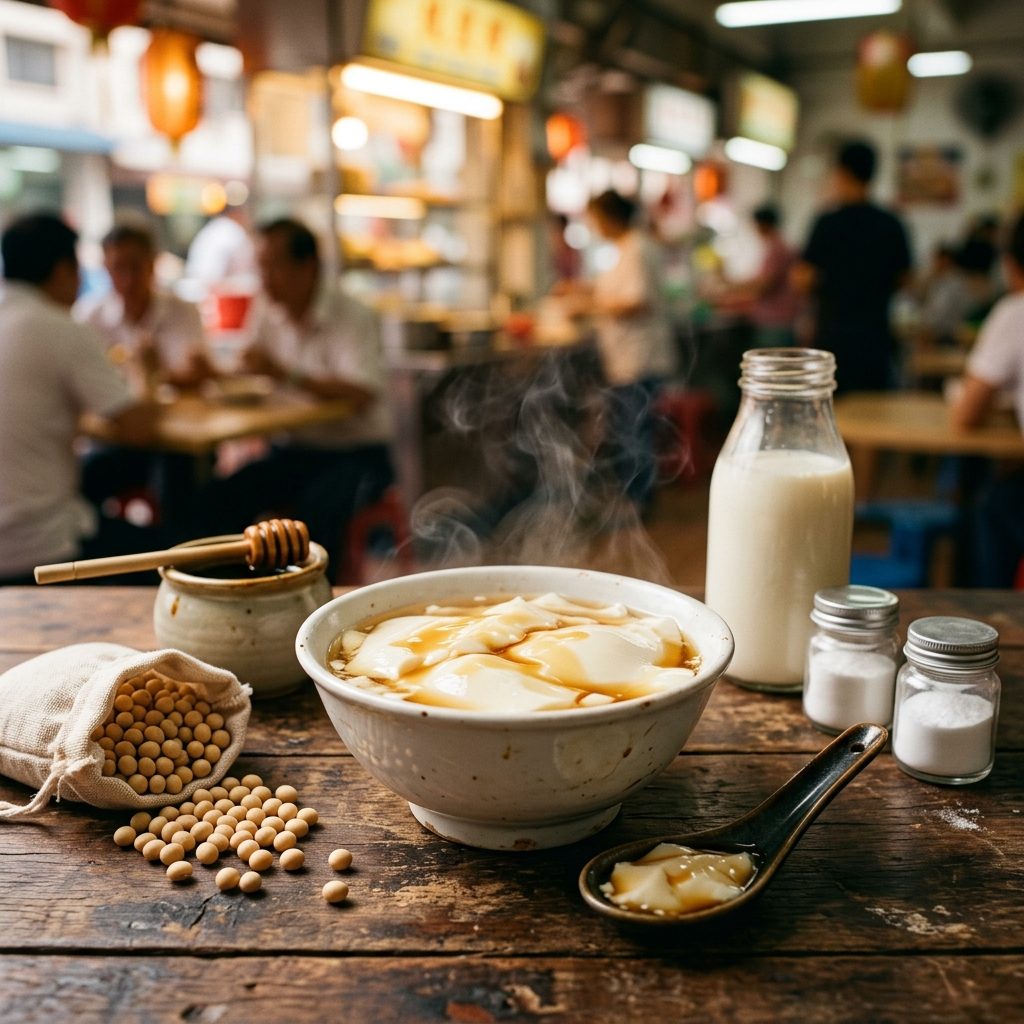
Traditional Snacks
Authentic Butterfly Pastry Twists and Silken Tau Huay Recipe
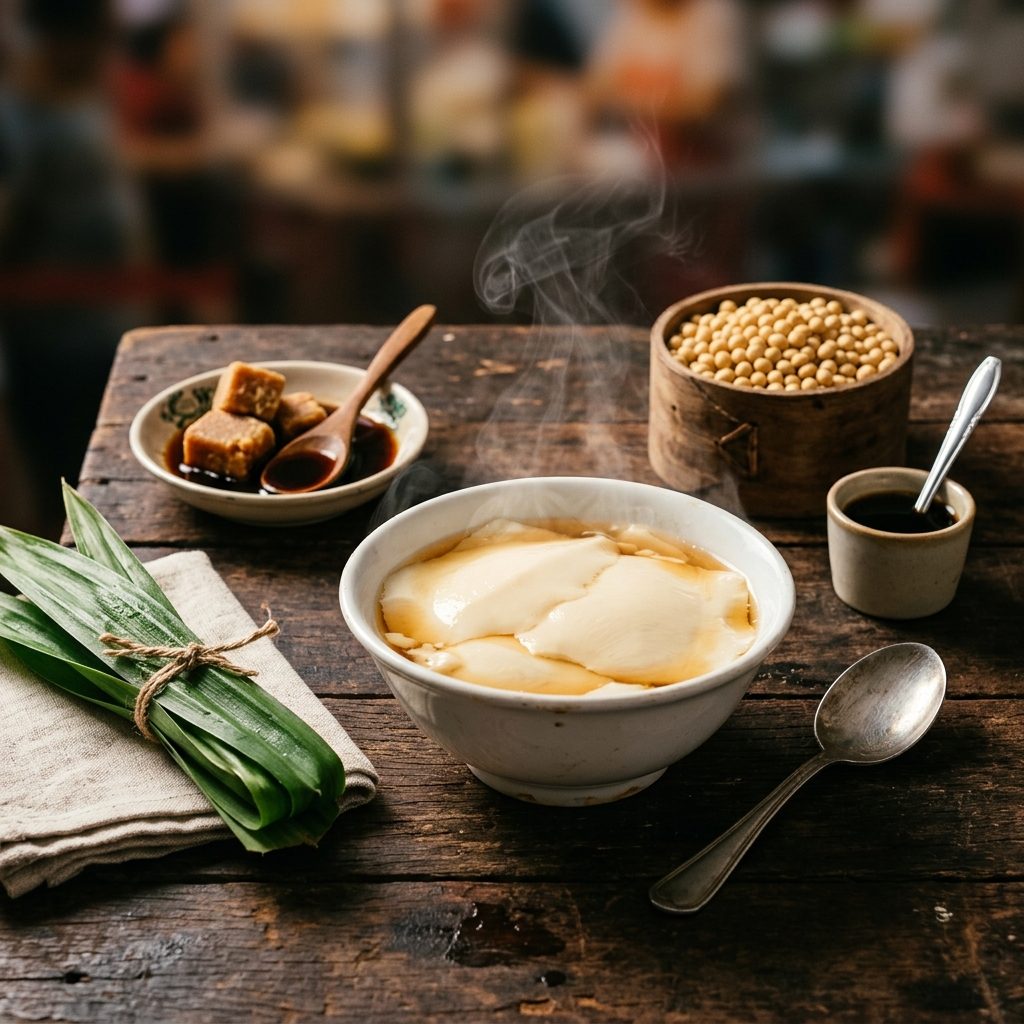
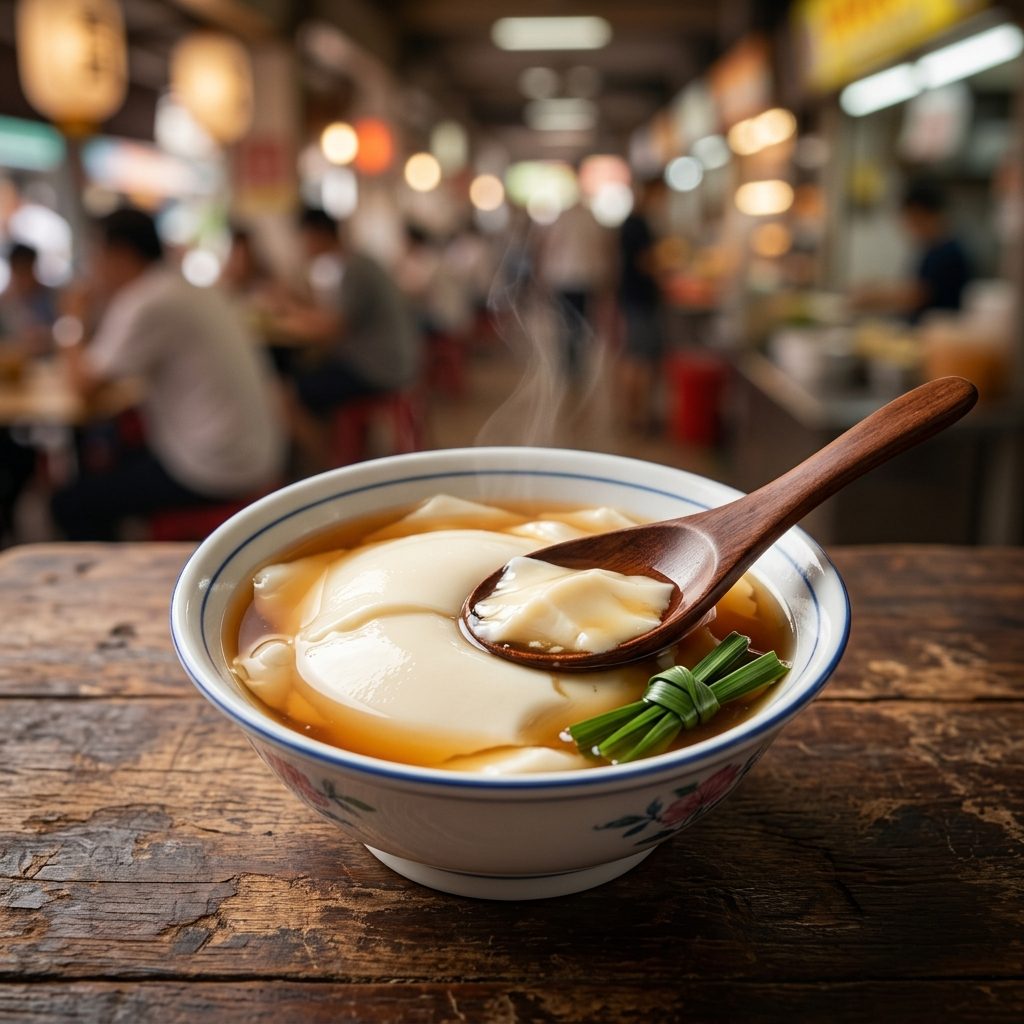
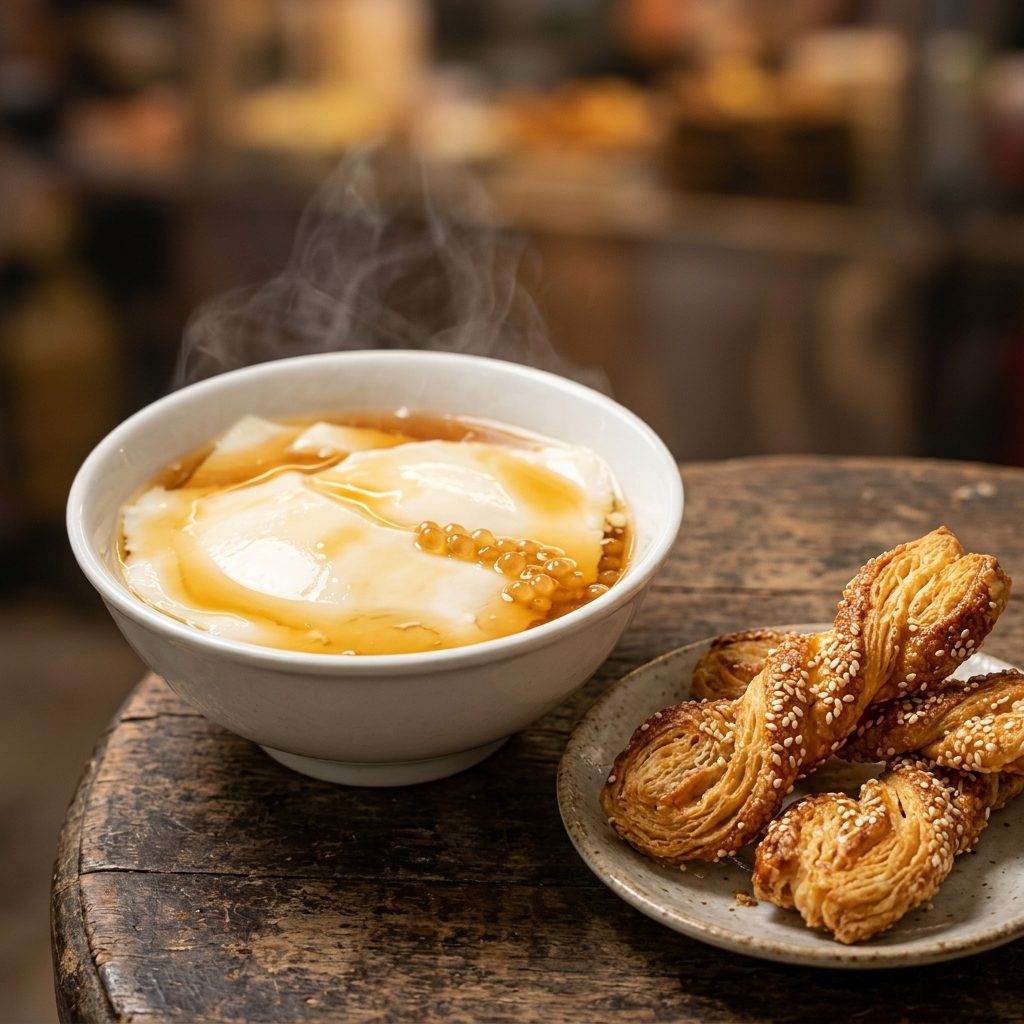
A quintessential Singaporean breakfast featuring golden, sesame-crusted fried dough twists paired with velvety smooth soya beancurd. This recipe masters the delicate balance of 'Hu Die Shuang' (Butterfly Twists) and the traditional 'Tau Huay' (Bean Flower) setting technique.
- Prep
- 480 min
- Cook
- 45 min
- Serves
- 6
- Level
- Intermediate
- Per serving
- 420 kcal
Method
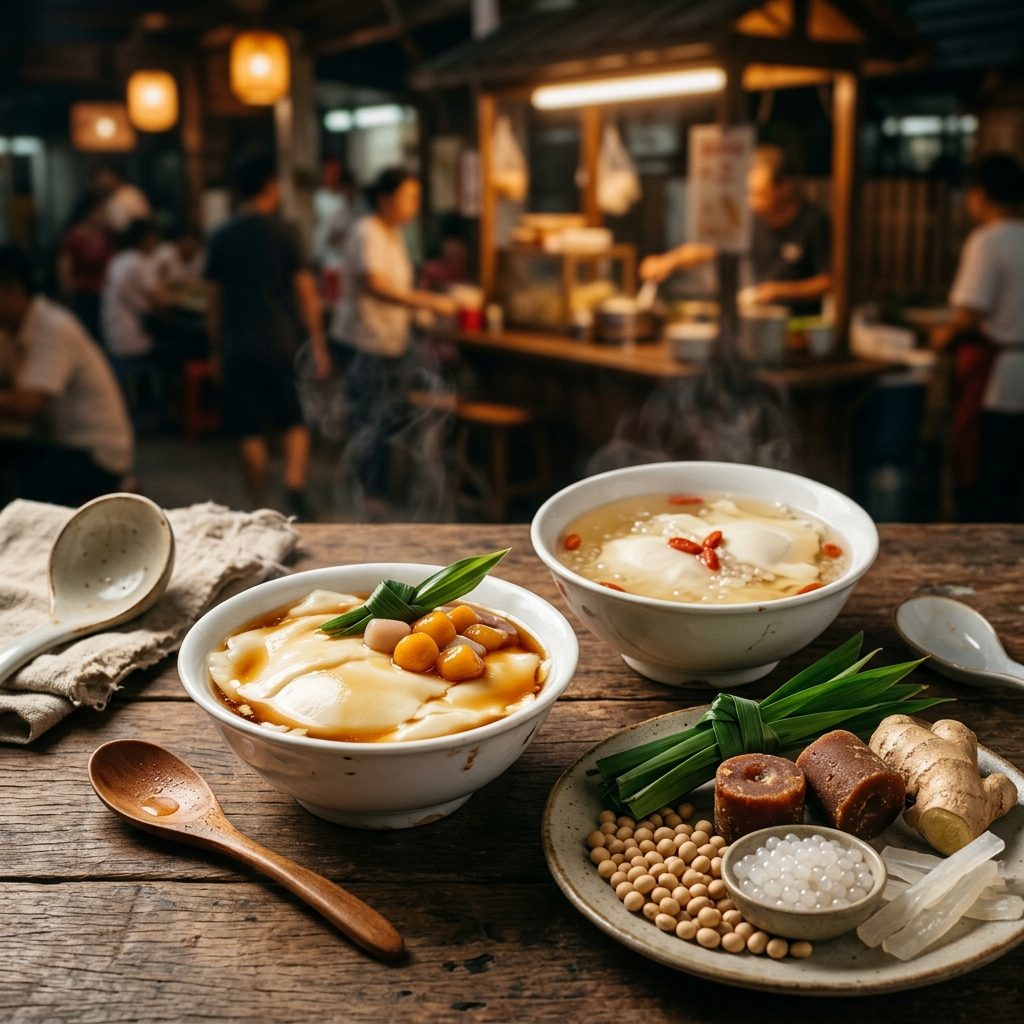
Soak the soya beans in plenty of water for 8 hours (or overnight) until they double in size and the skins are easy to remove. Drain and rinse thoroughly.
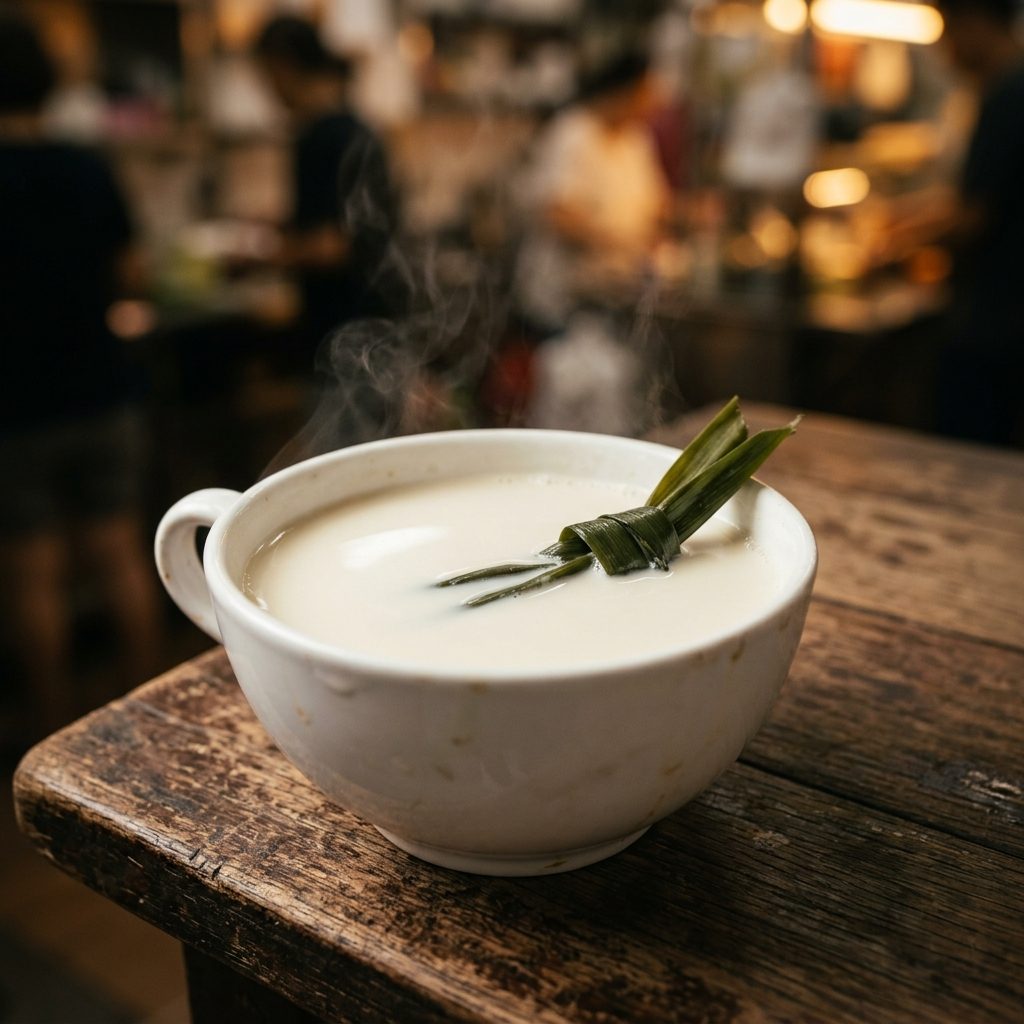
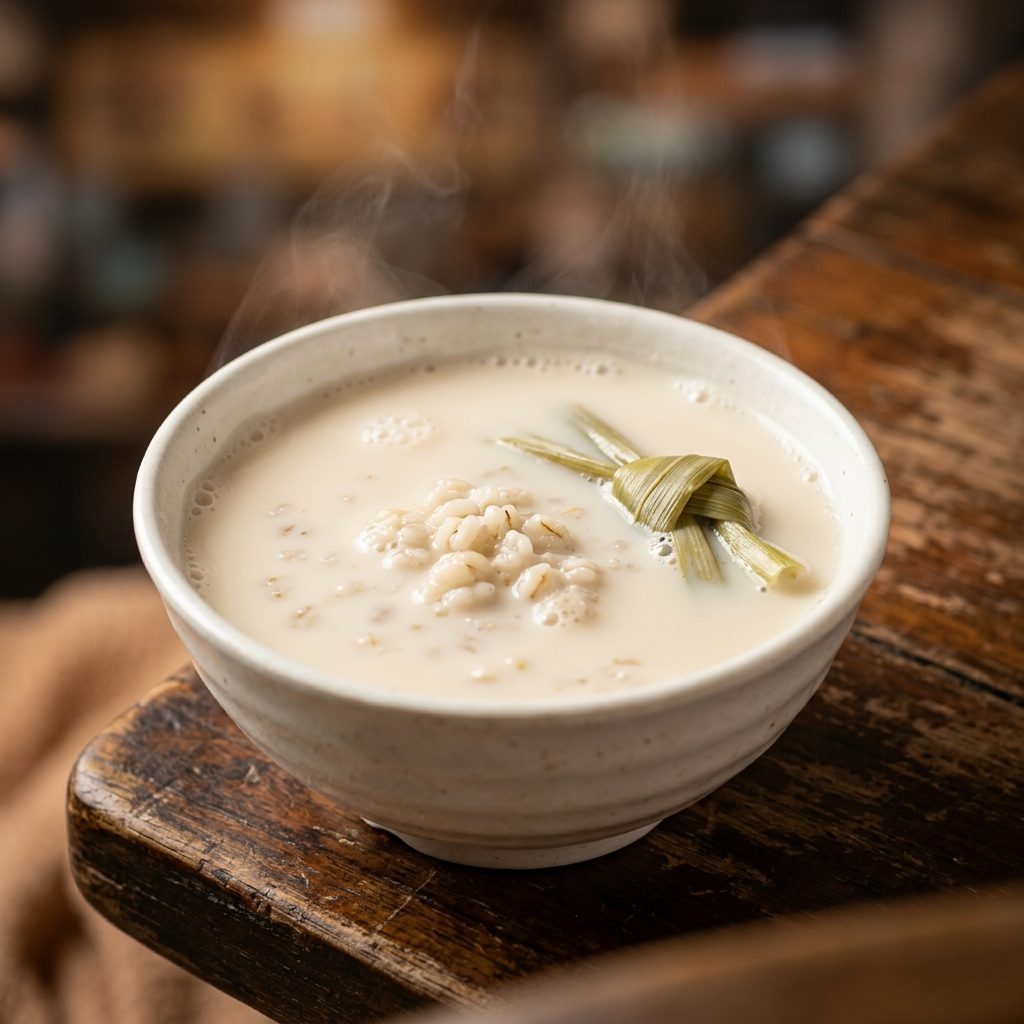
Place beans in a blender with the 2.1L of water (working in batches if necessary). Blend on high until completely smooth and milky.
Pour the mixture through a fine sieve lined with a muslin or cheesecloth into a large pot. Squeeze the cloth tightly to extract every drop of milk; discard the pulp (okara).
Bring the soya milk to a gentle boil over medium heat, stirring constantly to prevent scorching. Simmer for 15 minutes, skimming off any foam. Remove from heat and let it cool slightly to approximately 85°C to 90°C.
In a clean, deep ceramic or plastic pot, whisk the gypsum powder, cornstarch, and 120ml cold water into a slurry. Give it a final stir just before the next step as it settles quickly.
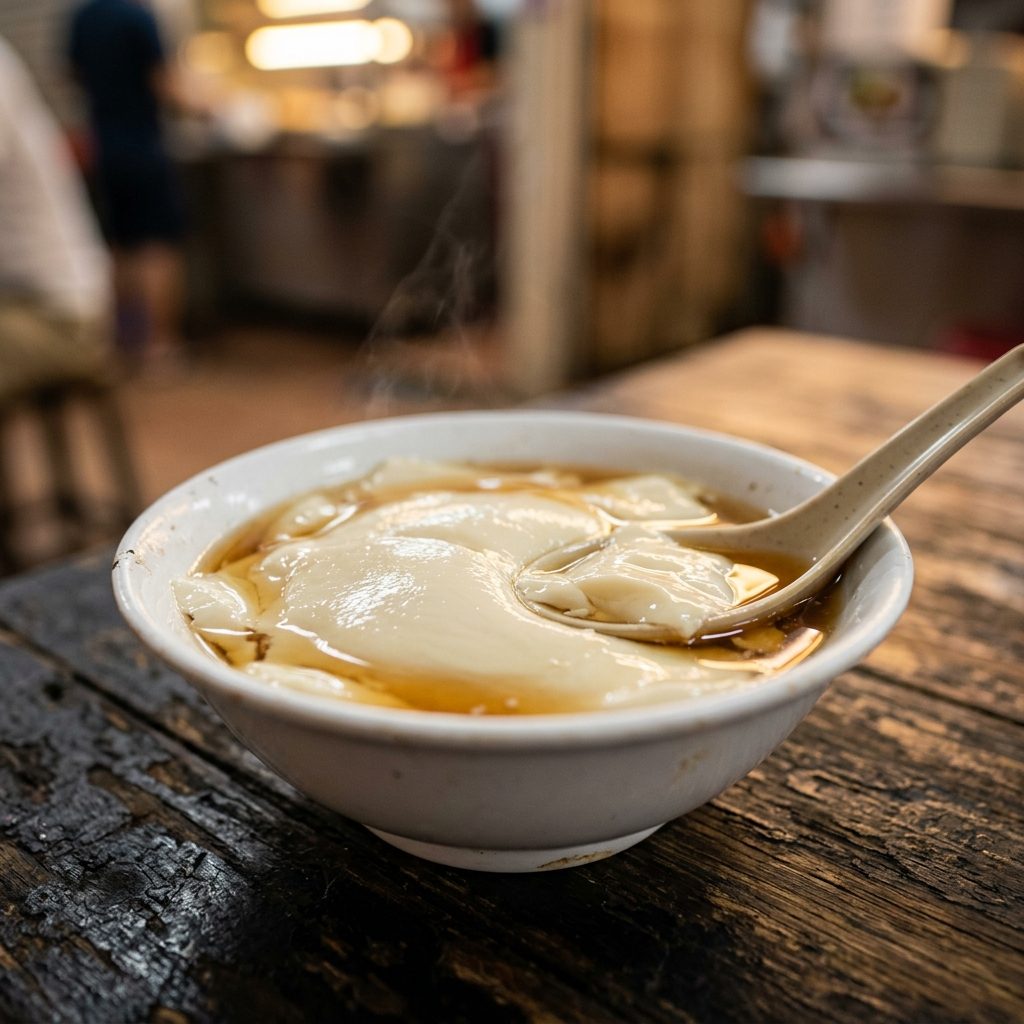
Hold the pot of hot soya milk about 30cm above the coagulant pot and pour it in with a steady, swift motion (the 'impact' method). Do not stir. Immediately cover the pot with a clean cloth and a lid. Let it sit undisturbed for 30-40 minutes to set into Tau Huay.
To make the Butterfly Twists, combine flour, yeast, 2 tbsp sugar, and 150ml water into a dough. Knead until smooth and let rise for 1 hour. Roll out into 1cm thick rectangles, press two pieces together with a dab of water in the center, twist, and coat with sesame seeds.
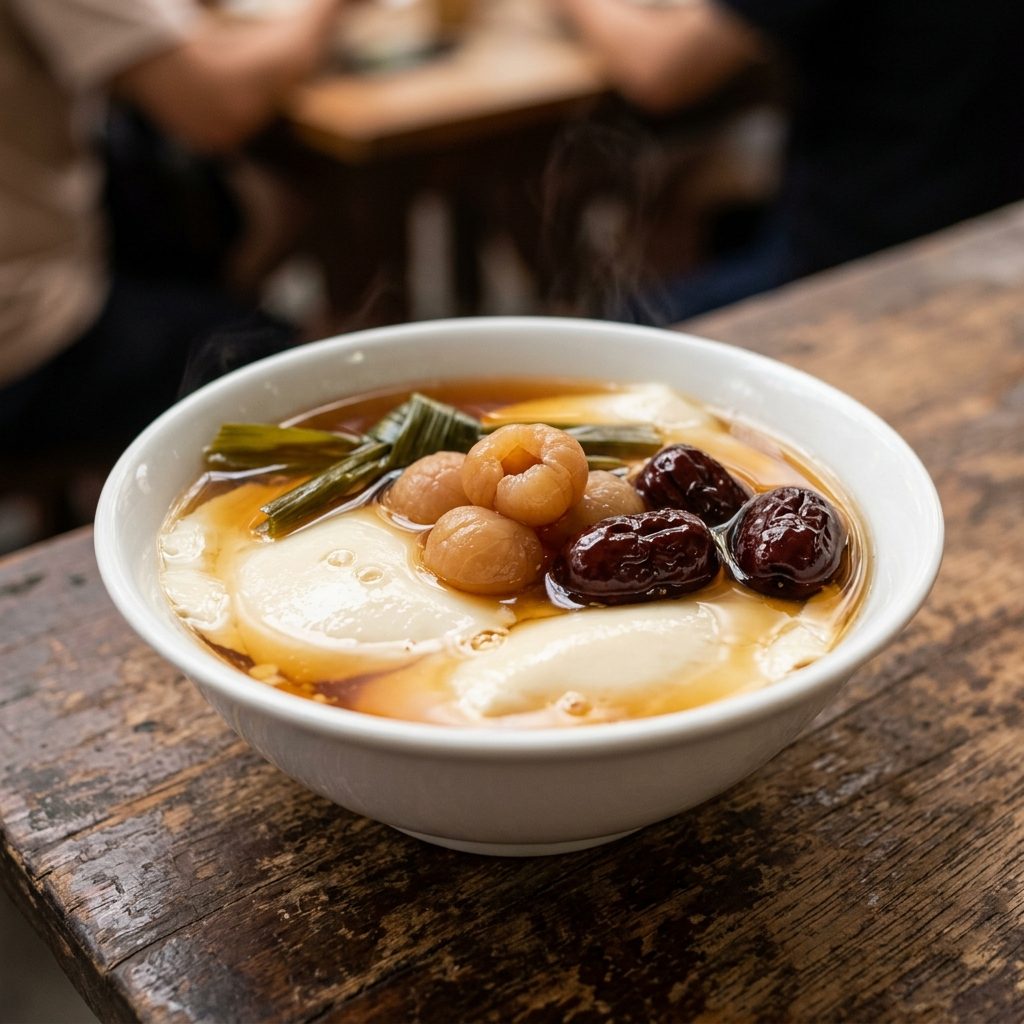
Deep fry the twists in 170°C oil until golden and puffed. Serve the warm, crispy twists alongside the silken beancurd drizzled with simple sugar syrup.
Notes
The 1:7 ratio of beans to water ensures the beancurd is rich enough to set while remaining silken.
The height of the pour is crucial; the force of the milk hitting the slurry creates a natural mix without the need for spoons which can break the delicate protein bonds.
Never stir the beancurd once it is poured, or it will become grainy and watery.
Ensure your gypsum is 'Food Grade' or 'USP Grade' to ensure it is safe for consumption and has the correct chemical purity for setting.
Questions
What does Hu Die Shuang mean?
Why is my beancurd too soft or watery?
Can I substitute gypsum with gelatin?
How do I prevent the soya milk from burning?
Another version of this dish, written for a home kitchen outside Singapore: Sugared Butterfly Pastry Twists on Recipe.net.