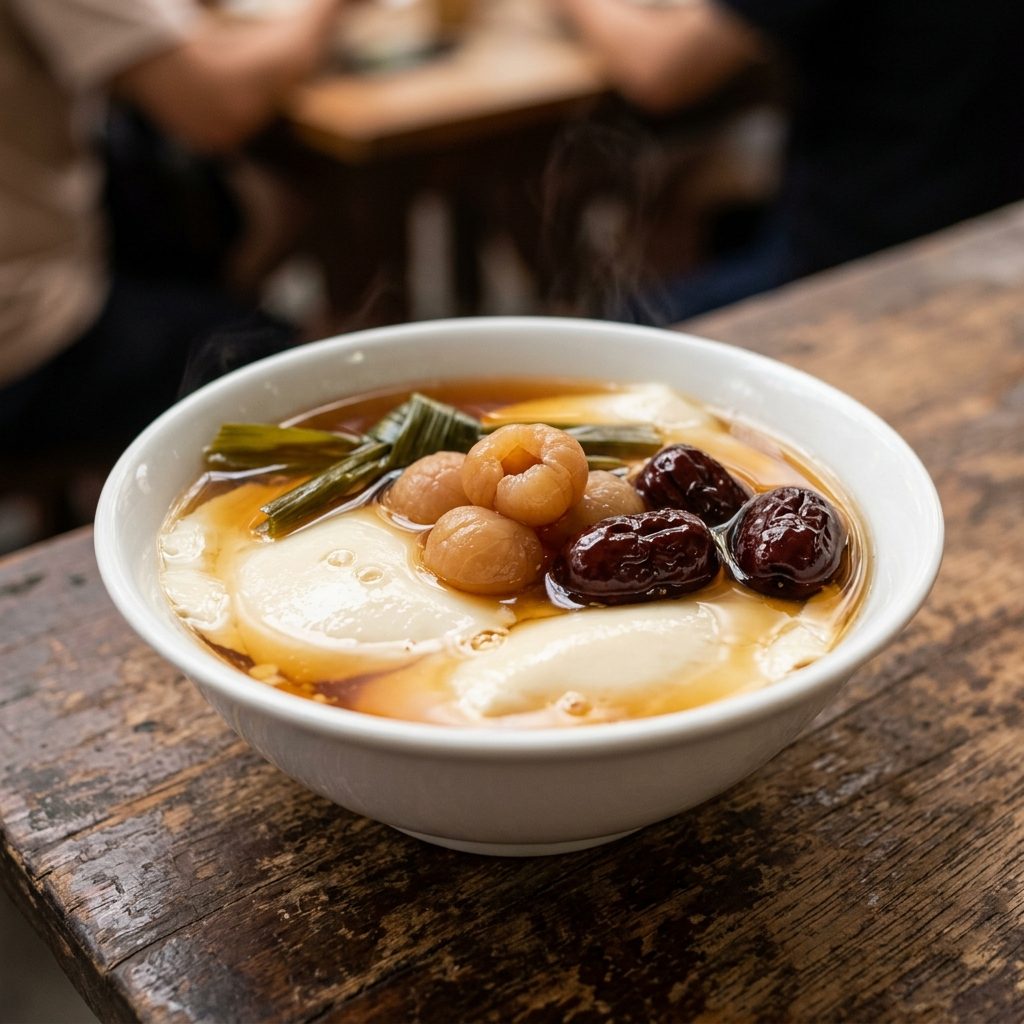
Beancurd Desserts
Authentic Traditional Tau Huay (Soya Beancurd) Recipe
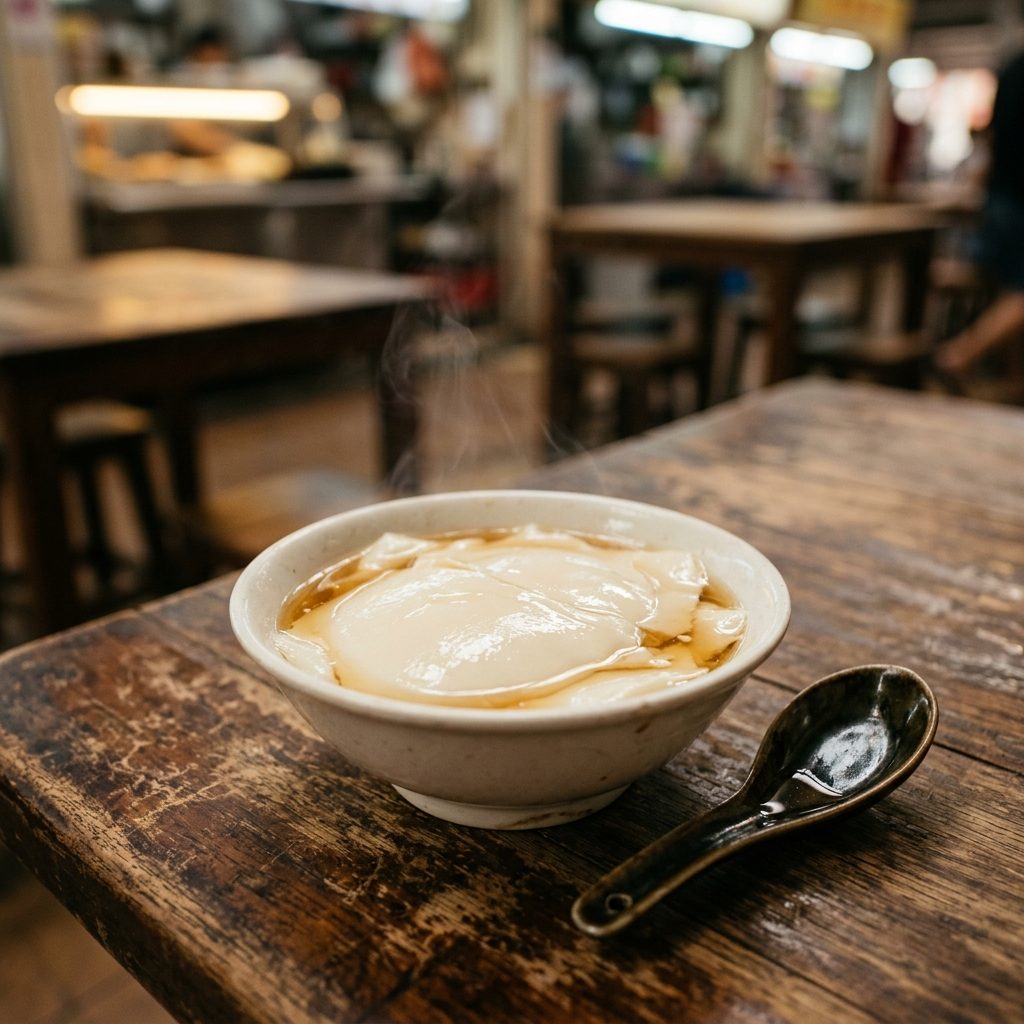
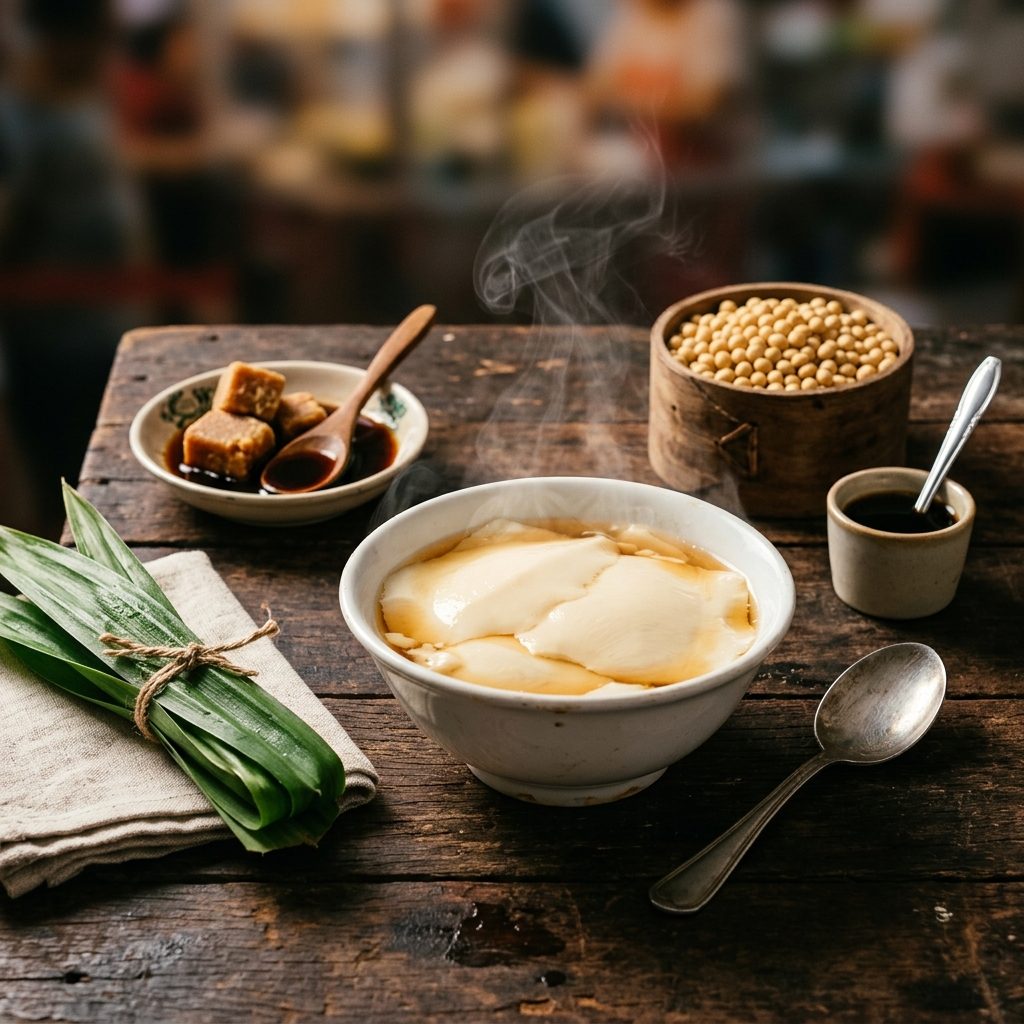
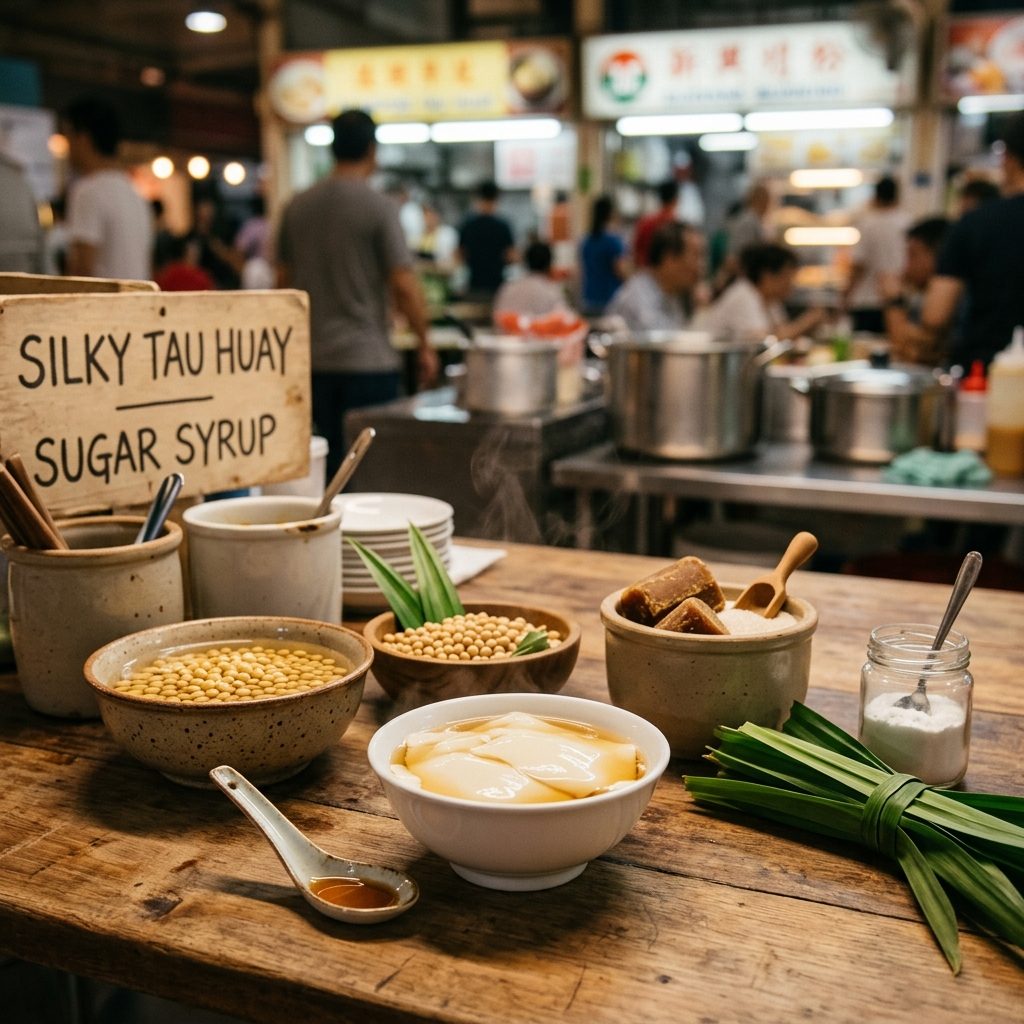
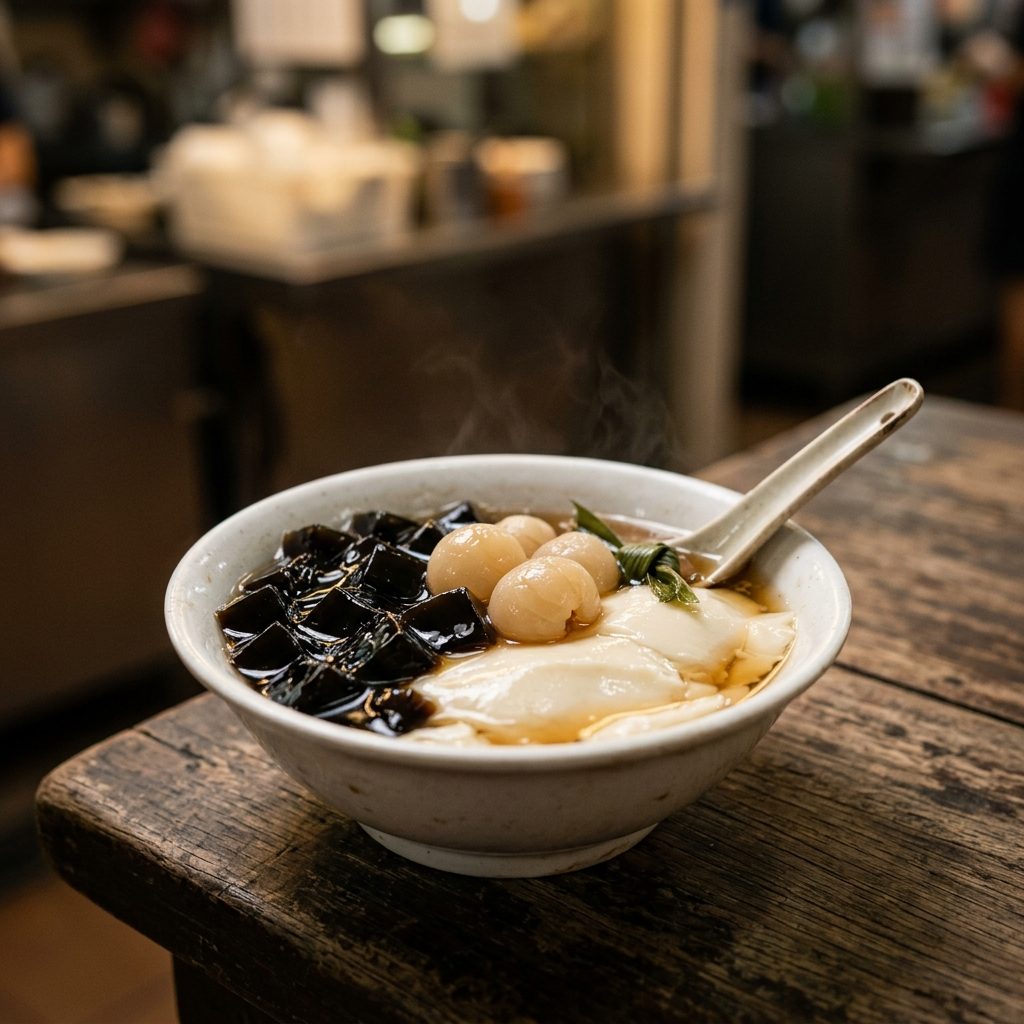
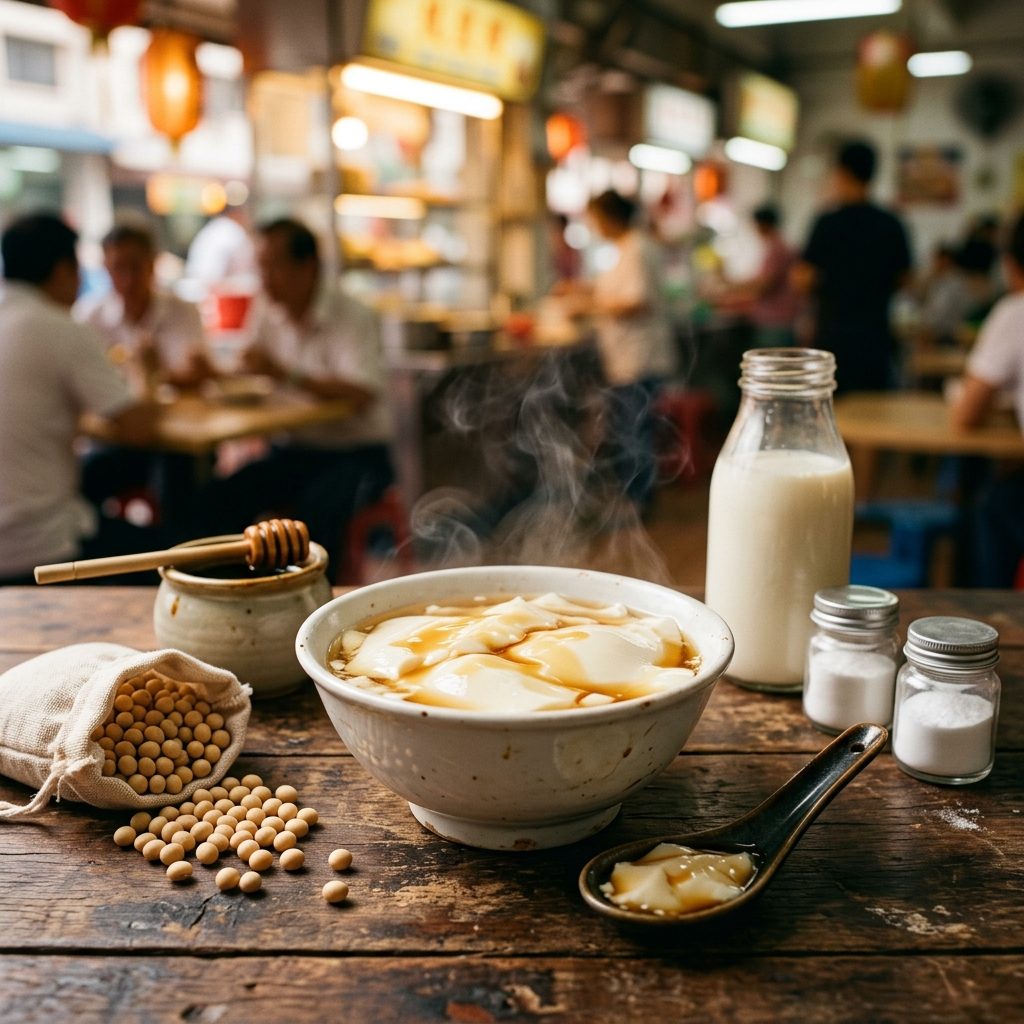
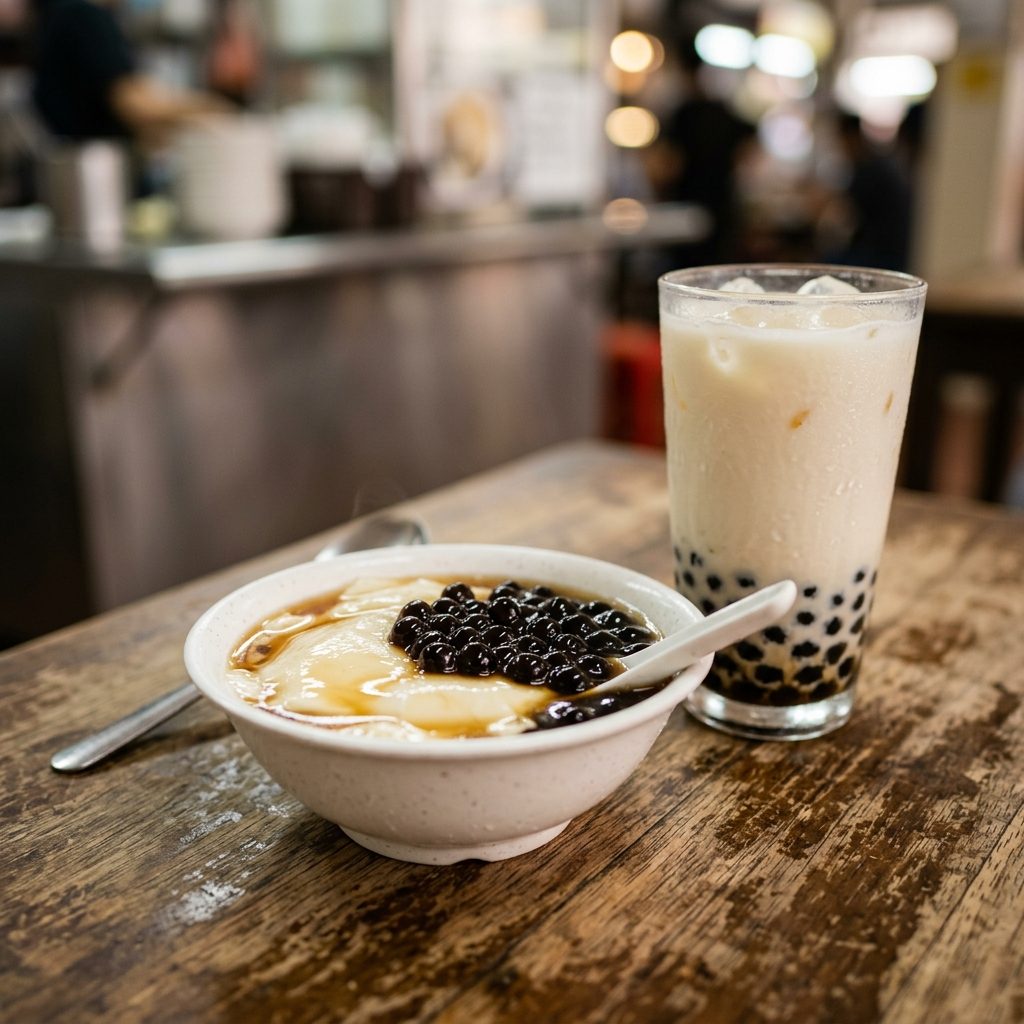
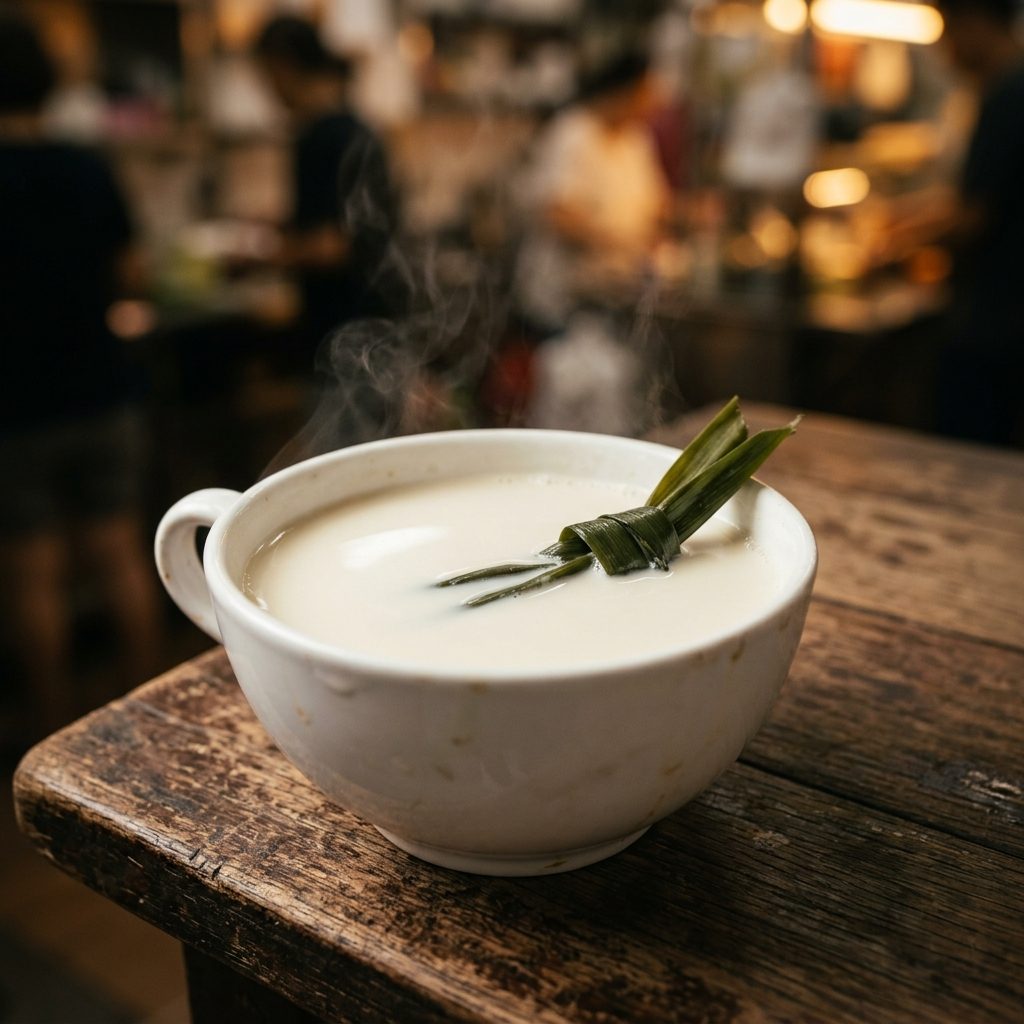
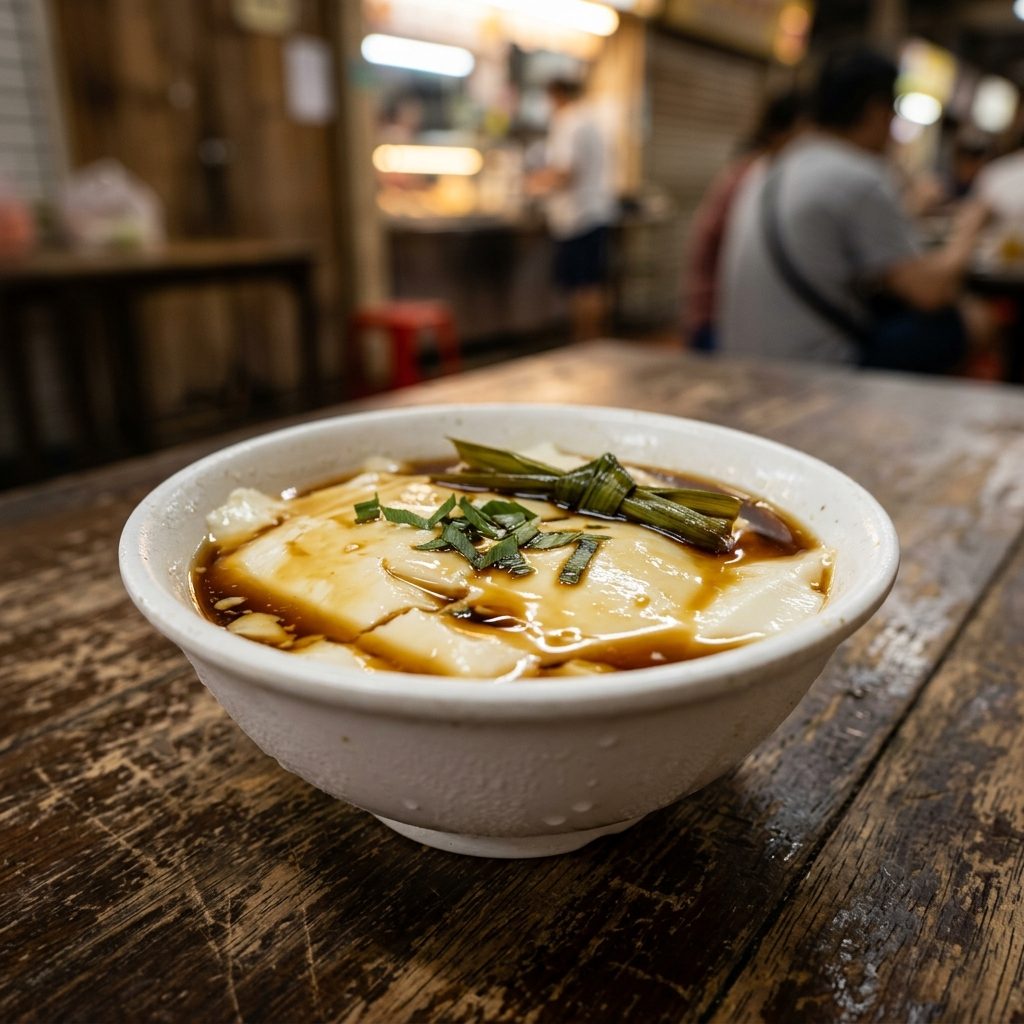
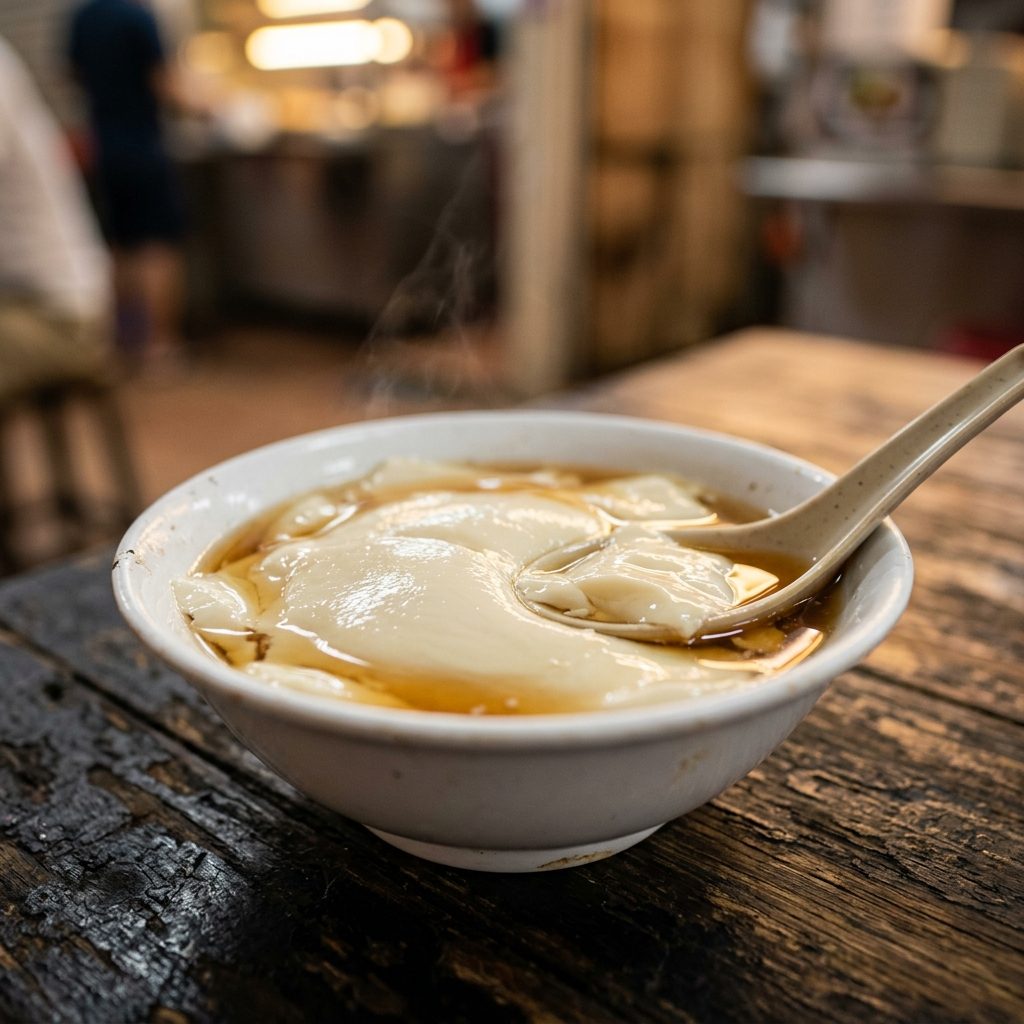
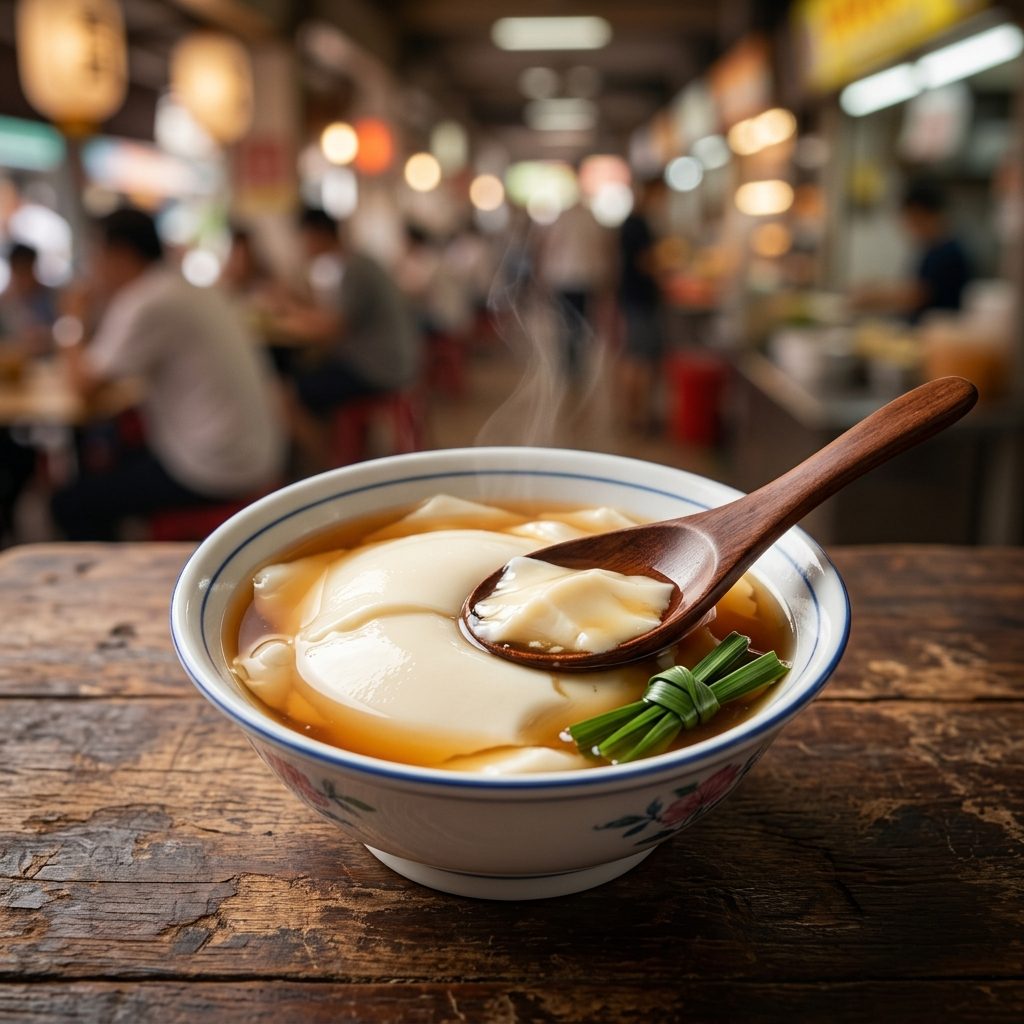
Tau Huay (豆花), meaning 'Bean Flower' in Hokkien, is a quintessential Singaporean dessert celebrated for its incredibly soft, velvet-like texture. This recipe ensures a perfect set using a precise ratio of soybeans to water, complemented by a fragrant, hand-made pandan sugar syrup.
- Prep
- 480 min
- Cook
- 40 min
- Serves
- 4
- Level
- Medium
- Per serving
- 515 kcal
Method
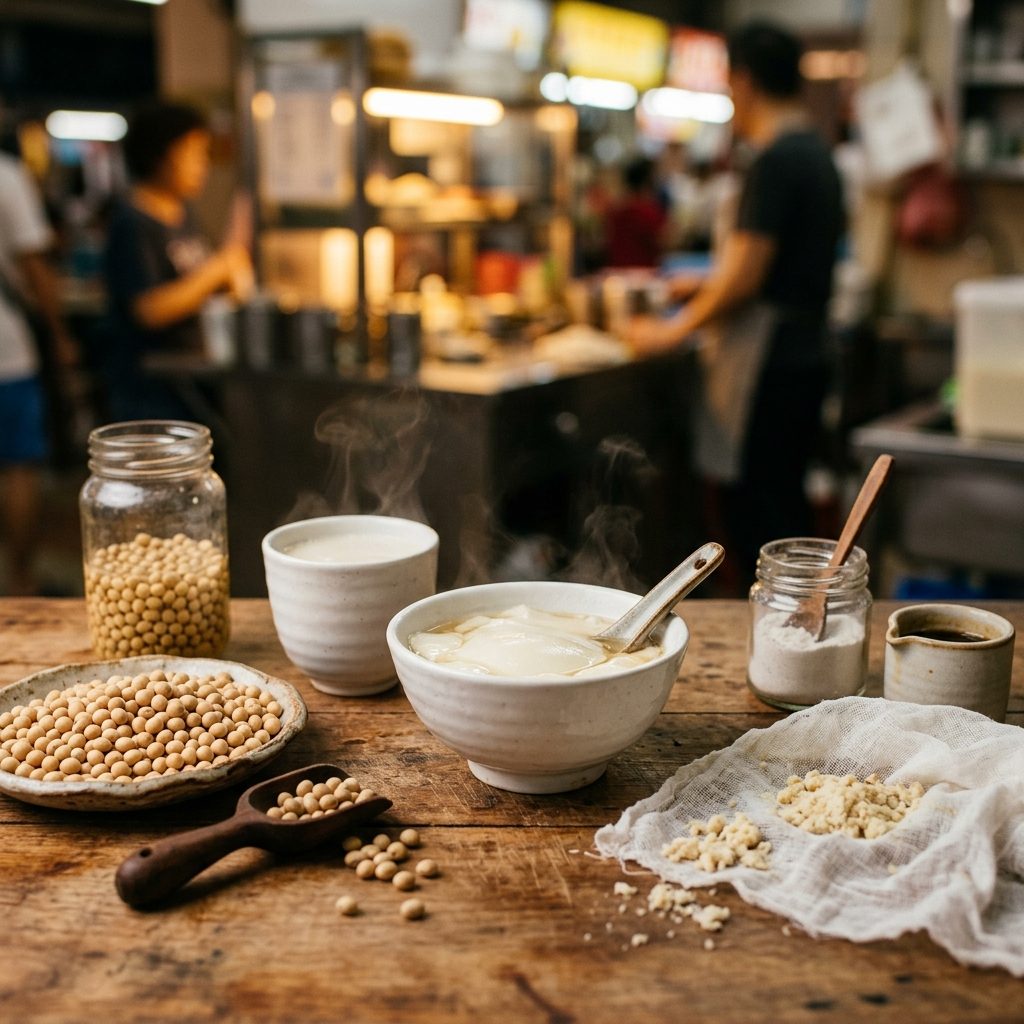
Rinse the dried soybeans thoroughly under cold water. Soak them in a large bowl with at least 3 times their volume of water for 6 to 8 hours (overnight is best); the beans should double in size and the skins should slip off easily.
Drain the soaked beans and discard the soaking water. Place half the beans in a high-speed blender with 1 liter of filtered water and blend until completely smooth. Repeat with the second half of the beans and the remaining 1 liter of water.
Place a fine sieve lined with a muslin cloth or a nut milk bag over a large heavy-bottomed pot. Pour the blended soy mixture through the cloth. Squeeze the bag forcefully to extract every drop of soy milk, leaving only the dry pulp (okara) behind.
Heat the soy milk over medium-low heat. Stir constantly to prevent the bottom from scorching. Once it reaches a boil, lower the heat and simmer for 10 minutes, skimming off any foam or 'skin' that forms on the surface. Turn off the heat.
While the milk cools slightly (you want it at approximately 85-90°C), prepare the coagulant. In a deep, clean, heat-proof pot or ceramic container, whisk together the GDL (or gypsum), cornstarch, and 3 tablespoons of cool water until a smooth slurry forms. Swirl the slurry to ensure the minerals are suspended just before pouring.
Hold the pot of hot soy milk about 12 inches above the pot containing the slurry. In one swift, continuous motion, pour the milk into the slurry. The force of the pour should naturally mix the ingredients—do not stir after pouring.
Immediately cover the pot with a clean kitchen towel (to catch condensation) and then a lid. Let it sit undisturbed for at least 30 to 45 minutes until the beancurd is fully set.
While the beancurd sets, make the syrup by boiling the 250ml water, 200g sugar, and pandan leaves in a small saucepan until the sugar dissolves and the syrup is fragrant. Let it cool.
Use a wide, flat metal ladle to gently shave thin layers of the warm beancurd into bowls. Drizzle with pandan syrup and serve warm.
Notes
The 'high pour' is essential; it creates enough turbulence to mix the coagulant without the need for stirring, which would break the delicate protein bonds.
Ensure your pots are completely free of oil or grease, as any residue will prevent the soy protein from coagulating properly.
If using food-grade gypsum instead of GDL, the texture will be slightly firmer; GDL provides a more jelly-like silkiness preferred in modern hawker stalls.
Always use a kitchen towel under the lid to prevent water droplets from falling onto the surface of the beancurd, which creates unsightly pits.
Questions
Can I use store-bought soy milk?
What is the difference between GDL and Gypsum?
Why is my Tau Huay watery or not setting?
How long does it stay fresh?
Another version of this dish, written for a home kitchen outside Singapore: Silken Tofu Pudding (Douhua) on Recipe.net.