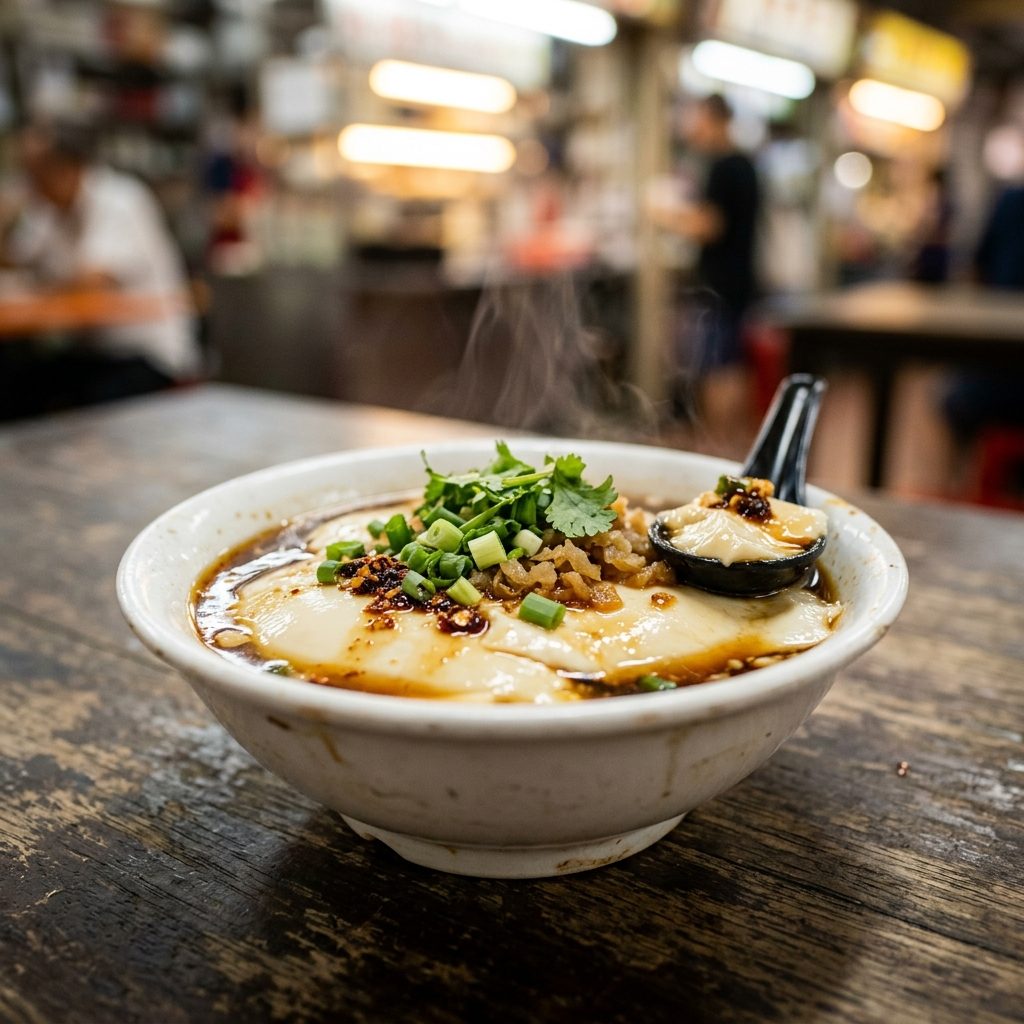
Traditional Snacks
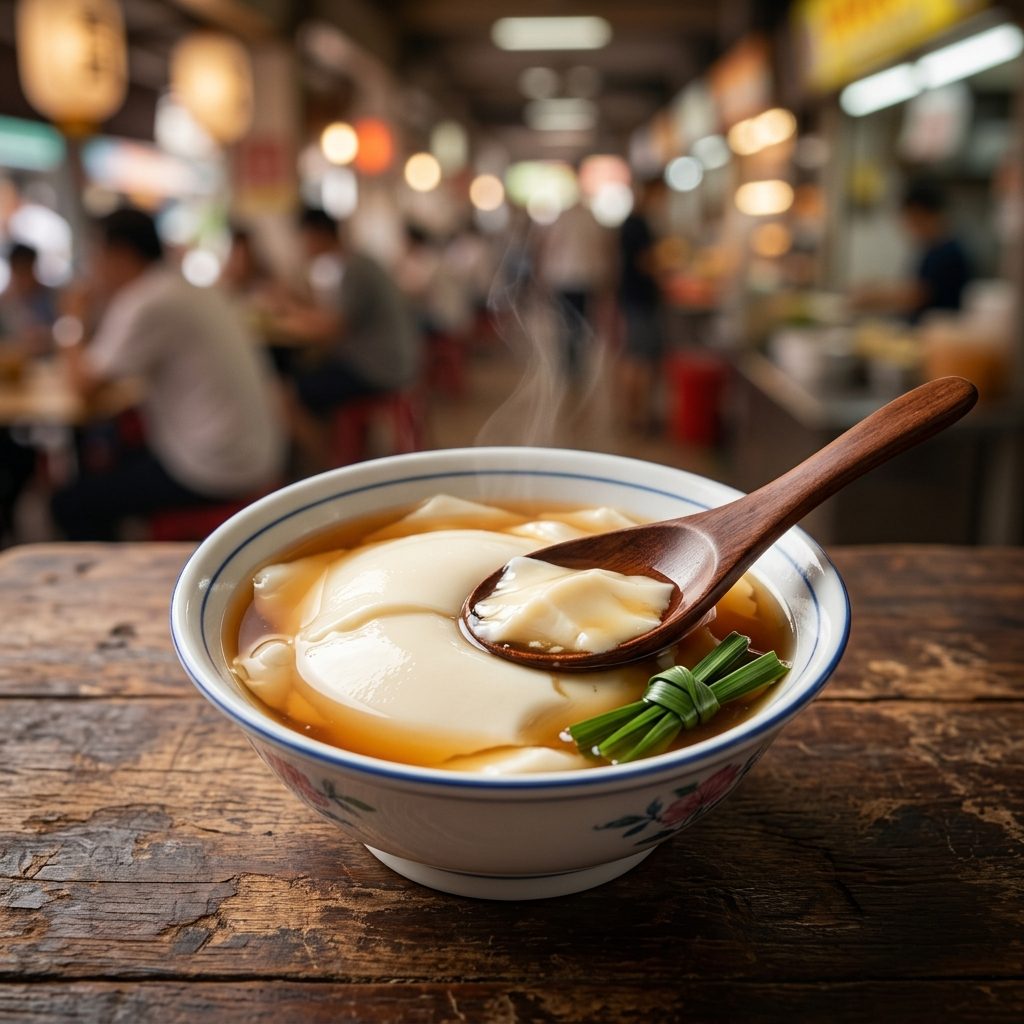
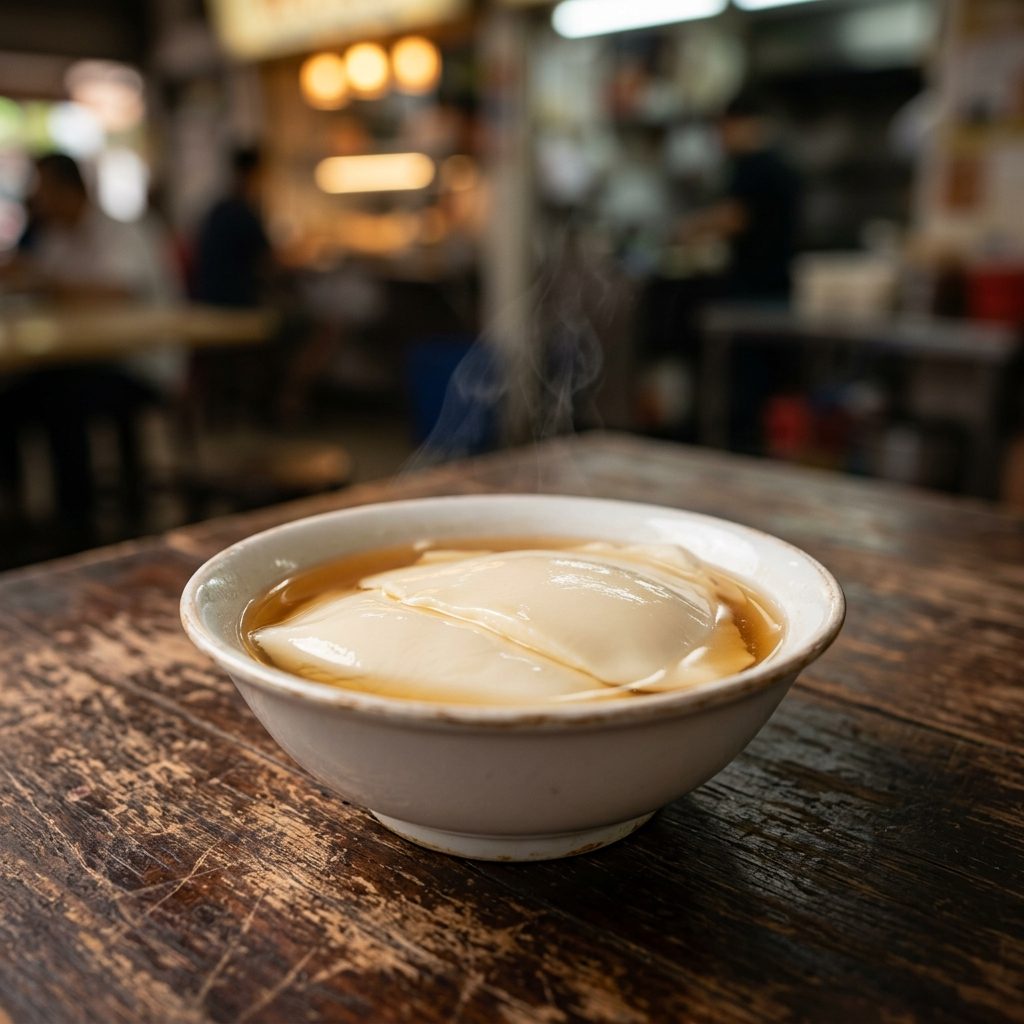
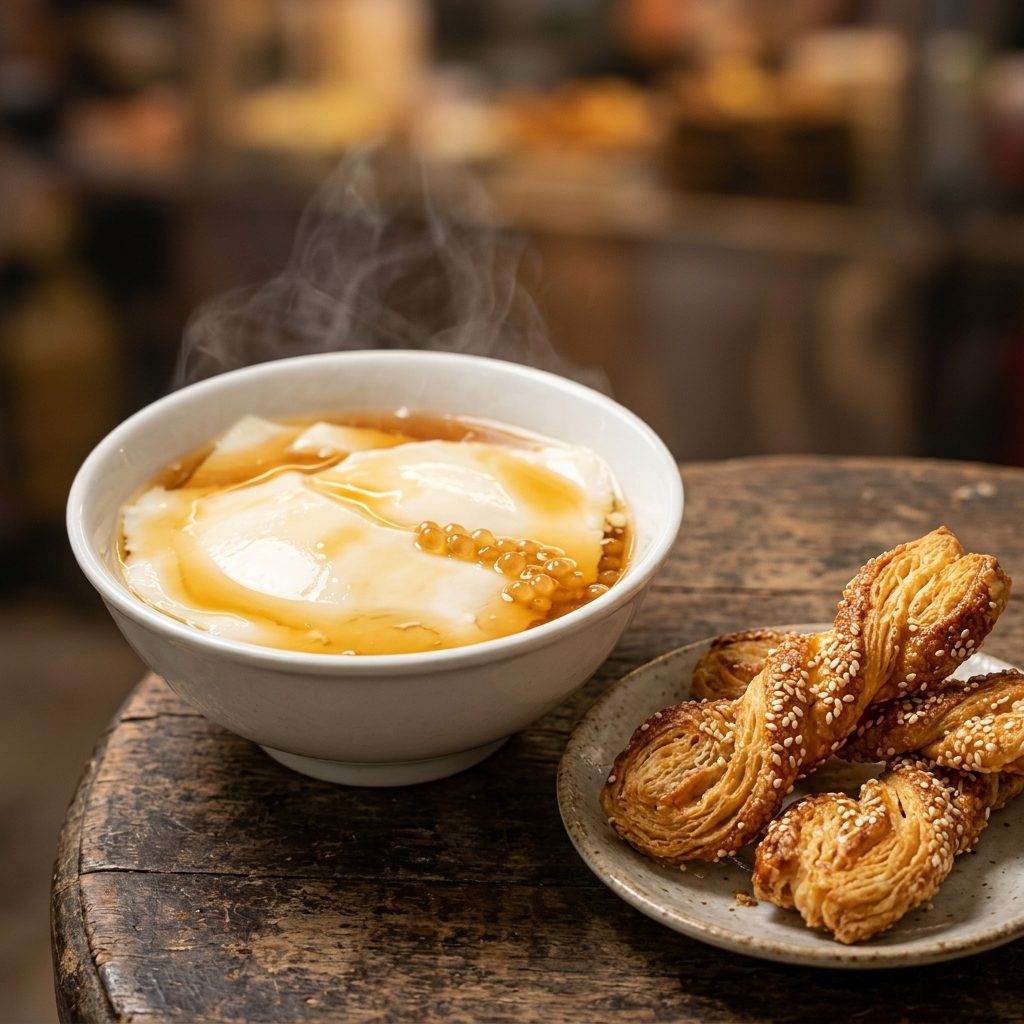
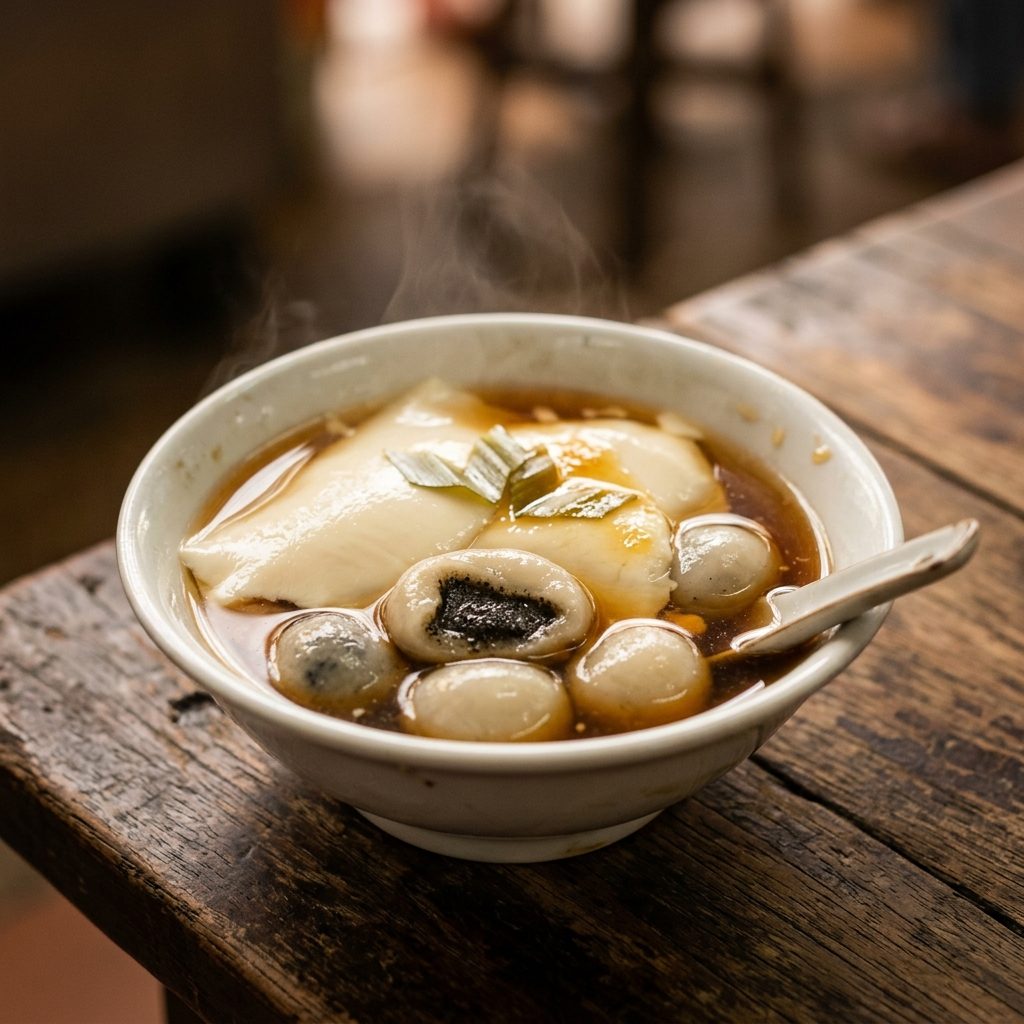
Traditional Singapore Tau Huay with Black Sesame Balls
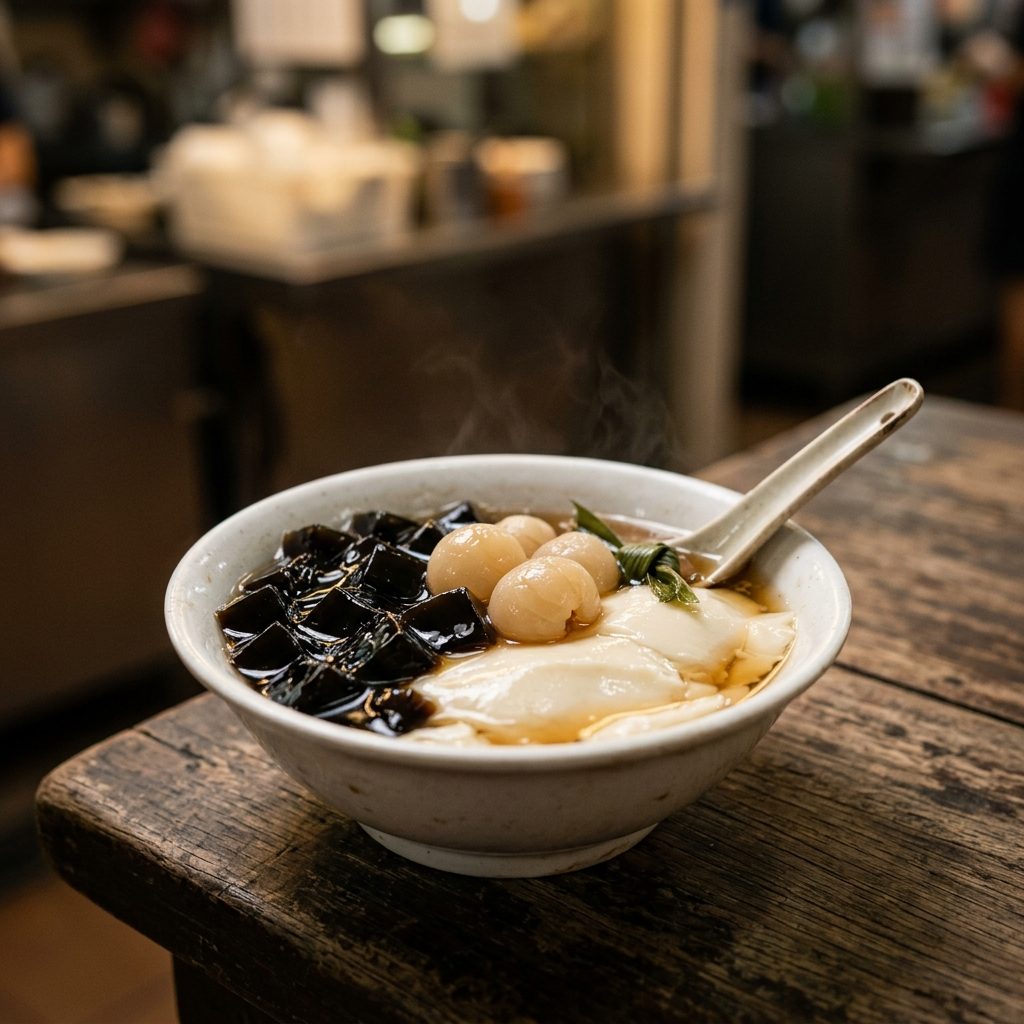
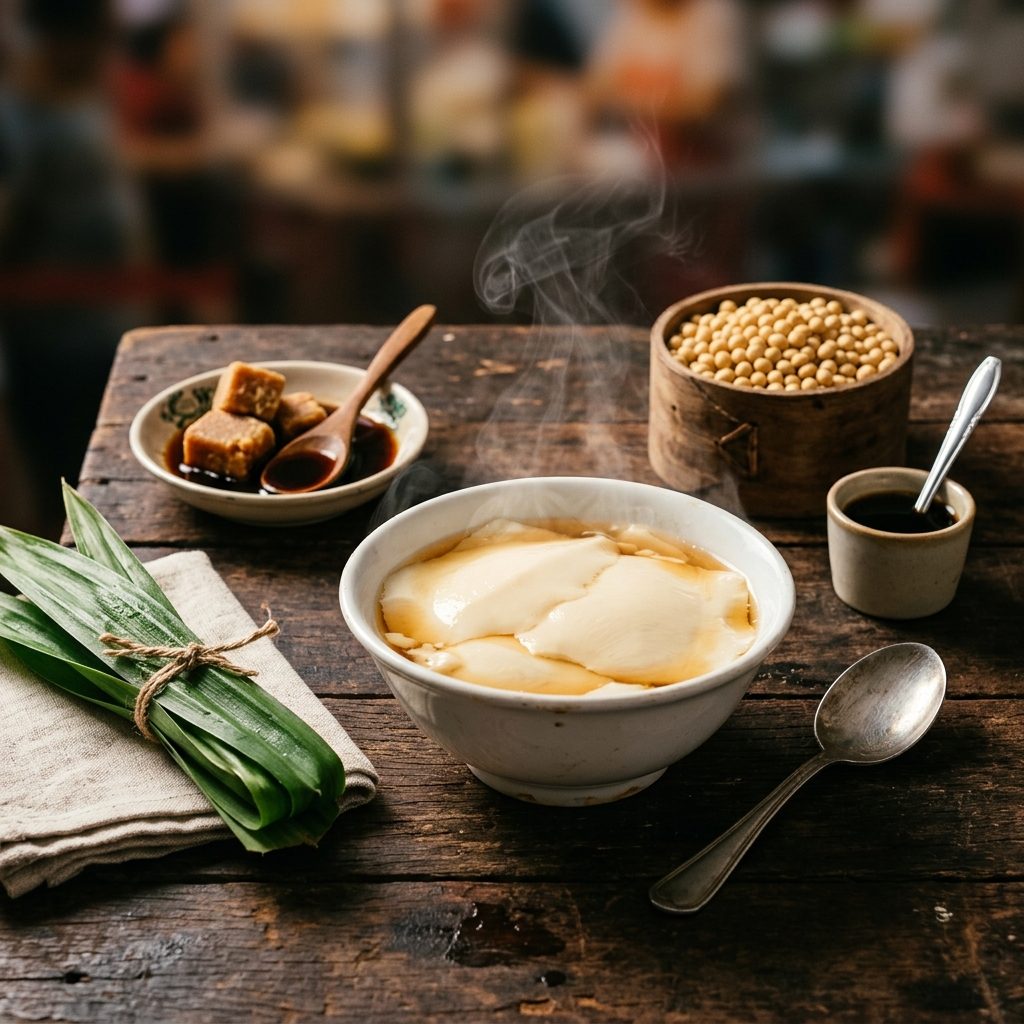
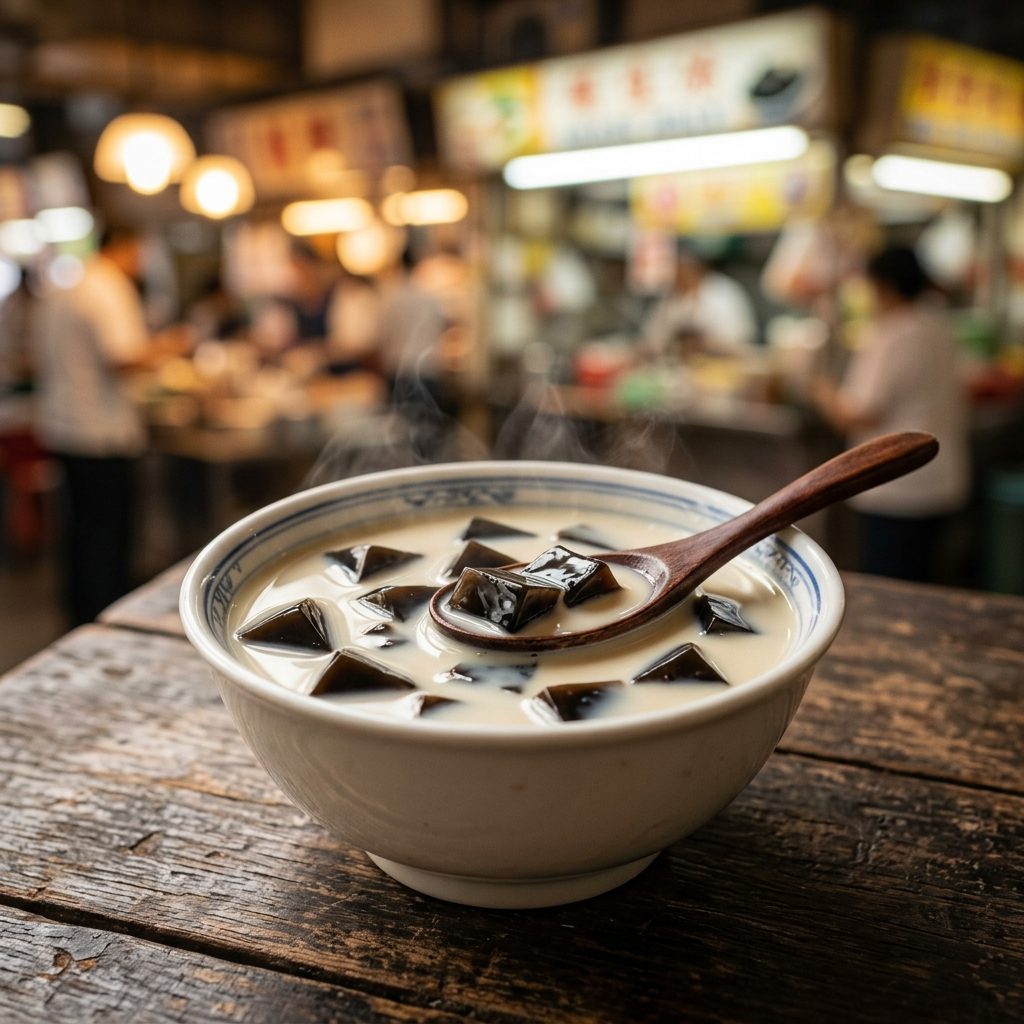
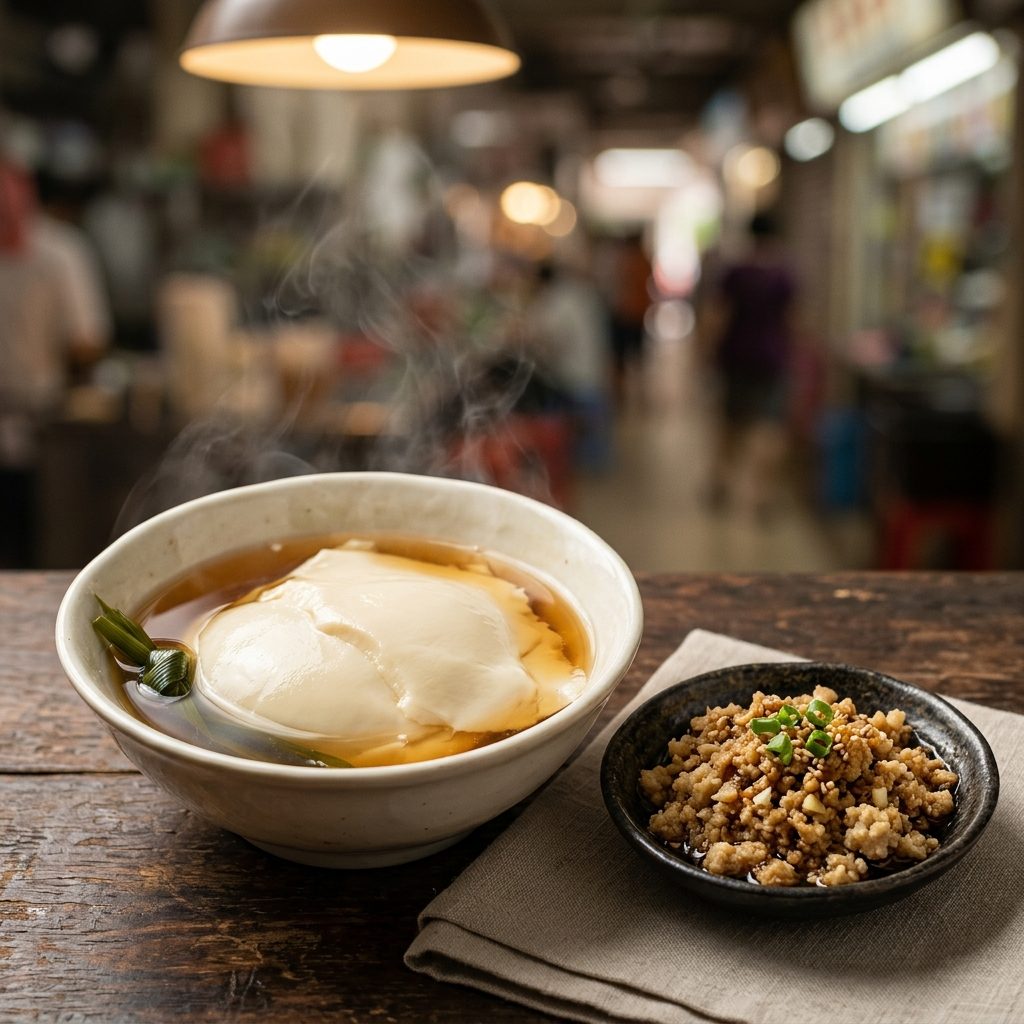
Experience a classic Singapore hawker center dessert at home with this velvety soya beancurd, known as Tau Huay. Made from scratch using high-quality yellow soya beans and served with molten black sesame-filled glutinous rice balls, this dish balances smooth textures with rich, nutty flavors.
- Prep
- 480 min
- Cook
- 45 min
- Serves
- 4
- Level
- Medium
- Per serving
- 320 kcal
Method
Soak the yellow soya beans in water for at least 6-8 hours, or overnight. Drain and rinse the beans thoroughly.
Place the beans in a blender with 1.5 liters of water. Blend on high speed until the mixture is completely smooth and milky.
Strain the mixture through a fine sieve lined with a muslin cloth or cheesecloth into a large pot. Squeeze the cloth firmly to extract every drop of soya milk; discard the pulp (okara).
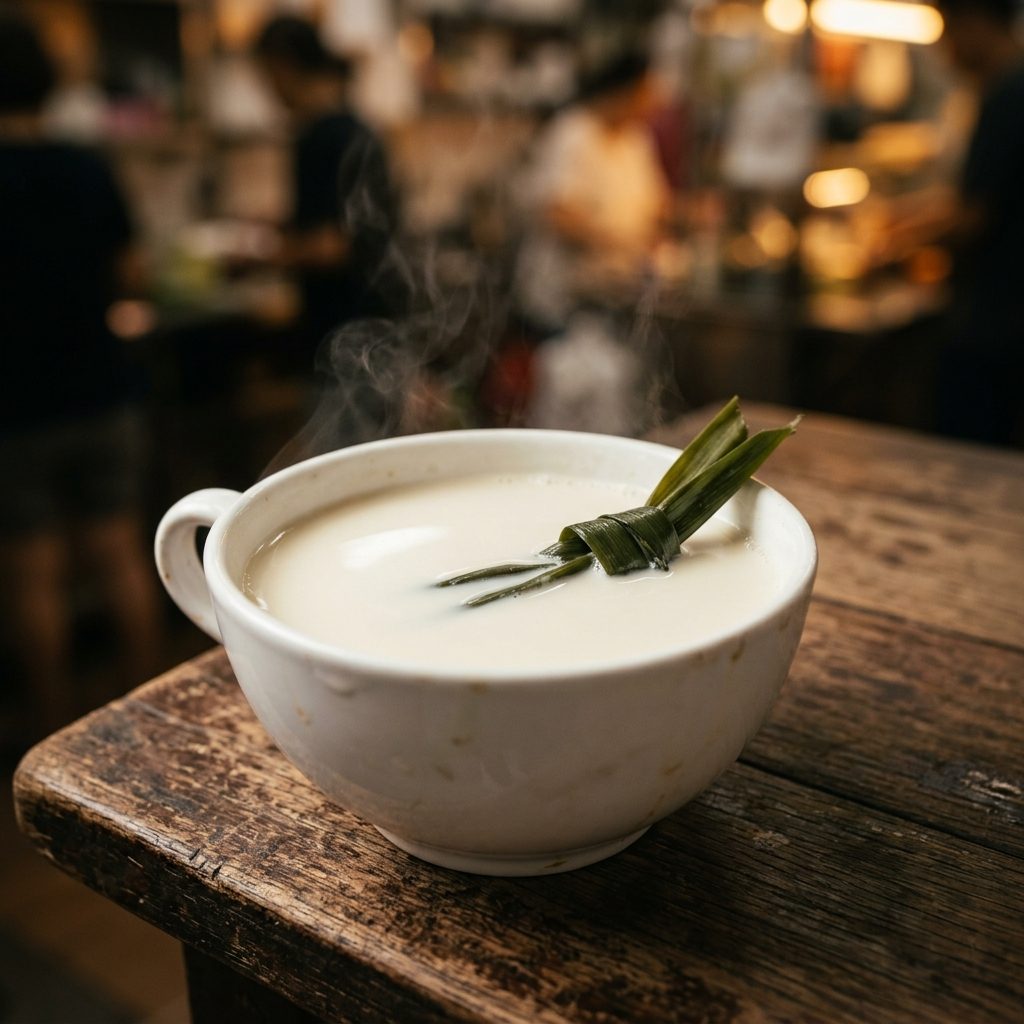
Bring the soya milk to a gentle boil over medium heat, stirring constantly to prevent the bottom from burning. Simmer for 10 minutes, then remove from heat and skim off any foam.
Prepare the coagulant by mixing the gypsum powder, cornstarch, and 60ml of water in a deep, heatproof ceramic or glass pot. Stir well to ensure no clumps remain.
Re-boil the soya milk until it reaches 85-90°C (just below boiling). Stir the coagulant slurry one last time, then pour the hot soya milk into the pot from a height of about 30cm to ensure even mixing. Do not stir after pouring. Cover immediately and let set for 30 minutes.
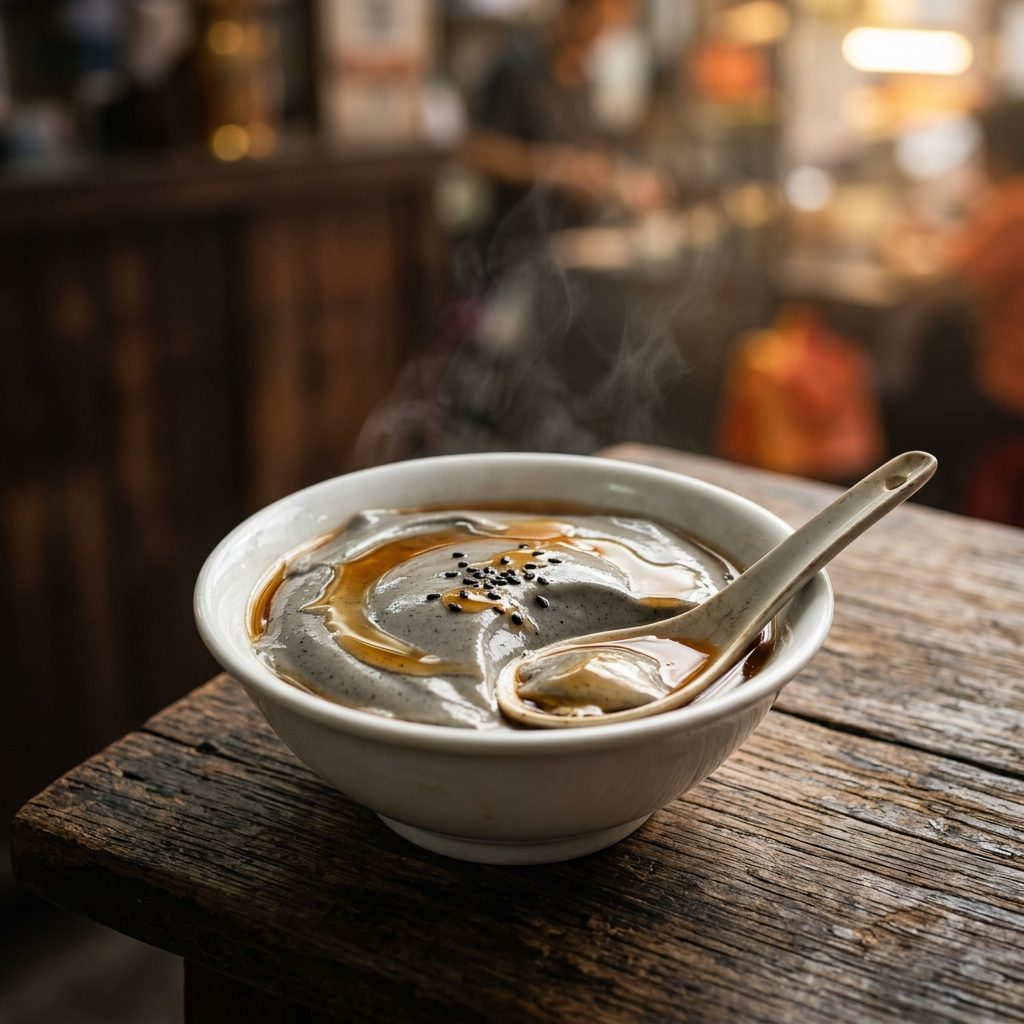
While the beancurd sets, make the sesame balls by mixing glutinous rice flour with a little warm water until a dough forms. Wrap small portions of dough around a teaspoon of sesame paste and roll into balls. Boil in water until they float.
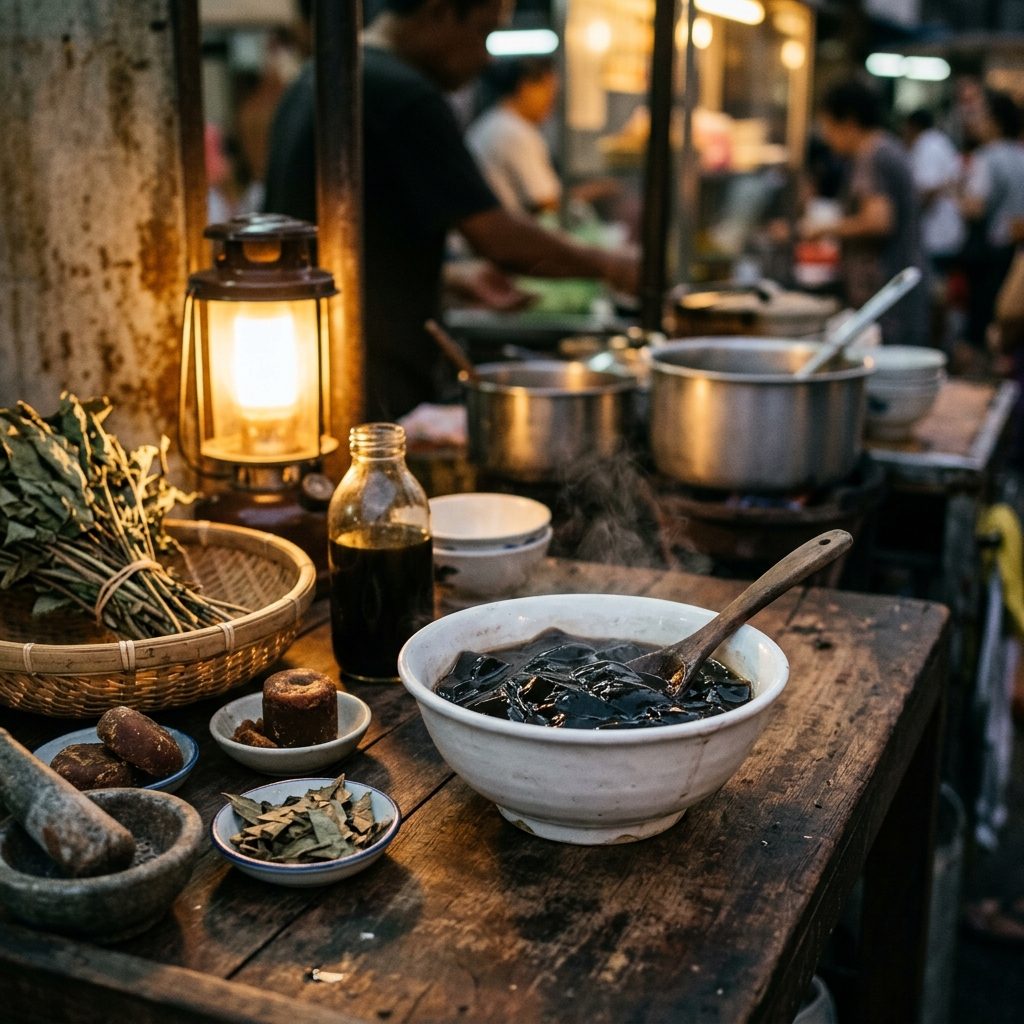
Prepare a simple syrup by boiling rock sugar and pandan leaves in 1 cup of water until dissolved.
To serve, use a flat metal spoon to thin-slice the set beancurd into bowls. Add the cooked sesame balls and drizzle with the pandan-infused sugar syrup.
Notes
The 'long pour' of the soya milk into the coagulant is essential for a smooth set without stirring.
Do not open the lid while the beancurd is setting, as heat retention is crucial for the gypsum to activate.
Always use food-grade gypsum (calcium sulfate) specifically sold for beancurd making.
If the beancurd is too soft, increase the gypsum by 1/4 teaspoon next time; if too gritty, reduce it.
Questions
What is the Hokkien name for this dish?
Can I use GDL instead of gypsum?
Why is my soya beancurd watery?
How long does the fresh beancurd last?
Another version of this dish, written for a home kitchen outside Singapore: Sesame Balls with Mung Bean Filling on Recipe.net.