Traditional Snacks
Salted Savoury Steamed Beancurd Recipe
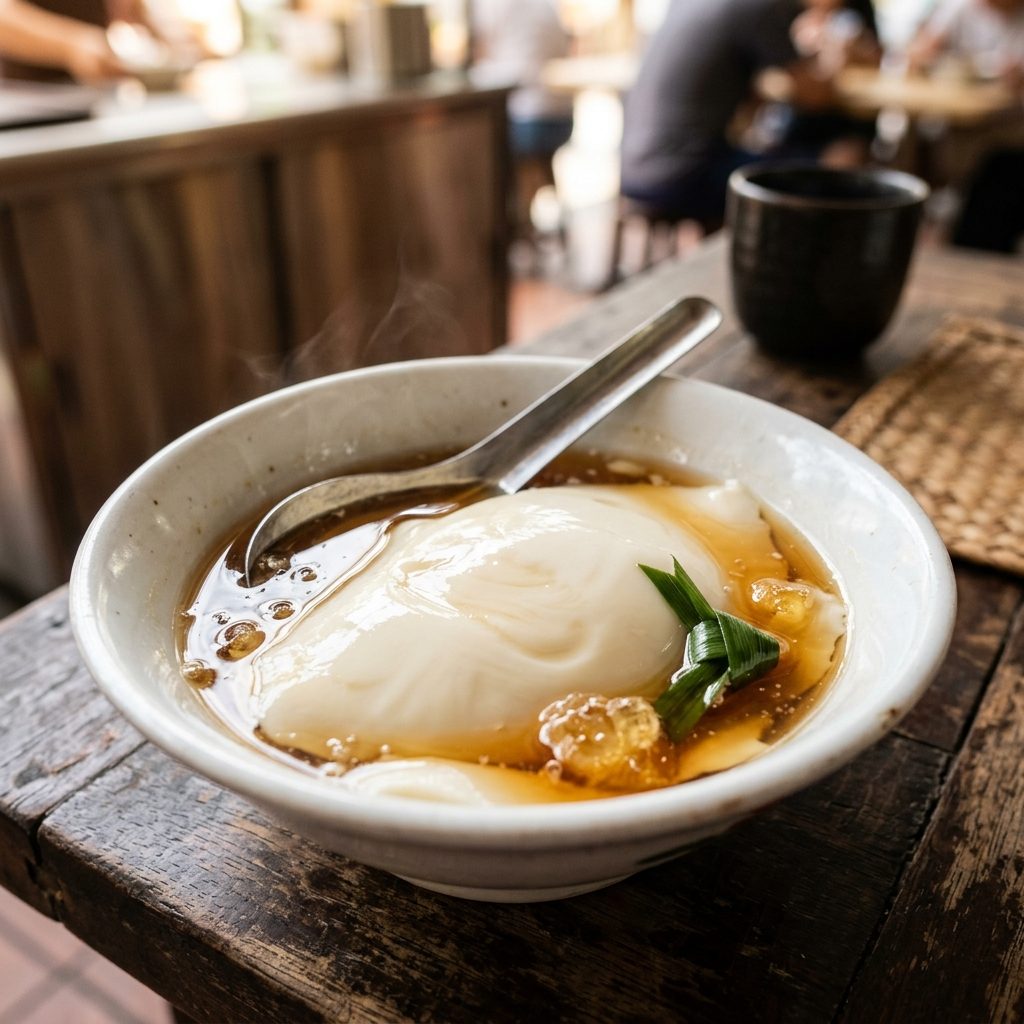
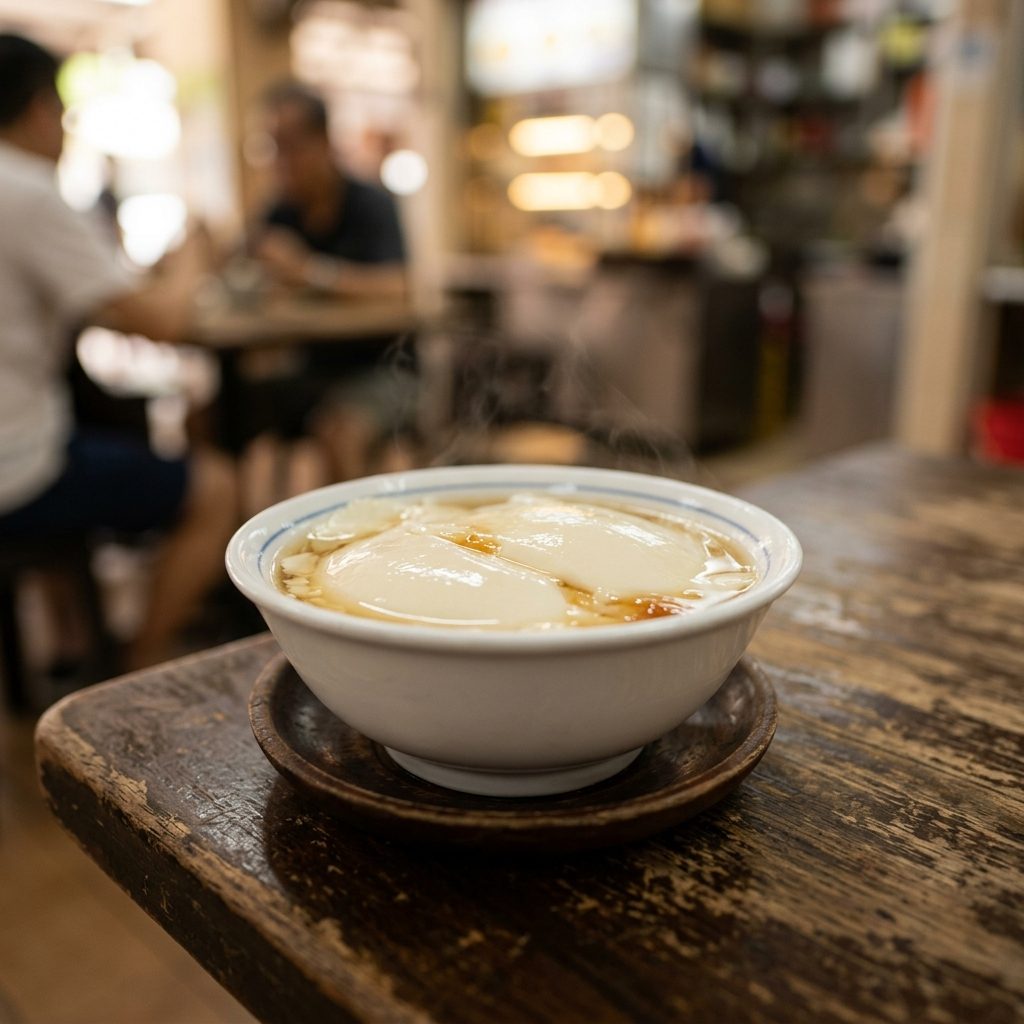
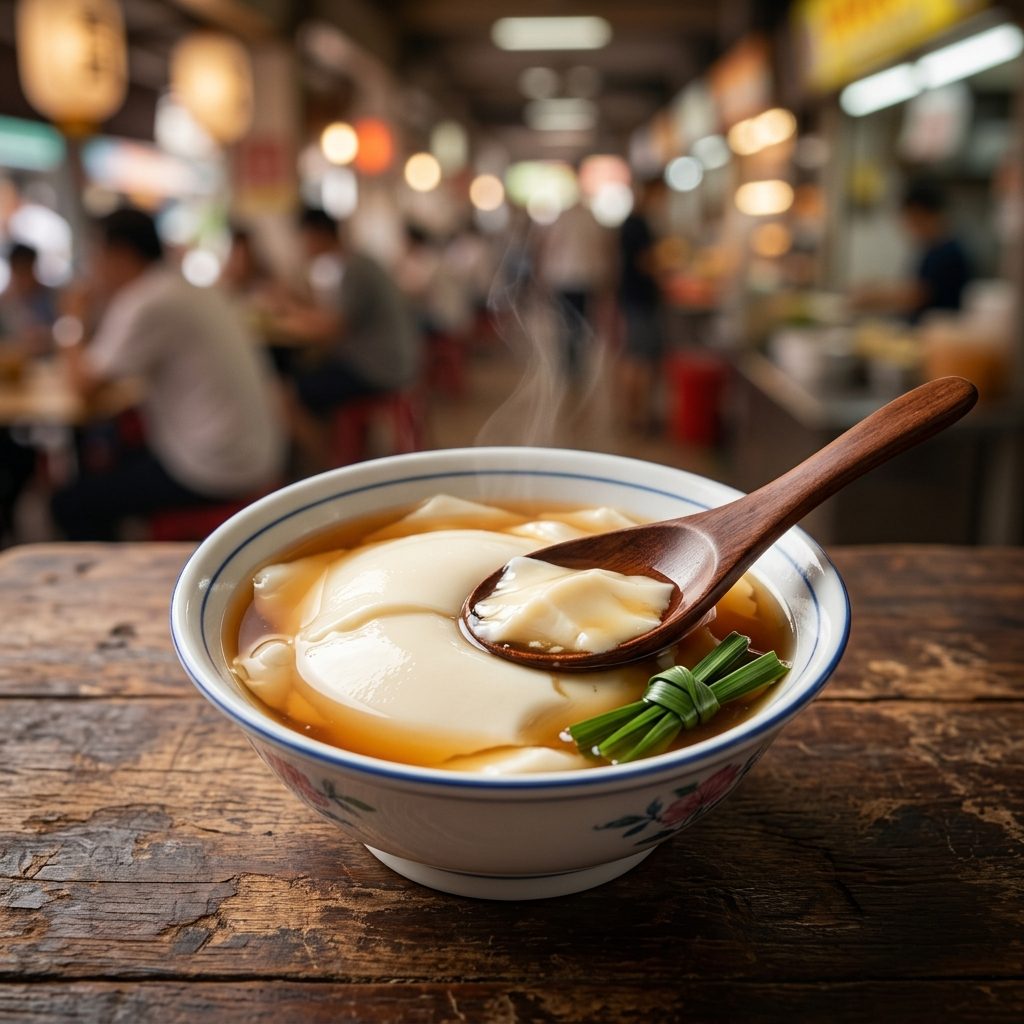
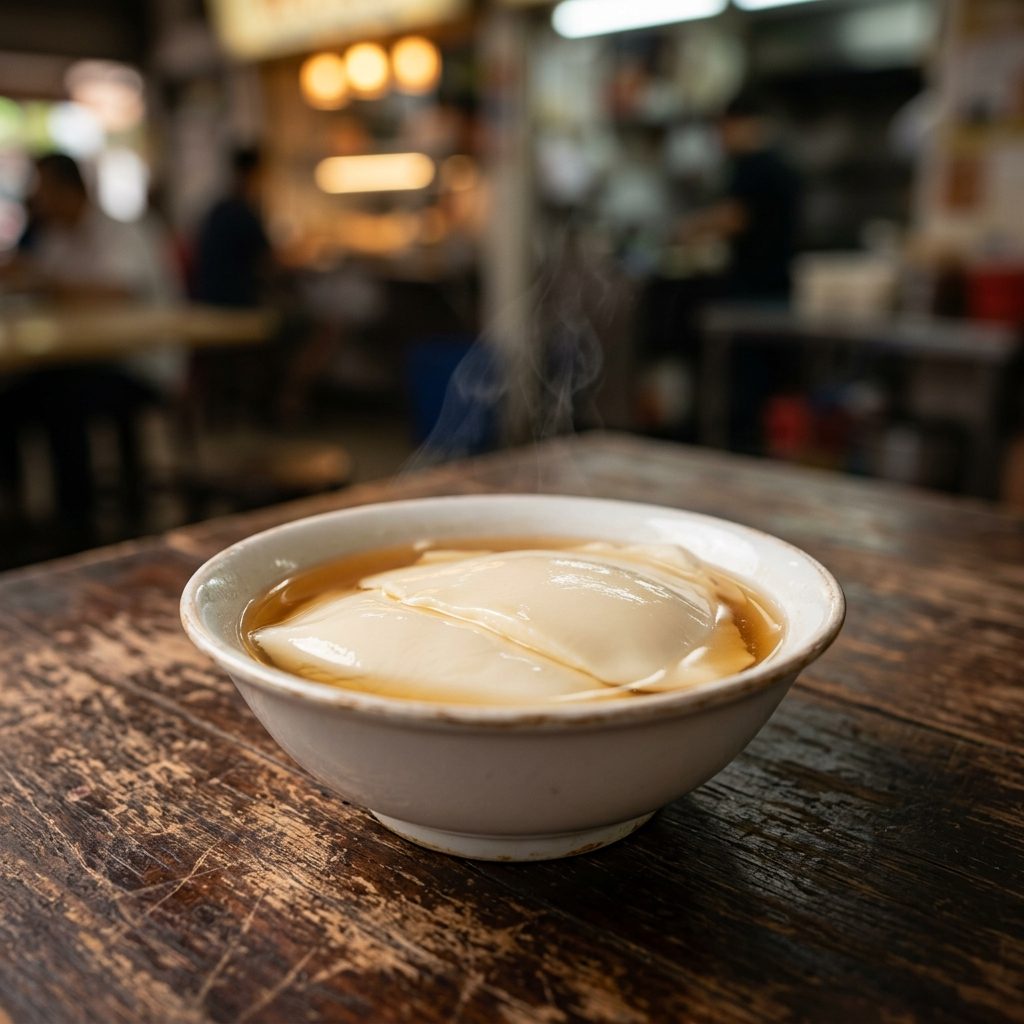
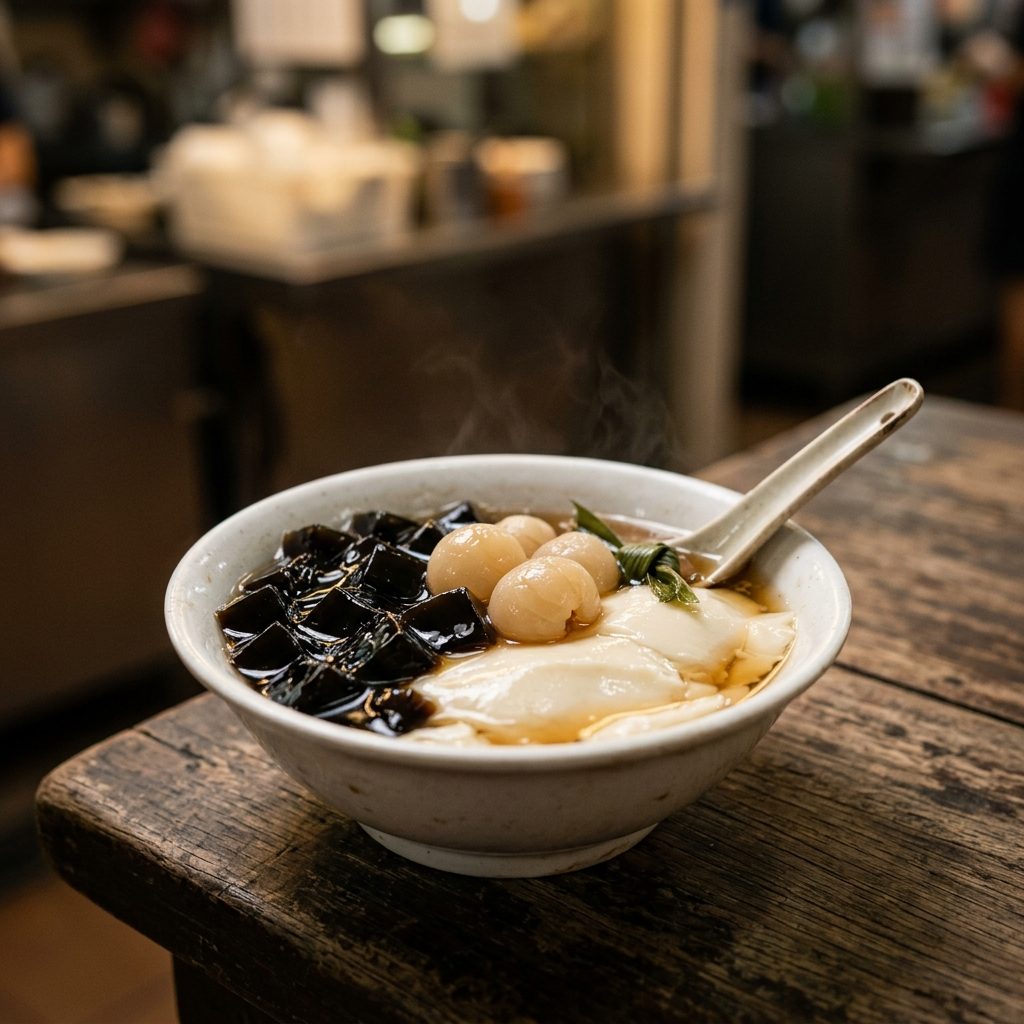
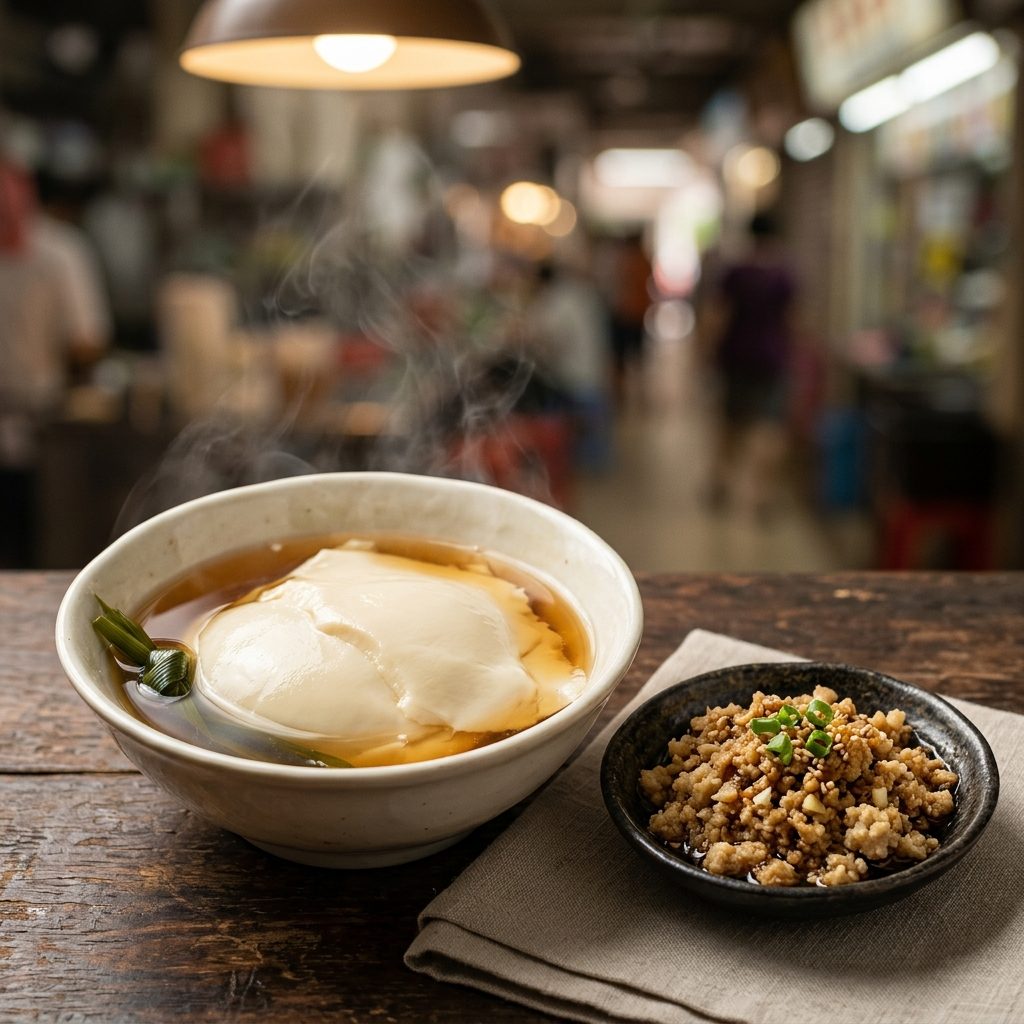
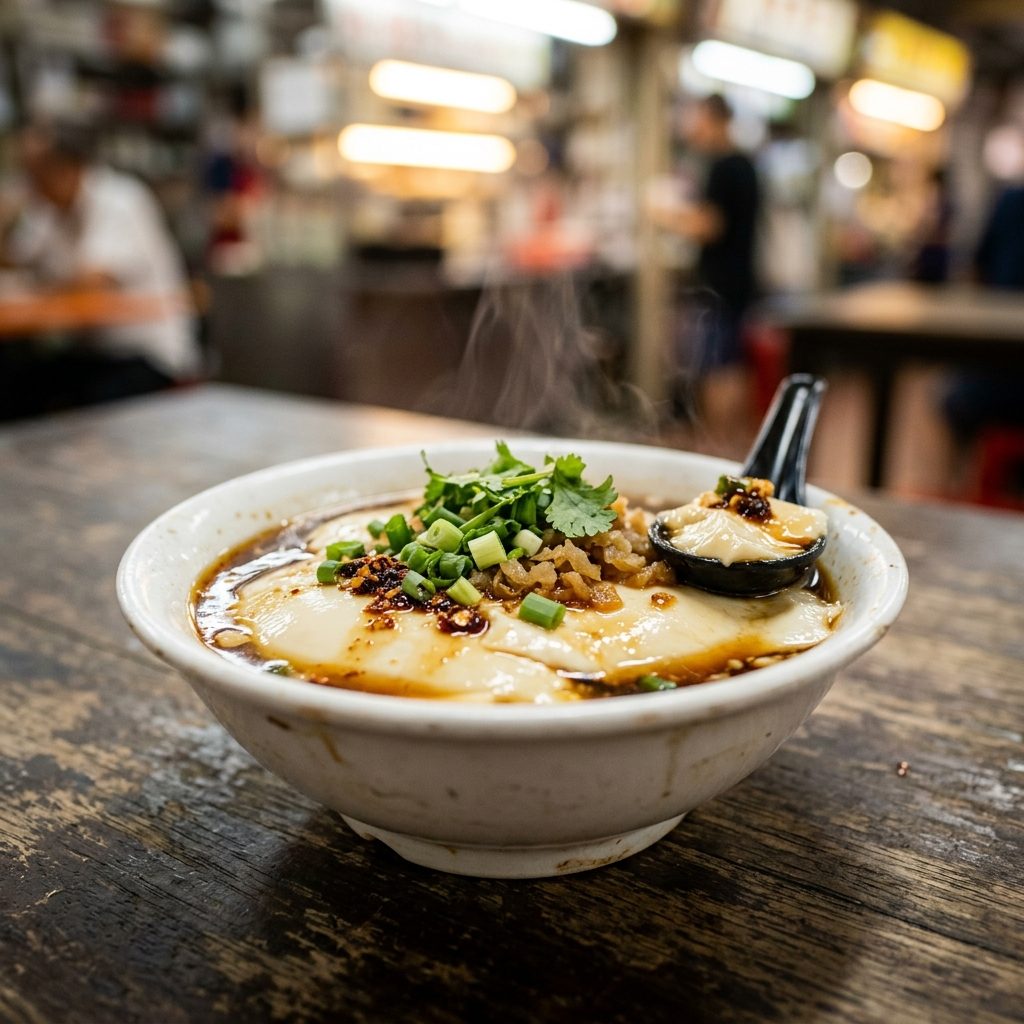
This Salted Savoury Steamed Beancurd, known in Mandarin as Xian Dou Hua, offers a silky, melt-in-your-mouth texture balanced by umami-rich toppings. Unlike the sweet version, this hawker classic is seasoned with soy sauce, vinegar, and preserved radish for a deeply satisfying snack.
- Prep
- 15 min
- Cook
- 30 min
- Serves
- 4
- Level
- Medium
- Per serving
- 380 kcal
Method
Soak the soya beans in plenty of water for 8 hours at room temperature, or overnight in the refrigerator. Drain and rinse thoroughly to remove loose skins.
Place beans in a blender with the 2.1 liters of water. Blend in batches on the highest speed for 2 minutes until completely pulverized.
Strain the mixture through a very fine sieve or a muslin cheesecloth into a large pot. Squeeze the cloth firmly to extract every drop of soy milk; discard the dry pulp (okara).
Bring the soy milk to a gentle boil over medium heat, stirring constantly to prevent the bottom from scorching. Once it boils, skim off the surface foam and simmer for 5-10 minutes to remove the 'raw' bean taste.
In a deep, heat-proof ceramic or stainless steel pot, whisk the gypsum powder, cornstarch, and 100ml of water to create a slurry. Stir well right before the next step as gypsum settles quickly.
Take the soy milk off the heat. From a height of about 30cm, pour the hot milk (roughly 85-90°C) in one continuous, swift motion into the slurry pot. This 'throwing' motion ensures the coagulant is evenly distributed without stirring.
Immediately cover the pot with a lid. Do not stir or move the pot. Let it sit undisturbed for 20-30 minutes until it sets into a soft curd.
Gently scoop thin layers of the curd into bowls using a flat spoon. Drizzle with soy sauce, vinegar, and chili oil. Garnish with preserved radish, spring onions, and cilantro. Serve hot.
Notes
The 1:7 bean-to-water ratio is the 'golden ratio' for the silken texture found in Singapore hawker centers.
Never stir the mixture once the milk has been poured into the gypsum slurry, or the curd will break and become watery.
If using gelatine instead of gypsum, use 15g of gelatine powder for this volume, but note that the beancurd must be chilled to set and cannot be served hot.
Use a paper towel to gently dab away any bubbles on the surface of the milk after pouring for a perfectly smooth finish.
Questions
What is the Hokkien name for this dish?
Where can I find food-grade gypsum?
Can I use a nut milk bag instead of a sieve?
Why is my beancurd not setting?
Another version of this dish, written for a home kitchen outside Singapore: Savoury Steamed Buns on Recipe.net.