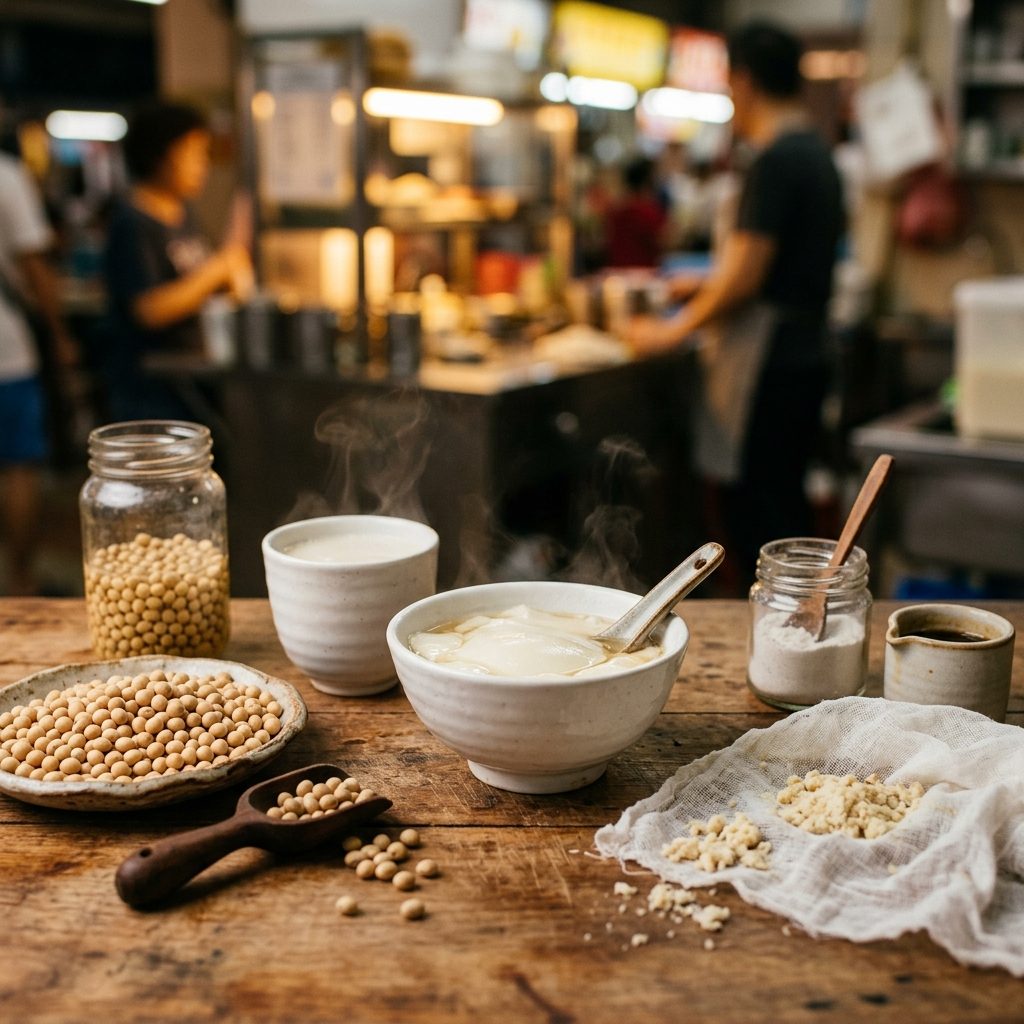
Traditional Snacks
Authentic Peanut Sesame Balls (Jian Dui) Recipe
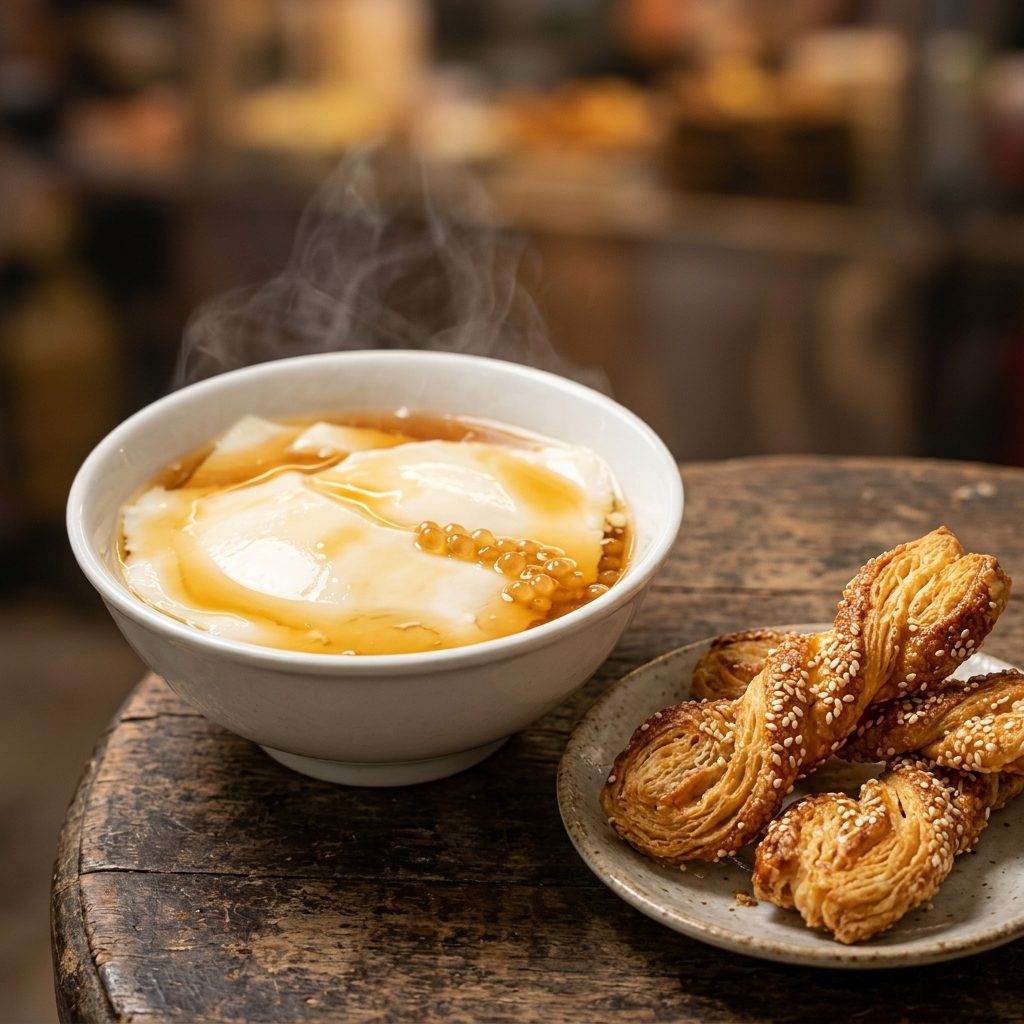
These golden, crispy spheres are made from glutinous rice flour and coated in toasted sesame seeds, yielding a delightful chewiness. Inside, a warm, fragrant peanut paste provides a nutty contrast that defines this classic Singaporean hawker treat.
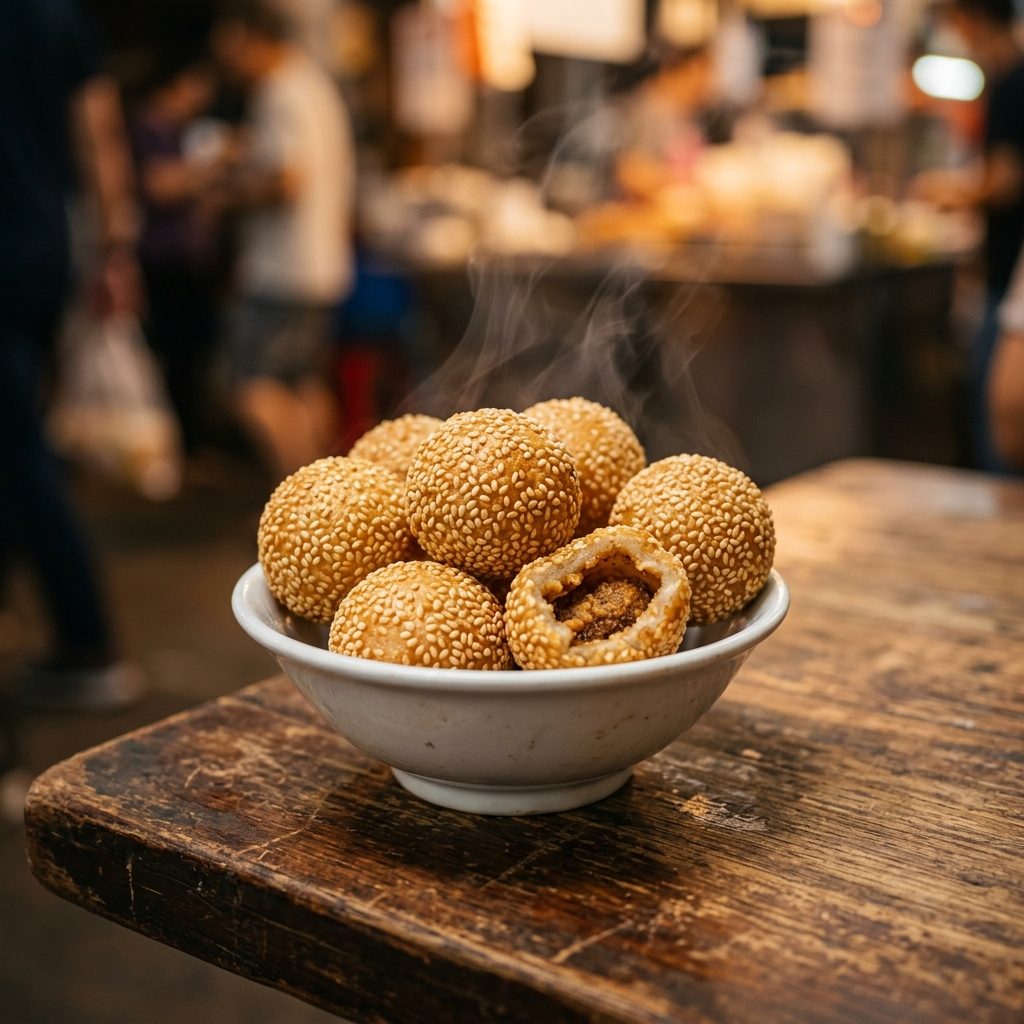
- Prep
- 45 min
- Cook
- 25 min
- Serves
- 4
- Level
- Intermediate
- Per serving
- 420 kcal
Method
Prepare the filling by soaking the raw peanuts for at least 4 hours. After soaking, drain and boil the peanuts in a 1:2 bean-to-water ratio for 20 minutes until softened.
Drain the peanuts and place them in a blender. Add 50g of sugar and a splash of water if needed. Blend until a thick paste forms. Use a fine sieve to strain the paste for a silky texture if desired.
Dissolve 5g of gelatine in 1 tablespoon of hot water and stir it into the peanut paste. This acts as the setting agent. Spread the mixture on a tray and refrigerate for 30 minutes until firm enough to roll into small 15g balls.
Make the dough by mixing the glutinous rice flour and remaining 50g of sugar. Slowly pour in 180ml of boiling water, stirring constantly with chopsticks until a shaggy dough forms. Knead while warm until smooth.
Divide the dough into 30g portions. Flatten a portion, place a chilled peanut ball in the center, and wrap the dough around it, pinching to seal. Roll into a smooth sphere.
Lightly dampen the balls with water and roll them in white sesame seeds, pressing firmly so they stick.
Heat oil in a pot to 150°C (300°F). Deep fry the balls. As they float, use a slotted spoon to gently press them against the side of the pot; this encourages them to expand and become hollow.
Fry until golden brown and significantly expanded, about 5-7 minutes. Drain on paper towels and serve warm.
Notes
The boiling water is essential to partially cook the starch, making the dough pliable and preventing it from cracking.
Do not skip the 'pressing' technique during frying; it is the secret to achieving the hollow, light texture of professional Jian Dui.
Ensure the oil temperature stays moderate; if it is too hot, the outside will burn before the ball expands.
If the peanut filling is too runny, the gelatine is the key coagulant that allows you to handle it easily before frying.
Questions
What does Jian Dui mean?
Why do my sesame balls explode while frying?
Can I use peanut butter instead of making the filling?
What is the Hokkien name for this dish?
Another version of this dish, written for a home kitchen outside Singapore: Sesame Balls with Peanut Filling on Recipe.net.